
Materia Aromatica
Warming Spices
Cinnamon, clove, pepper, ginger and cardamom. Spice oils read by molecule.
See the oils ↓Materia Aromatica · Scent
Spice oils are often grouped together as hot. Few of them are hot in chemistry. Distilled black pepper oil is mostly terpenes, and its pungency, piperine, does not distil. Warmth in the family comes instead from aromatic molecules built on a benzene ring: the phenol eugenol, the aldehyde cinnamaldehyde and the ether anethole.
01 · The Family
Phenols, aldehydes and ethers
Three classes of aromatic compound produce most of the warm character. The phenol eugenol leads clove bud, allspice and bay St. Thomas. The aldehyde cinnamaldehyde leads cinnamon bark and cassia. The phenolic ethers trans-anethole and methyl chavicol lead anise, star anise and anise myrtle, and give them their sweet, liquorice-like note.
A second group is terpenic. Black, pink and cubeb pepper are led by monoterpenes and by sesquiterpenes such as beta-caryophyllene, and read dry and peppery rather than sweet. Ginger and turmeric are rhizome oils led by zingiberene and the curcumenes. Cardamom combines 1,8-cineole with terpinyl acetate. Coriander seed is led by linalool, which makes it the most floral of the spices. Spice oils are mostly middle notes. Clove and cinnamon are tenacious and carry into the base.
Phenol
Clove and allspice
Eugenol, with eugenyl acetate and beta-caryophyllene.
Aldehyde
Cinnamon and cassia
Cinnamaldehyde with cinnamyl acetate; coumarin in cassia.
Phenolic ether
The anises
trans-Anethole and methyl chavicol. Sweet and liquorice-like.
Terpenes
Pepper, ginger, cardamom
Caryophyllene, zingiberene, cineole and terpinyl acetate.
-
Regular price $17.00Regular priceUnit price per
-
Regular price $21.00Regular priceUnit price per
-
Regular price $20.00Regular priceUnit price per
-
Regular price From $13.00Regular priceUnit price per
-
Regular price $27.00Regular priceUnit price per
-
Regular price $20.00Regular priceUnit price per
-
Regular price $15.00Regular priceUnit price per
-
Regular price $25.00Regular priceUnit price per
-
Regular price $13.00Regular priceUnit price per
-
Regular price $24.00Regular priceUnit price per
-
Regular price $12.00Regular priceUnit price per
-
Regular price $14.00Regular priceUnit price per
-
Regular price $13.00Regular priceUnit price per
-
Regular price $19.00Regular priceUnit price per
-
Regular price $14.00Regular priceUnit price per
-
Regular price $26.00Regular priceUnit price per
-
Regular price $14.00Regular priceUnit price per
-
Regular price $21.00Regular priceUnit price per
-
Regular price $15.00Regular priceUnit price per
-
Regular price $22.00Regular priceUnit price per
-
Regular price $20.00Regular priceUnit price per
-
Regular price $23.00Regular priceUnit price per







02 · The Range
Ten oils, ten spices
03 · Side by Side
Three comparisons
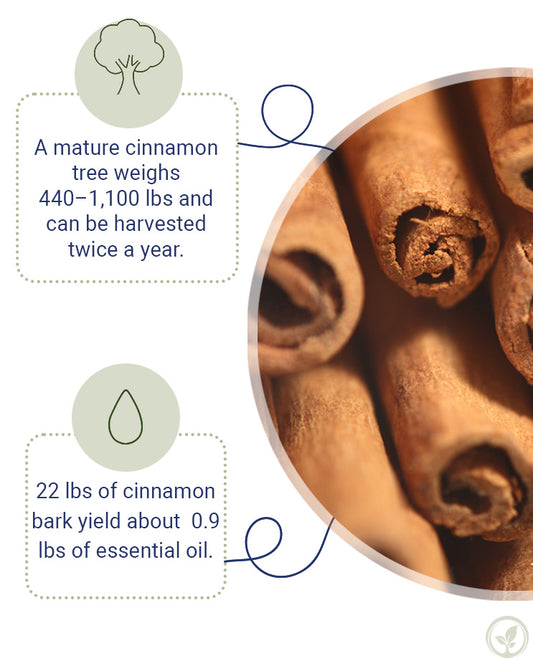
Cinnamon first. Cinnamon Bark, 45% Cinnamaldehyde (No. 3110) from Sri Lanka and Cinnamon Bark, Madagascar (No. 3120) are both Cinnamomum verum, led by cinnamaldehyde with eugenol beneath. Cinnamon Cassia (No. 3140) is a different species. Coumarin and benzaldehyde give it a harsher, sweeter and more almond-like tone.
Then eugenol in three plants. Clove Bud (No. 2250), Allspice Berry (No. 2503) and Bay St. Thomas (No. 1145) are all eugenol-led. Clove is the fullest and most rounded, with eugenyl acetate. Allspice adds methyl eugenol and reads softer. Bay carries myrcene and reads brighter and more herbaceous.
Then three peppers from three unrelated plants. Pepper, Black (No. 2500) is Piper nigrum, led by limonene and beta-caryophyllene. Pepper, Pink (No. 2715) is Schinus molle, led by the phellandrenes and fruity. Pepper, Szechuan (No. 3073) is a Zanthoxylum, led by linalool and methyl cinnamate, and reads floral and citrus.
04 · In Practice
Warmth in small proportion
In natural perfumery the spices bring warmth and diffusion to the heart. Clove, cinnamon and cardamom join vanilla, benzoin and labdanum in amber accords. Black pepper and pink pepper pair with vetiver, cedar and the citrus peels. Cardamom and coriander seed sit near the top and pair well with rose and neroli. A drop of clove or cinnamon in a citrus blend gives the familiar orange-and-spice accord.
For diffusion, a small share of spice with sweet orange or the conifers is usual. In massage blends ginger, black pepper, cardamom and coriander are used at low dilution. The phenol- and aldehyde-rich spices are not added to the bath. Cinnamaldehyde is a strong dermal sensitiser, and cinnamon bark and cassia are used only at very low dilution. Clove, allspice and bay are eugenol-rich and are also kept at low dilution. Chili CO2 extract carries capsaicinoids, is used at trace level and is kept well away from the eyes.
Essential oils are for aromatic and topical use. Dilute before applying to skin. Keep out of reach of children.