

Cassia, Tamala, India (organic)
Cassia, Tamala, India (organic)
Low stock: 8 left
Sell by Date: June 2028
Couldn't load pickup availability
Product No. 1244
Cinnamomum tamala
| Origin | Nepal |
| Plant part | Leaves |
| Cultivation | Wild-crafted organic |
| Extraction | Distilled |
| Main constituents | Linalool, 1,8-Cineol, alpha-Pinene |
| Aroma | Spicy, Sweet |
| Ingredients (INCI) | Cinnamomum Tamala Leaf Oil* |
*Certified organic.
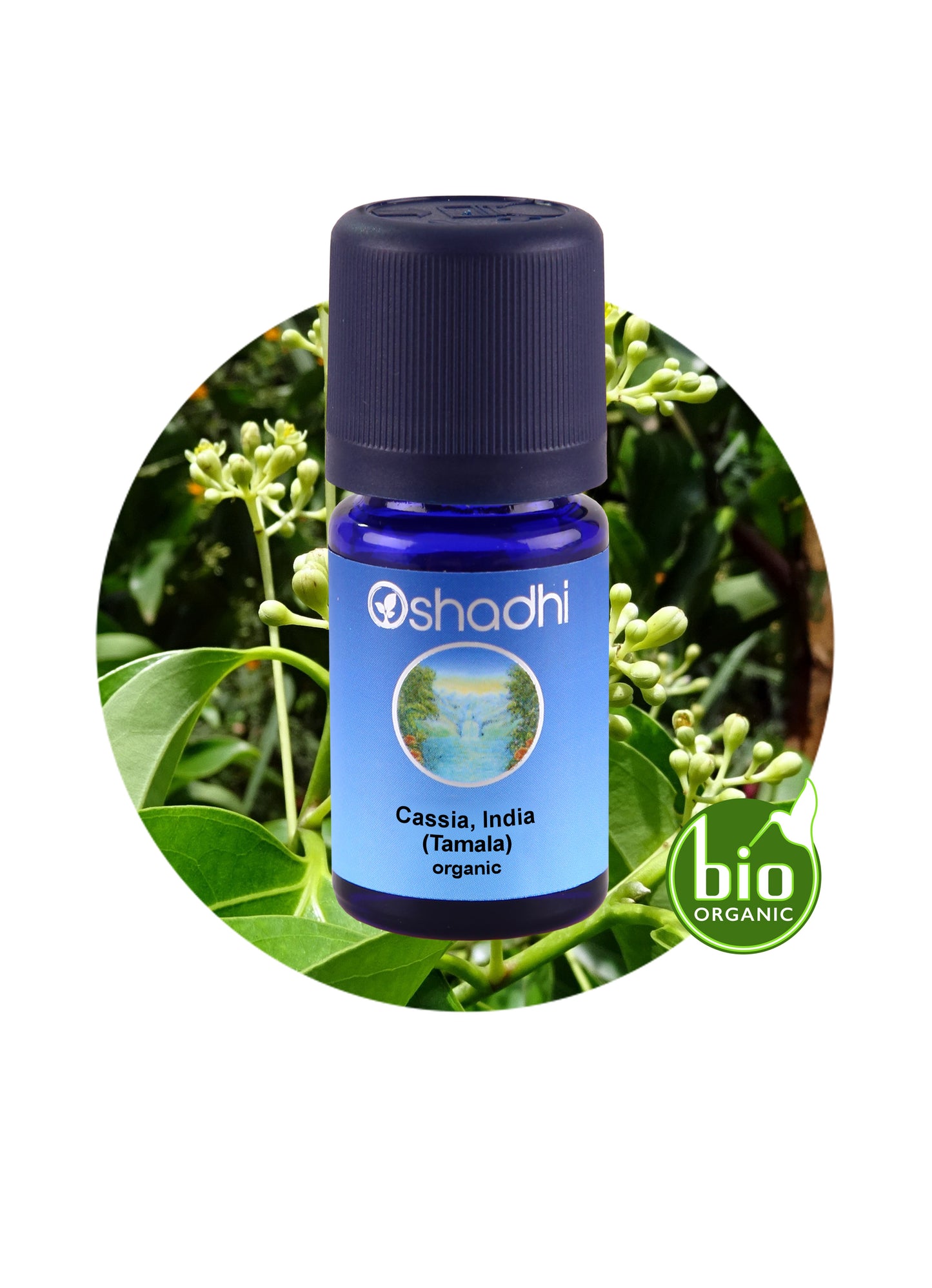
Cinnamomum tamala is sold under several confusing names, among them Indian cassia and Indian bay leaf. It is neither cassia bark nor bay laurel. The leaf oil varies with chemotype, and this one is linalool-led, not cinnamaldehyde- or eugenol-led.
01 · Origin
An evergreen of the Lauraceae native to the Himalayan foothills, where the dried leaf, tejpat, is a standard kitchen spice. This oil is distilled from the leaves of wild-crafted trees in Nepal, under organic certification.
02 · Chemistry
Linalool dominates the profile and gives a soft floral tone. 1,8-cineole adds a cool freshness and alpha-pinene a light resinous edge. The absence of strong phenols or aldehydes makes this a far milder material than the bark oils of the genus.
03 · In Practice
Fresh, gently spiced and floral, with a faint warm-woody undertone. A middle note. Diffusion, massage blends and natural perfumery. Comparative work with Cinnamon (Cassia) (No. 3140) shows the range of chemistry within one genus. Blends with orange, cardamom, ginger, lavender, coriander, sandalwood and frankincense.
General information: For external use only. Dilute before applying to skin. Keep away from heat and sunlight. Keep out of reach of children. Avoid contact with eyes and mucous membranes.
How to use Essential Oils
Find out more about how Essential Oils can be used and the different application methods:
https://oshadhi.com/pages/how-to-use-essential-oils