
Materia Aromatica
Madagascar & Africa
Madagascan endemics and plantation crops, Cape fynbos herbs and Somali frankincense.
See the oils ↓Materia Aromatica · Origin
Madagascar is often filed as one more source in the African aromatic trade. Its flora is largely its own: most of the island's plant species occur nowhere else. The Madagascan range divides into endemic wild plants, such as ravensara, saro and katafray, and introduced plantation crops, such as ylang ylang, clove and vetiver. The mainland adds the Cape and the Horn of Africa.
01 · The Region
Island, Cape and Horn
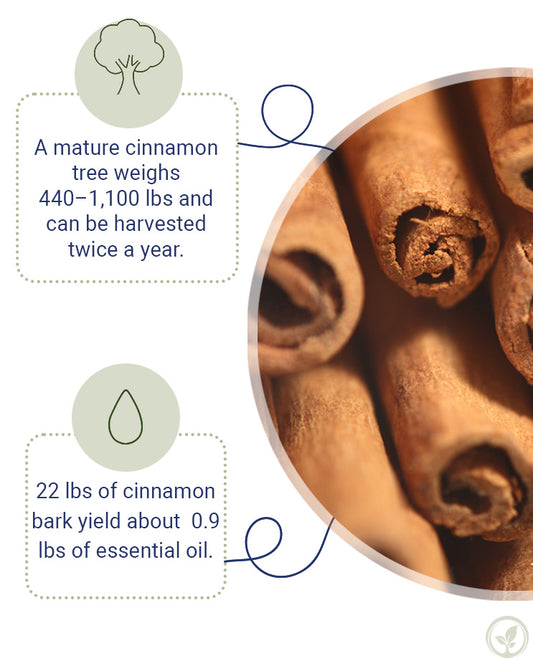
Madagascar has been separated from the African mainland for a very long geological period, and its flora evolved largely in isolation. The endemic oils in this range come from wild trees and shrubs: Ravensara aromatica and Ravensara anisata, Cinnamosma fragrans, Cedrelopsis grevei, Rhus taratana and two endemic helichrysums. Alongside them stand crops brought to the island and grown on a large scale: ylang ylang, clove, vetiver, cinnamon, turmeric and rose geranium.
South Africa supplies the Cape flora. Buchu, Cape may and Cape chamomile are fynbos plants of the winter-rainfall south-west, a region of exceptional plant diversity. Artemisia afra, Helichrysum splendidum and Lippia javanica come from the wider grassland and bush. The eucalypts and lemon tea tree are Australian species grown in South African plantations. Somalia, in the arid Horn of Africa, gives the frankincenses, tapped as resin from wild Boswellia trees. Uganda supplies vanilla and chili as CO2 extracts.
Madagascar
Endemics
Ravensara, saro, katafray, Rhus taratana and the Madagascan helichrysums. Wild.
Madagascar
Plantation crops
Ylang ylang in three grades, clove bud, vetiver, cinnamon bark, rose geranium.
The Cape
Fynbos
Buchu, Cape may, Cape chamomile, with Artemisia afra and Helichrysum splendidum.
Horn and east
Resin and CO2
Somali frankincense, carterii and rivae. Vanilla and chili CO2 from Uganda.
-
Regular price From $19.00Regular priceUnit price per
-
Regular price $21.00Regular priceUnit price per
-
Regular price $20.00Regular priceUnit price per
-
Regular price $25.00Regular priceUnit price per
-
Regular price $34.00Regular priceUnit price per
-
Regular price $21.00Regular priceUnit price per
-
Regular price $25.00Regular priceUnit price per
-
Regular price $25.00Regular priceUnit price per
-
Regular price $25.00Regular priceUnit price per
-
Regular price $30.00Regular priceUnit price per
-
Regular price $25.00Regular priceUnit price per
-
Regular price $22.00Regular priceUnit price per
-
Regular price $35.00Regular priceUnit price per
-
Regular price $13.00Regular priceUnit price per
-
Regular price $23.00Regular priceUnit price per
-
Regular price From $30.00Regular priceUnit price per
-
Regular price $23.00Regular priceUnit price per
-
Regular price $19.00Regular priceUnit price per
-
Regular price $35.00Regular priceUnit price per
-
Regular price From $8.00Regular priceUnit price per
$16.00Sale price From $8.00Sold out -
 Sold outRegular price From $12.00Regular priceUnit price per
-
 Sold outRegular price From $20.00Regular priceUnit price per
-
 Sold outRegular price $17.00Regular priceUnit price per




02 · The Range
Ten oils, island and mainland
03 · Side by Side
Fractions, species and endemics
Ylang ylang is distilled in fractions. Ylang Ylang, Extra (No. 3041) is the first fraction, rich in linalool, para-cresyl methyl ether, geranyl acetate and benzyl acetate. Ylang Ylang II (No. 3027) comes later in the distillation and carries more germacrene-D and beta-caryophyllene. Ylang Ylang Complete (No. 3030) is the uninterrupted distillation. The three show how a single still run separates a flower into lighter and heavier materials.
The two ravensaras are separate species with separate chemistry. Ravensara anisata (No. 2530) is a bark oil led by methyl chavicol, anisic in character. Ravensara aromatica (No. 2532) is a leaf oil led by limonene, with methyl eugenol and methyl chavicol behind it. Neither is the cineole-rich ravintsara, Cinnamomum camphora, with which both are often confused.
Then helichrysum. The Madagascan endemics, Helichrysum Bracteiferum (No. 1591) and Helichrysum Gymnocephalum (No. 1593), are cineole oils. Helichrysum Splendidum (No. 1592) from South Africa is limonene- and beta-pinene-led. None carries the neryl acetate and italidiones of Helichrysum italicum. The genus name travels; the chemistry does not.
04 · In Practice
Heart, base and dilution
Ylang ylang is a heart note in natural perfumery and a common material in massage blends; the Extra grade reads brightest, the II grade fuller. Vetiver and katafray are base notes and fixatives. Vanilla CO2 supplies a sweet base. Frankincense suits diffusion, massage blends and meditation practice. Saro and the eucalypts are diffusion materials.
Clove bud and cinnamon bark are high in eugenol and cinnamaldehyde and are used only at high dilution. Buchu crenulata carries pulegone and menthone, and the peppermint geranium is menthone-led; both are used sparingly, for adults. Artemisia afra is thujone-bearing. Ravensara anisata is high in methyl chavicol. Chili CO2 is kept away from eyes and mucous membranes and used in very small proportion. Lemon tea tree and Eucalyptus citriodora are aldehyde-rich and are diluted accordingly for skin.
Essential oils are for aromatic and topical use. Dilute before applying to skin. Keep out of reach of children.