
Materia Aromatica
Florals
Rose, jasmine, neroli and ylang ylang. Floral oils read by chemistry.
See the oils ↓Materia Aromatica · Scent
Floral is usually read as a single note. It is several. A rose is built on alcohols, a jasmine on benzyl esters and indole, a Roman chamomile on angelate esters. Oils grouped under the word share a register, not a chemistry, and they behave differently in a formula.
01 · The Family
Alcohols, esters and the heavy fraction
The floral character of distilled oils rests largely on monoterpene alcohols. Citronellol, geraniol and nerol give rose and geranium their rosy body. Linalool gives lavender, neroli and magnolia a lighter, cleaner floral tone. Esters round these alcohols: linalyl acetate in lavender, benzyl acetate in jasmine and ylang ylang, the angelates in Roman chamomile.
Absolutes add a second layer. Solvent extraction keeps compounds that steam distillation leaves in the water or alters: phenylethyl alcohol in rose absolute, indole and cis-jasmone in jasmine, ionones in osmanthus, irones in iris. Most florals are middle notes. Lavender and neroli sit higher. The absolutes, with their waxes and heavier aromatics, reach into the base and evaporate slowly.
Rosy alcohols
Rose and geranium
Citronellol, geraniol and nerol. Phenylethyl alcohol in the absolutes.
Linalool and esters
Lavender and neroli
Linalool with linalyl acetate. Light, clean and volatile.
Benzyl esters
Jasmine and ylang ylang
Benzyl acetate and benzyl benzoate; indole in jasmine. Dense and diffusive.
Angelates
The chamomiles
Angelate esters in Roman chamomile; farnesene and bisabolol oxides in blue chamomile.
-
Regular price From $15.00Regular priceUnit price per
-
Regular price From $19.00Regular priceUnit price per
-
Regular price From $13.00Regular priceUnit price per
-
Regular price From $23.80Regular priceUnit price per
$34.00Sale price From $23.80Sale -
Regular price $19.00Regular priceUnit price per
-
Regular price $68.00Regular priceUnit price per
-
Regular price From $45.00Regular priceUnit price per
-
Regular price $45.00Regular priceUnit price per
-
Regular price $22.00Regular priceUnit price per
-
Regular price $29.00Regular priceUnit price per
-
Regular price From $12.00Regular priceUnit price per
-
Regular price $17.00Regular priceUnit price per
-
Regular price $21.00Regular priceUnit price per
-
Regular price $23.00Regular priceUnit price per
-
Regular price $28.00Regular priceUnit price per
-
Regular price From $43.00Regular priceUnit price per
-
Regular price $73.00Regular priceUnit price per
-
Regular price From $57.00Regular priceUnit price per
-
Regular price $81.00Regular priceUnit price per
-
Regular price $43.00Regular priceUnit price per
-
Regular price From $8.00Regular priceUnit price per
$16.00Sale price From $8.00Sold out -
 Sold outRegular price From $17.00Regular priceUnit price per
$34.00Sale price From $17.00Sold out -

 Sold outRegular price $55.00Regular priceUnit price per
$110.00Sale price $55.00Sold out -
 Sold outRegular price $43.50Regular priceUnit price per
$87.00Sale price $43.50Sold out



02 · The Range
Ten oils, nine species
03 · Side by Side
Three comparisons
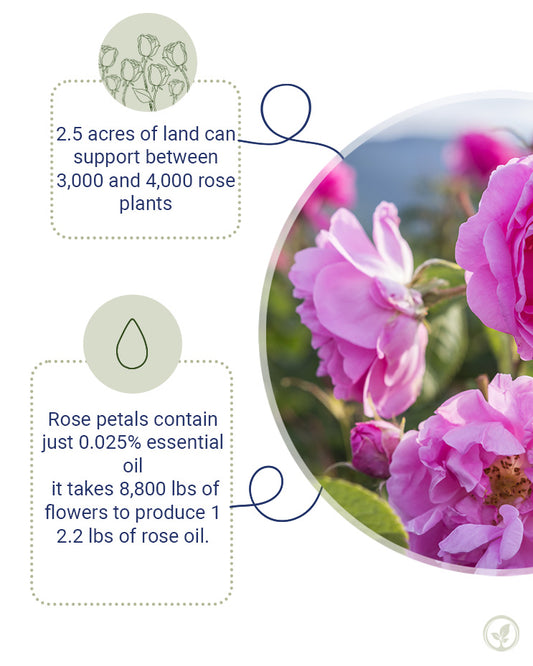
Method first. Rose Blossom, Bulgaria (No. 2575) beside Rose Blossom, Absolute (No. 2540) shows what each process keeps. The distilled oil is led by citronellol and geraniol and congeals at cool temperatures through its stearoptene waxes. The absolute retains the phenylethyl alcohol that distillation leaves in the rose water, and reads closer to the open flower.
Then species. Jasmine, Grandiflorum, India (No. 1630) and Jasmine, Sambac (No. 1635) share benzyl acetate and linalool. Grandiflorum carries cis-jasmone and reads rounder and more indolic. Sambac is greener and sharper, with a tea-like facet from its hexenyl esters.
Then fraction. Ylang Ylang, Extra (No. 3041) is the first part of the distillation, rich in linalool, benzyl acetate and the cresyl ethers. Ylang Ylang II (No. 3027) is taken later, and germacrene-D and beta-caryophyllene move to the front. Ylang Ylang Complete (No. 3030) holds the whole run in one oil.
04 · In Practice
The heart of a formula
In natural perfumery the florals form the heart. Rose and jasmine are the two pillars of the classical floral accord, and a small proportion of either changes a whole composition. Both sit well over sandalwood, vetiver and the resins, and under bergamot and neroli at the top. Lavender joins tonka and other coumarin-rich materials in the fougère accord. Ylang ylang and champaca give a dense, creamy floral to amber accords built on vanilla and benzoin.
In massage blends and skincare formulation, geranium, lavender, rose and Roman chamomile are the most widely used. The absolutes are intense, and very low concentrations are enough. Blue chamomile colours a formulation blue through chamazulene. For diffusion, lavender, geranium and neroli work well; the absolutes, several of them supplied diluted in alcohol, are better studied on a perfumer's strip. Many florals contain allergens named in cosmetic labelling rules, among them geraniol, citronellol, linalool and benzyl benzoate, and leave-on products are labelled accordingly.
Essential oils are for aromatic and topical use. Dilute before applying to skin. Keep out of reach of children.