

Geranium, Rose (organic)
Geranium, Rose (organic)
20 in stock
Couldn't load pickup availability
Product No. 1506
Pelargonium graveolens
| Origin | Madagascar |
| Plant part | Leaves |
| Cultivation | Certified organic |
| Certification | EcoControl |
| Extraction | Distilled |
| Main constituents | Citronellol, Geraniol, Linalol |
| Aroma | Earthy, Herbaceous, Spicy, Woody |
| Ingredients (INCI) | Pelargonium Graveolens Oil* |
*Certified organic, EcoControl.
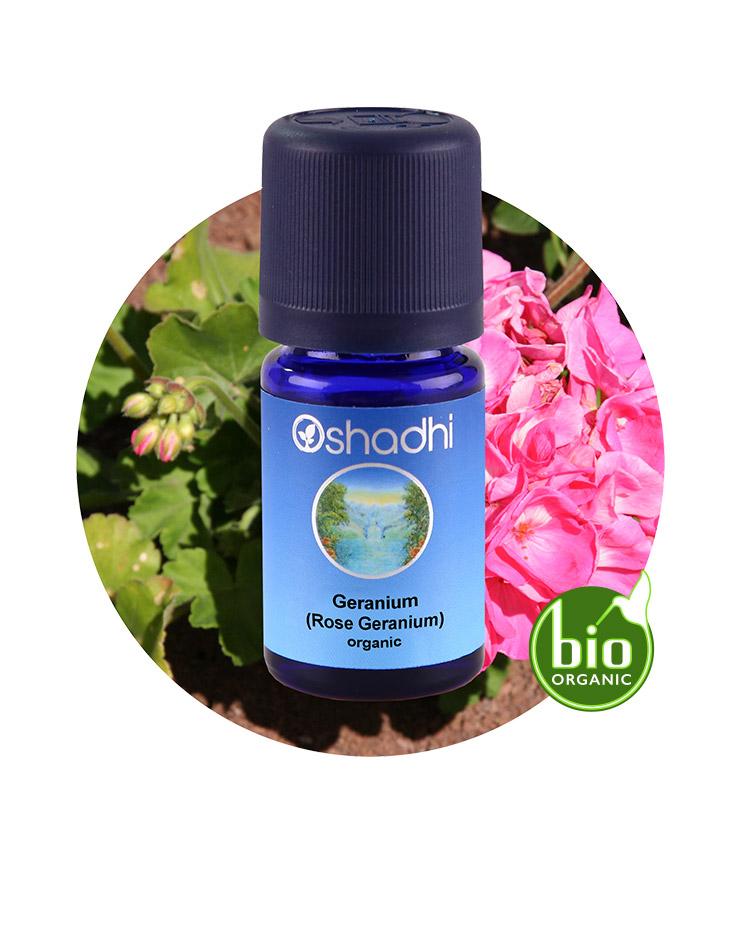
Geranium oil does not come from a geranium. The source is Pelargonium, a separate genus of the same family, native to southern Africa. The hardy geraniums of temperate gardens yield no oil of commercial interest. Rose geranium names the rose-scented forms of Pelargonium graveolens.
01 · Origin
A bushy perennial with deeply lobed, velvety leaves, long cultivated well beyond its native range. This oil is distilled from the leaves of certified organic cultivation in Madagascar, under EcoControl certification.
02 · Chemistry
Citronellol and geraniol lead the alcohol fraction, with linalool behind them. These are the same monoterpene alcohols that dominate rose otto, which explains the family resemblance and the long use of pelargonium as a rose extender. Growing region shifts the ratio between the two leading alcohols.
03 · In Practice
Rosy, green and herbaceous, with a dry woody undertone. A middle note. Skincare formulation, massage blends, diffusion and natural perfumery, where it bridges citrus top notes and woody bases. Blends with rose, lavender, bergamot, clary sage, sandalwood, patchouli and frankincense.
General information: For external use only. Dilute before applying to skin. Keep away from heat and sunlight. Keep out of reach of children. Avoid contact with eyes and mucous membranes.
How to use Essential Oils
Find out more about how Essential Oils can be used and the different application methods:
https://oshadhi.com/pages/how-to-use-essential-oils