
Materia Aromatica
The Balkans & Central Europe
Bulgarian rose, the herbs and seeds of the Pannonian plain, Balkan karst and mountain fir.
See the oils ↓Materia Aromatica · Origin
Bulgaria is commonly reduced to rose. Rose accounts for two entries in this range. The rest is built on herbs, seeds and flowers of a continental climate: chamomiles, yarrow, melissa, coriander, fennel, dill and lovage, with fir and juniper from the mountains and helichrysum from the Balkan karst.
01 · The Region
A continental climate
The countries grouped here share cold winters and warm summers, a different regime from the Mediterranean to the south. In Bulgaria the rose is grown in the valley between the Balkan range and the Sredna Gora, where the climate suits Rosa damascena and Rosa alba. Bulgarian rose oil is distilled, and the distilled oil is the region's reference material. Zdravets, Geranium macrorrhizum, is a native Balkan plant with a long local use.
Hungary sits on the Pannonian plain, a flat, fertile basin. The Hungarian oils are herbs, seeds and flowers of field and meadow: Roman chamomile, dill, sweet fennel, lovage, hops, summer savory and wild blue yarrow. Helichrysum italicum from Bosnia-Herzegovina comes from the dry karst near the Adriatic. The conifers widen the frame: silver fir and juniper from the Bulgarian mountains, and Siberian fir from Kazakhstan as the eastern outlier. Valerian comes from Poland and curly-leaf parsley from Austria.
Rose valley
Bulgaria
Rosa damascena and Rosa alba, both distilled. Bulgaria also gives melissa, coriander and St. John's wort.
Pannonian plain
Hungary
Roman chamomile, yarrow, dill herb, sweet fennel, lovage, hops and summer savory.
Karst
The Balkans
Helichrysum from Bosnia-Herzegovina, zdravets from Bulgaria, chamomile CO2 from Serbia.
Mountain and east
Conifers
Silver fir and juniper berry from Bulgaria, Siberian fir from Kazakhstan.
-
Regular price From $13.00Regular priceUnit price per
-
Regular price $68.00Regular priceUnit price per
-
Regular price From $13.00Regular priceUnit price per
-
Regular price $20.00Regular priceUnit price per
-
Regular price $41.00Regular priceUnit price per
-
Regular price From $32.00Regular priceUnit price per
-
Regular price $15.00Regular priceUnit price per
-
Regular price $48.00Regular priceUnit price per
-
Regular price $17.00Regular priceUnit price per
-
Regular price $18.00Regular priceUnit price per
-
Regular price From $54.00Regular priceUnit price per
-
Regular price $20.00Regular priceUnit price per
-
Regular price $14.00Regular priceUnit price per
-
Regular price $30.00Regular priceUnit price per
-
Regular price $50.00Regular priceUnit price per
-
Regular price $21.00Regular priceUnit price per
-
Regular price $20.00Regular priceUnit price per
-

 Sold outRegular price $55.00Regular priceUnit price per
$110.00Sale price $55.00Sold out -
 Sold outRegular price $43.50Regular priceUnit price per
$87.00Sale price $43.50Sold out



02 · The Range
Ten oils, valley to mountain
03 · Side by Side
Two roses, two chamomiles, two dills
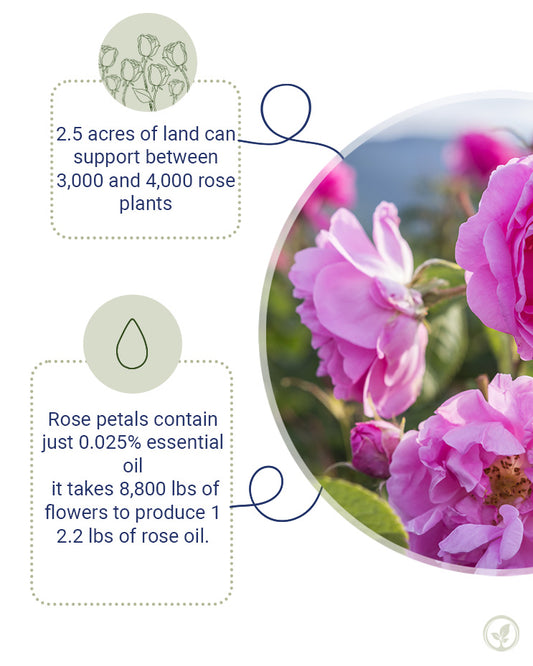
The two roses come first. Rose Blossom, Bulgaria (No. 2575) is Rosa damascena; Rose Blossom, White (No. 2565) is Rosa alba. Their analyses lead with the same compounds, citronellol, geraniol and nerol, with the paraffinic stearoptene that makes rose oil set when cool. The difference between them is olfactory and is best read on strips, side by side, over several hours.
Then method. Chamomile, Blue CO2 (No. 1689) from Serbia and the distilled blue chamomiles of the library are the same species, Matricaria chamomilla. Chamazulene does not exist as such in the flower. It forms from matricin in the heat of distillation. The CO2 extract keeps alpha-bisabolol and farnesene but lacks the chamazulene of a steam-distilled oil. Yarrow, Blue (Wild) (No. 2700) carries chamazulene for the same reason: it forms in the still.
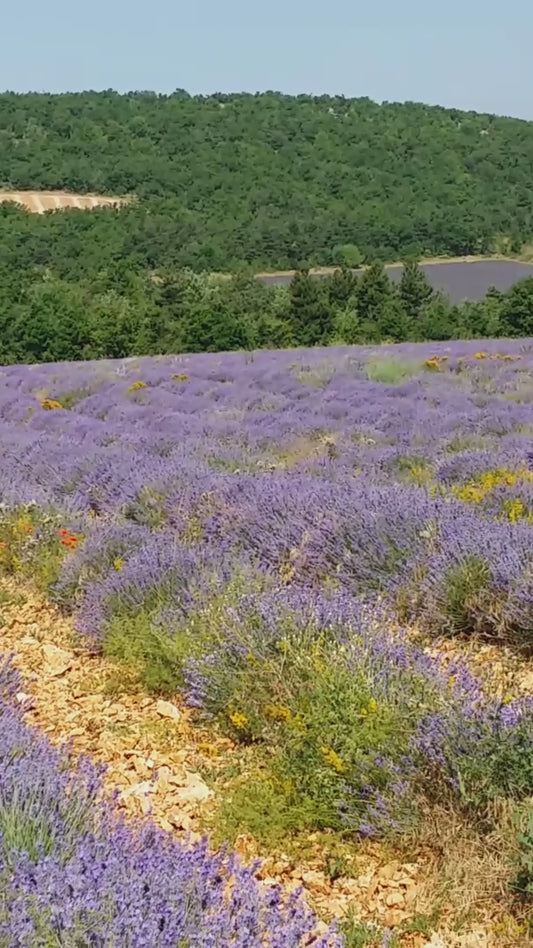
Then plant part. Dill Herb (No. 1320) from Hungary is distilled from the whole plant and carries para-cymene, limonene and dill ether. Dill Seed (No. 1311) from France is led by carvone. One species, two parts, two oils. Lavender Highland, Bulgaria (No. 1907) set against the French highland lavenders makes the same point for origin.
04 · In Practice
Heart notes and herbal blends
The roses are perfumery heart notes and are used in small proportion in skincare formulation and massage blends. Distilled rose congeals at cool room temperature; warming the bottle gently in the hand returns it to liquid. Roman chamomile and the chamomile CO2 suit massage blends, bath preparations and skincare formulation at low dilution.
Melissa is citral-rich and is used at low dilution on skin. Sweet fennel is high in anethole and summer savory is phenolic; both are used sparingly. Hops, lovage and valerian are strong, characterful materials for natural perfumery and olfactory study, effective in very small proportion. The firs and juniper berry suit diffusion and bath preparations. True geranium and the Balkan helichrysum are distinctive middle notes for herbal and chypre-style accords.
Essential oils are for aromatic and topical use. Dilute before applying to skin. Keep out of reach of children.