

Dill Herb (organic)
Dill Herb (organic)
12 in stock
Couldn't load pickup availability
Product No. 1320
Anethum graveolens
| Origin | Hungary |
| Plant part | Plant |
| Cultivation | Wild-crafted organic |
| Certification | DE-ÖKO-007 |
| Extraction | Distilled |
| Main constituents | Paracymene, Limonene, Carvone, 3,9-epoxy-p-menth-1-en |
| Aroma | Earthy, Herbaceous, Sweet |
| Ingredients (INCI) | Anethum Graveolens Oil* |
*Certified organic, DE-ÖKO-007.
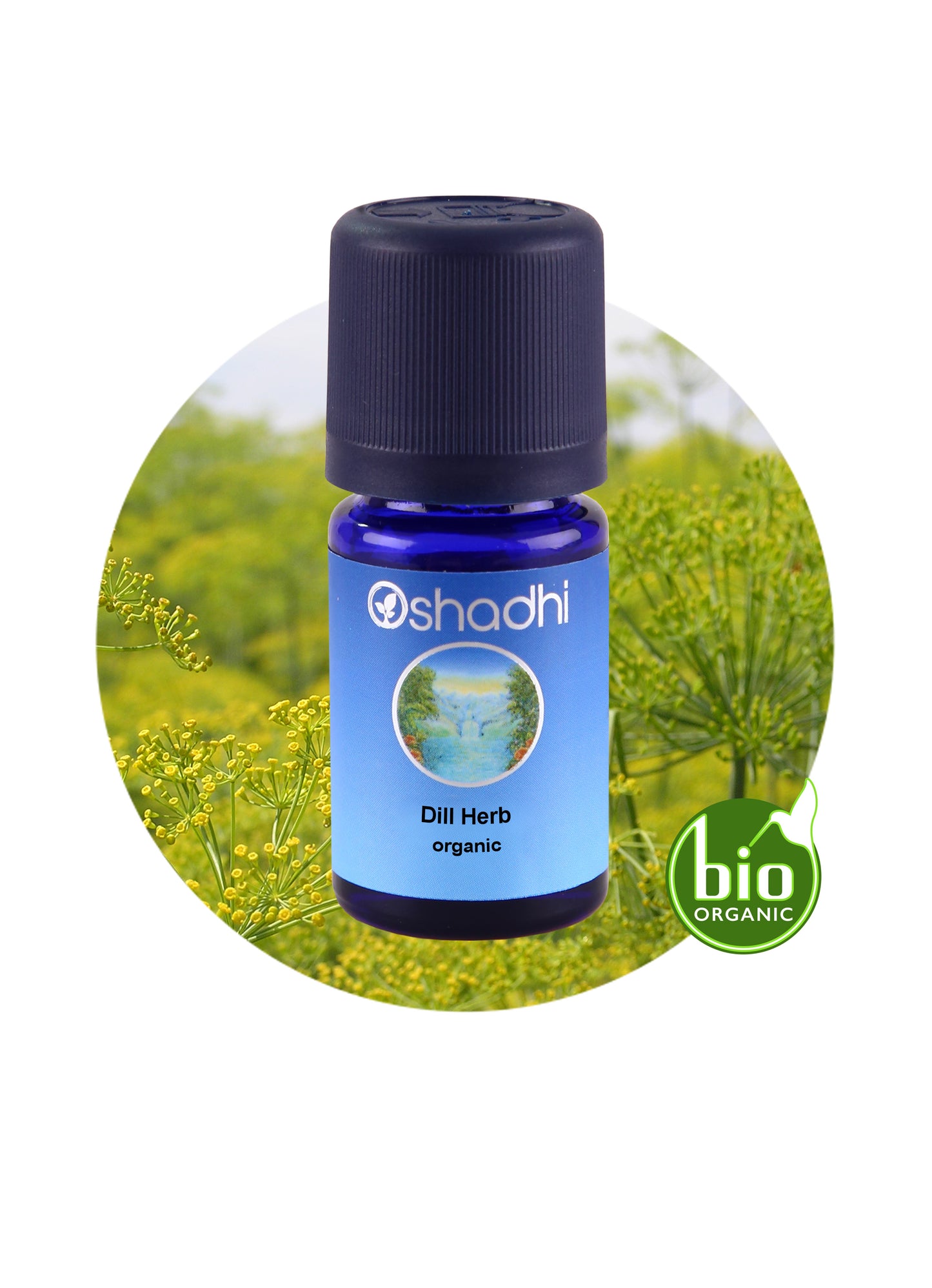
Dill oil is usually seed oil. Herb oil is a separate material. The seed oil is led by carvone and smells of caraway. The herb oil carries dill ether, the compound behind the fresh green note of the cut weed.
01 · Origin
An annual of the carrot family, Apiaceae, with fine feathery leaves and flat umbels of yellow flowers. It has a long culinary history across Europe and Asia. This oil is distilled in Hungary from the whole plant, wild-crafted and certified organic.
02 · Chemistry
Para-cymene and limonene lead. Carvone is present, at a lower level than in seed oil. 3,9-Epoxy-p-menth-1-ene, the dill ether, is the identity marker of the herb.
03 · In Practice
Sweet, fresh and warm, clean and slightly spicy. A top note. Diffusion, massage blends and green accords in natural perfumery. Comparison with Dill Seed (No. 1311) shows how plant part changes chemistry within a single species. Blends with lemon, bergamot, mandarin, coriander, spearmint and caraway.
General information: For external use only. Dilute before applying to skin. Keep away from heat and sunlight. Keep out of reach of children. Avoid contact with eyes and mucous membranes.
How to use Essential Oils
Find out more about how Essential Oils can be used and the different application methods:
https://oshadhi.com/pages/how-to-use-essential-oils