

St. John's Wort (organic)
St. John's Wort (organic)
Low stock: 3 left
Couldn't load pickup availability
Product No. 1670
Hypericum perforatum
| Origin | Bulgaria |
| Plant part | Plant |
| Cultivation | Certified organic |
| Extraction | Distilled |
| Main constituents | Methyl-2-Octane, alpha-Pinene, beta-Pinene, Nonane, Germacrene-D |
| Aroma | Balsamic, Earthy, Herbaceous |
| Ingredients (INCI) | Hypericum Perforatum Oil* |
*Certified organic.
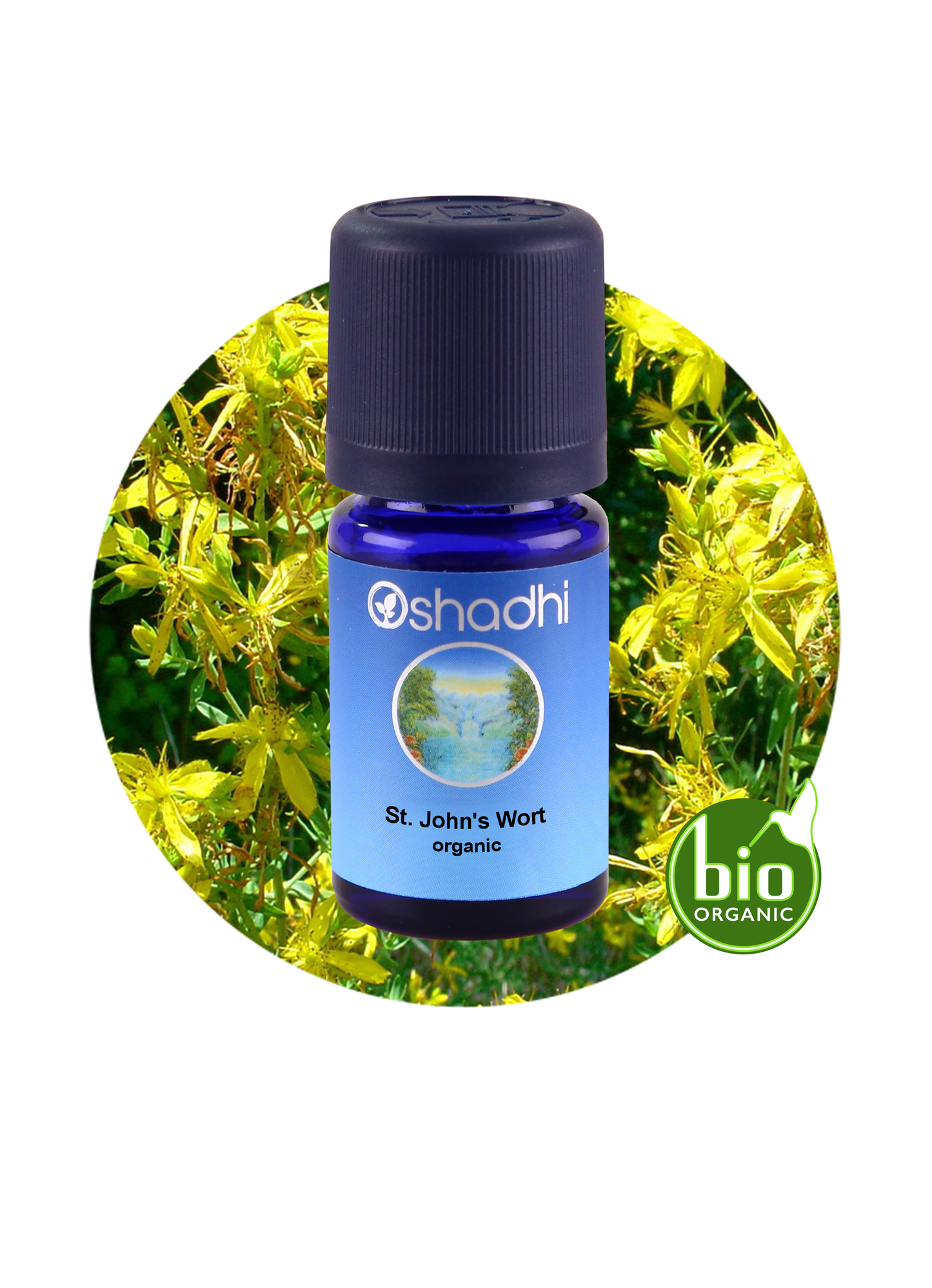
St. John's wort is best known as a red infused oil, made by macerating the flowers in a fixed oil. That red colour comes from hypericin, which is not volatile. The distilled essential oil is a different material entirely: pale, light and built on hydrocarbons.
01 · Origin
Hypericum perforatum is a perennial of open ground across Europe and western Asia, named for the translucent dots visible in its leaves when held to the light. This oil is distilled from the whole flowering plant, grown under certified organic cultivation in Bulgaria.
02 · Chemistry
Aliphatic hydrocarbons lead: 2-methyloctane and nonane. Alpha-pinene and beta-pinene supply the resinous top. Germacrene-D, a sesquiterpene, gives a woody, slightly spicy base. None of the pigments or naphthodianthrones associated with the macerate are present.
03 · In Practice
Fresh, green and resinous, with a dry herbal drydown. A top-to-middle note. Diffusion, massage blends and olfactory study, particularly as a contrast to the macerated oil. Blends with lavender, rosemary, pine, juniper, lemon, clary sage and cypress.
General information: For external use only. Dilute before applying to skin. Keep away from heat and sunlight. Keep out of reach of children. Avoid contact with eyes and mucous membranes.
How to use Essential Oils
Find out more about how Essential Oils can be used and the different application methods:
https://oshadhi.com/pages/how-to-use-essential-oils