

Yarrow, Blue (Wild)
Yarrow, Blue (Wild)
Low stock: 8 left
Sell by Date: March 2029
Couldn't load pickup availability
Product No. 2700
Achillea millefolium
| Origin | Hungary |
| Plant part | Blossom/Plant |
| Cultivation | Wild |
| Extraction | Distilled |
| Main constituents | alpha- & beta-Pinene, Sabinene, 1,8-Cineol, Camphene, Chamazulene, Isoartemisia cetone, Borneone |
| Aroma | Herbaceous, Sweet, Camphoraceous |
| Ingredients (INCI) | Achillea millefolium oil |
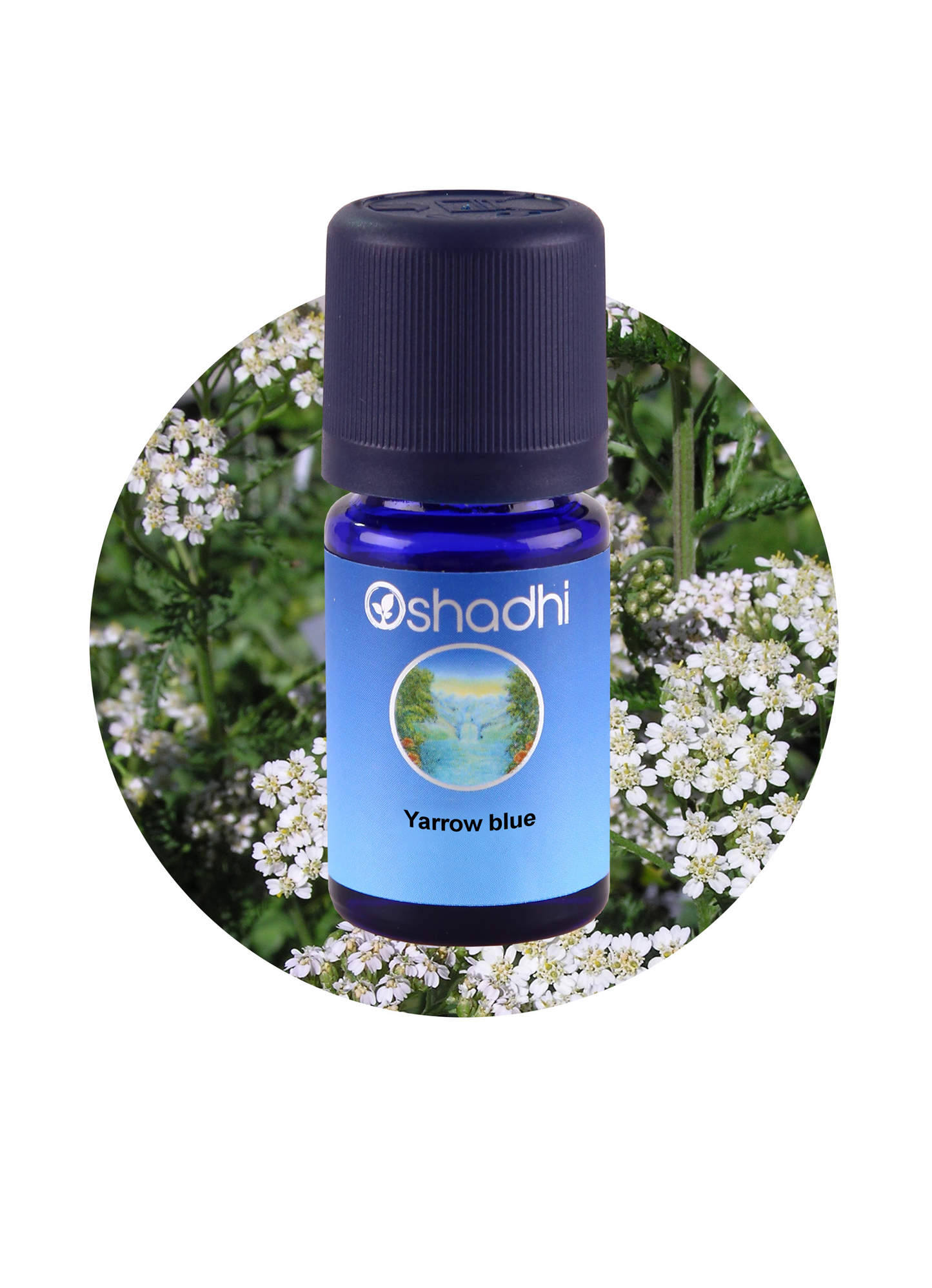
Yarrow flowers are white or pale pink. The blue is not in the plant. Chamazulene forms during steam distillation from sesquiterpene lactone precursors, and only certain yarrow types carry those precursors. Not every yarrow oil is blue, and the colour of an aged oil drifts toward green as chamazulene oxidises.
01 · Origin
Achillea millefolium is a perennial of open meadows across Europe and temperate Asia, in the Asteraceae. This oil is steam-distilled from the blossoms and aerial parts of wild plants in Hungary.
02 · Chemistry
A broad profile. Alpha- and beta-pinene, sabinene, 1,8-cineole and camphene form the monoterpene body. Chamazulene gives the colour. Isoartemisia ketone and borneone, an older name for camphor, add a herbal, camphoraceous sharpness.
03 · In Practice
Herbaceous, camphoraceous and slightly sweet, with a dry, hay-like undertone. A middle note. Massage blends, facial oils and skincare formulation at low concentration. Comparative work with Yarrow blue organic (No. 2705), from Bulgaria, shows variation within one species. Store cool and tightly closed. Blends with lavender, German chamomile, clary sage, rosemary, juniper, cedarwood and vetiver.
General information: For external use only. Dilute before applying to skin. Keep away from heat and sunlight. Keep out of reach of children. Avoid contact with eyes and mucous membranes.
How to use Essential Oils
Find out more about how Essential Oils can be used and the different application methods:
https://oshadhi.com/pages/how-to-use-essential-oils