

Magnolia Blossom
Magnolia Blossom
Low stock: 1 left
Sell by Date: March 2029
Couldn't load pickup availability
Product No. 2000
Magnolia grandiflora
| Origin | China |
| Plant part | Blossoms |
| Cultivation | Conventional |
| Extraction | Distilled |
| Main constituents | Linalool, beta-Elemene, trans-beta-Ocimene, beta-Caryophyllene |
| Aroma | Floral, Fruity |
| Ingredients (INCI) | Magnolia Grandiflora Flower Oil |
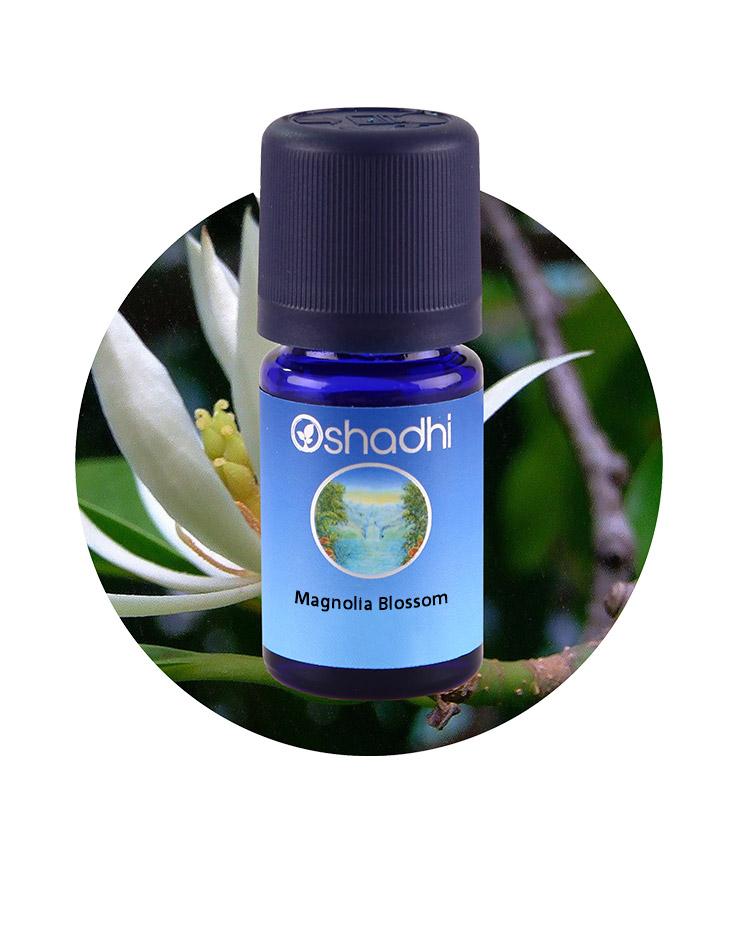
Much of what is sold as magnolia oil is distilled from Michelia alba, the white champaca, now placed in Magnolia as Magnolia × alba. This oil comes from Magnolia grandiflora, the southern magnolia. The two trees are related, but their oils are not the same material.
01 · Origin
A large evergreen tree native to the south-eastern United States, with glossy leaves and broad, cream-white flowers. It is widely planted in China and other warm temperate regions. This oil is distilled in China from the blossoms. Magnolia Leaf (No. 2005), from the same species, gives a greener comparison.
02 · Chemistry
Linalool leads and carries the soft floral character. Beta-elemene and beta-caryophyllene form a sesquiterpene fraction that gives warmth and body. Trans-beta-ocimene adds a fresh, sweet green top.
03 · In Practice
Soft, creamy and floral, with fresh, lemony and green-sweet nuances. A middle note in natural perfumery, used in white-floral and fresh accords. Facial oils, massage blends and diffusion, alone or in floral combinations. Blends with neroli, jasmine, rose, sandalwood, bergamot, ylang ylang and petitgrain.
General information: For external use only. Dilute before applying to skin. Keep away from heat and sunlight. Keep out of reach of children. Avoid contact with eyes and mucous membranes.
How to use Essential Oils
Find out more about how Essential Oils can be used and the different application methods:
https://oshadhi.com/pages/how-to-use-essential-oils