

Lavender, Spike (organic)
Lavender, Spike (organic)
Low stock: 8 left
Couldn't load pickup availability
Product No. 1895
Lavandula latifolia
| Origin | Spain |
| Plant part | Blossom/Plant |
| Cultivation | Certified organic |
| Certification | DE-ÖKO-007 |
| Extraction | Distilled |
| Main constituents | Linalool, 1,8-Cineol, Camphor |
| Aroma | Camphoraceous, Floral, Herbaceous, Sweet |
| Ingredients (INCI) | Lavandula Latifolia Flower Oil* |
*Certified organic, DE-ÖKO-007.
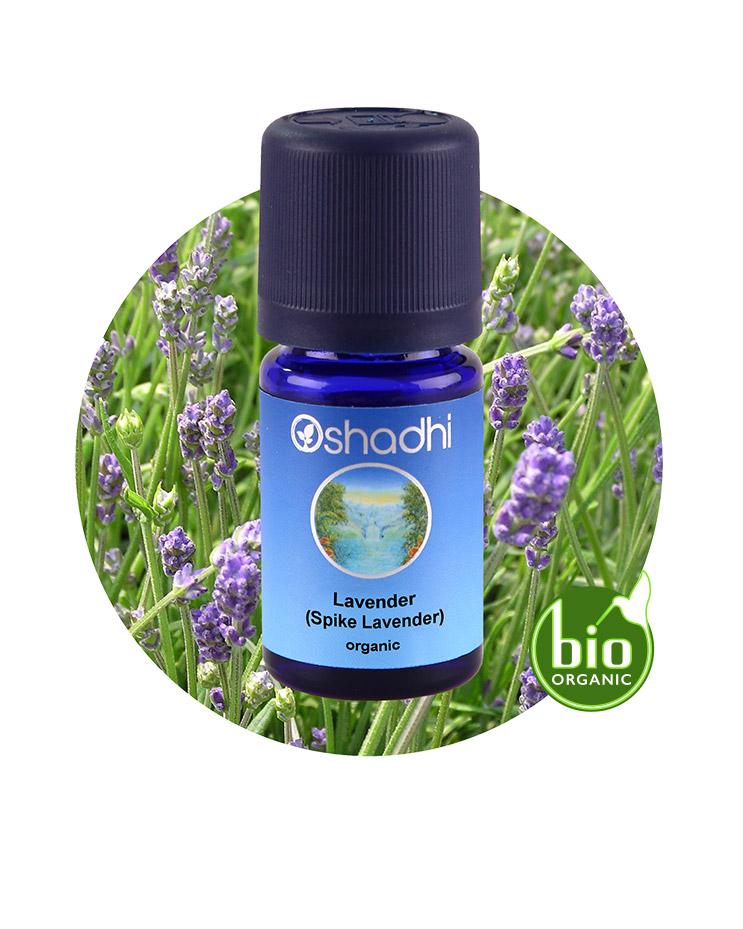
Spike lavender is often taken for a grade of true lavender. It is a separate species, Lavandula latifolia, with a distinct chemistry. It is also unrelated to spikenard, which is Nardostachys jatamansi, a Himalayan valerian relative.
01 · Origin
Lavandula latifolia grows wild on the hot, lower slopes of the western Mediterranean, particularly in Spain. The leaves are broader than those of true lavender, which gives the species its name. This oil is distilled in Spain from the flowering plant of certified organic cultivation (DE-ÖKO-007).
02 · Chemistry
Linalool leads, as in true lavender. 1,8-cineole and camphor are present in far higher proportion, and linalyl acetate is low. The oxide and ketone together give the oil its sharp, penetrating character and separate it clearly from Lavandula angustifolia.
03 · In Practice
Fresh, camphoraceous and herbaceous, with a floral linalool core. A top note. Diffusion, massage blends and bath preparations. Comparison with Lavender Highland (No. 1930) and Lavandin (No. 1870) shows the full span of the genus. Blends with rosemary, eucalyptus, pine, marjoram, cedarwood, lemon and peppermint.
General information: For external use only. Dilute before applying to skin. Keep away from heat and sunlight. Keep out of reach of children. Avoid contact with eyes and mucous membranes.
How to use Essential Oils
Find out more about how Essential Oils can be used and the different application methods:
https://oshadhi.com/pages/how-to-use-essential-oils