


Cinnamon Bark, Madagascar (organic)
Cinnamon Bark, Madagascar (organic)
22 in stock
Couldn't load pickup availability
Product No. 3120
Cinnamomum verum
| Origin | Madagascar |
| Plant part | Bark |
| Cultivation | Wild-crafted organic |
| Certification | DE-ÖKO-007 |
| Extraction | Distilled |
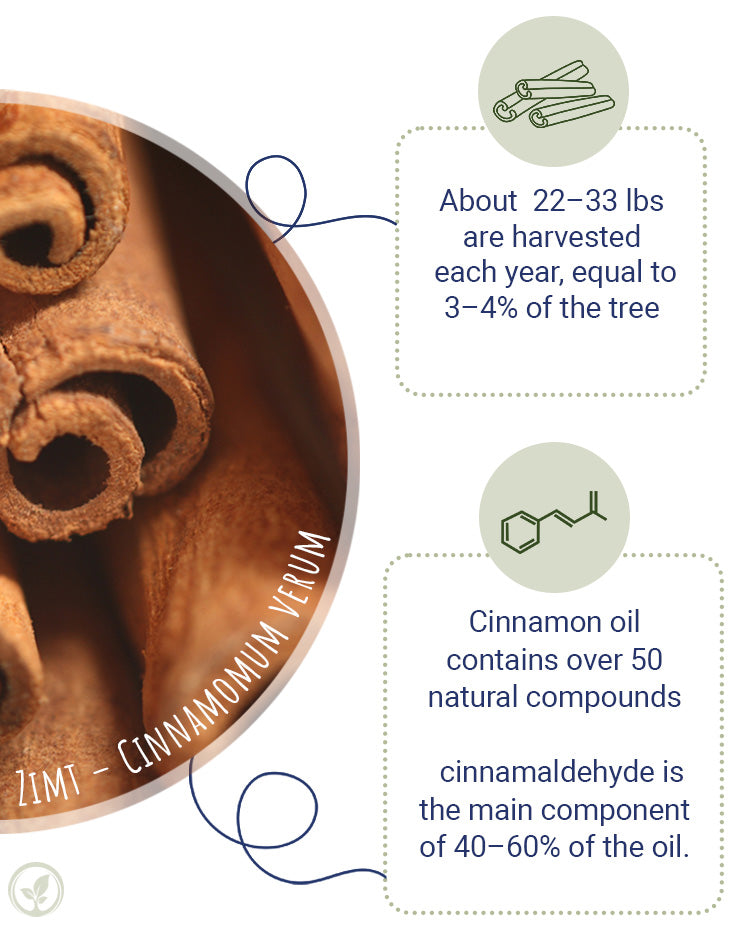
| Main constituents | Cinnamaldehyde, Cinnamyl acetate, Eugenol, beta-Phellandrene, beta-Caryophyllene |
| Aroma | Sweet, Spicy |
| Ingredients (INCI) | Cinnamomum Verum Bark Oil* |
*Certified organic, DE-ÖKO-007.


Cinnamon bark and cinnamon leaf oils are often stocked as alternatives. Leaf oil is dominated by eugenol and smells of clove. Bark oil is dominated by cinnamaldehyde and carries the familiar sweet spice. Cassia, from a separate species, is a third material again.
01 · Origin
Cinnamomum verum, true or Ceylon cinnamon, is a tree of the Lauraceae native to Sri Lanka and now grown across the Indian Ocean. This oil is distilled from the bark of wild-crafted organic trees in Madagascar.
02 · Chemistry
Cinnamaldehyde leads the profile. Cinnamyl acetate and eugenol follow, with beta-phellandrene and beta-caryophyllene in smaller amounts. Cinnamaldehyde is a recognised skin sensitiser, which places strict limits on dermal use. Work alongside Cinnamon Cassia, China (No. 3140) shows the difference between the two species clearly.
03 · In Practice
Warm, sweet and spicy, with a dry woody undertone. A middle note. Diffusion and natural perfumery, where a trace warms an oriental or gourmand accord. Dermal use only at very low concentration and with care. Blends with orange, clove, frankincense, vanilla, ginger, cardamom and benzoin.
General information: For external use only. Dilute before applying to skin. Keep away from heat and sunlight. Keep out of reach of children. Avoid contact with eyes and mucous membranes.
How to use Essential Oils
Find out more about how Essential Oils can be used and the different application methods:
https://oshadhi.com/pages/how-to-use-essential-oils