

Helichrysum Bracteiferum (Immortella)
Helichrysum Bracteiferum (Immortella)
Low stock: 1 left
Couldn't load pickup availability
Product No. 1591
Helichrysum bracteiferum
| Origin | Madagascar |
| Plant part | Blossoms |
| Cultivation | Wild |
| Extraction | Distilled |
| Main constituents | 1,8-Cineol, beta-Pinene, alpha-Humulene, beta-Caryophyllene |
| Aroma | Camphoraceous, Herbaceous, Medicinal, Fresh |
| Ingredients (INCI) | Helichrysum Bracteiferum Flower Oil |
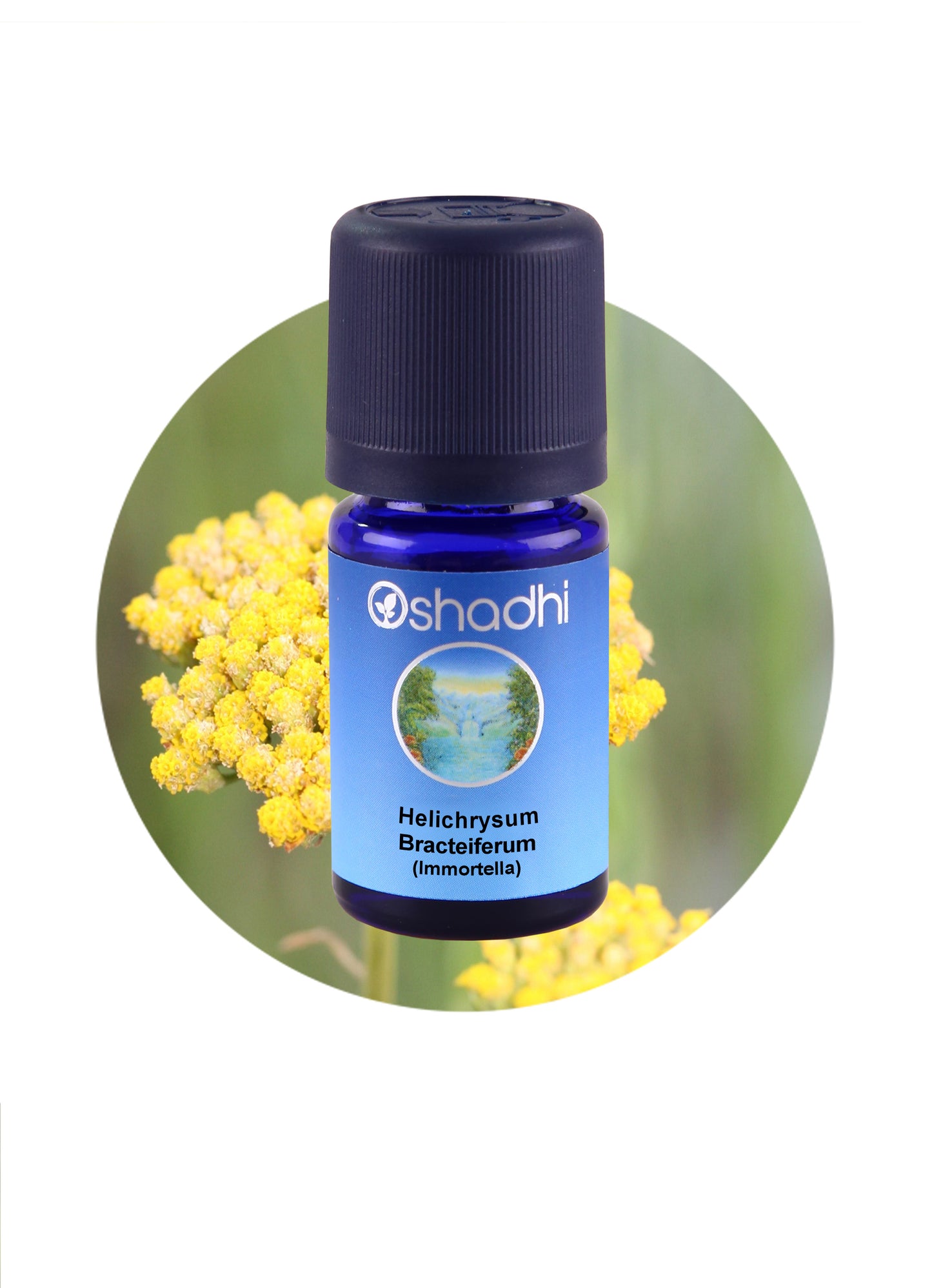
Helichrysum bracteiferum is sold under the same common name as Helichrysum italicum, immortelle, and is regularly assumed to be a substitute for it. This Malagasy species lacks the italidiones that mark italicum and carries little neryl acetate. Its profile is cineole-led.
01 · Origin
A woody shrub of the daisy family, Asteraceae, native to the uplands of Madagascar. This oil is distilled from the blossoms of wild plants. Madagascar also gives Helichrysum gymnocephalum (No. 1593), another cineole-rich species of the genus.
02 · Chemistry
1,8-cineole leads, and beta-pinene follows. Alpha-humulene and beta-caryophyllene form a sesquiterpene fraction that adds dry, woody warmth. Set on a blotter beside Helichrysum Italicum, Superior (No. 1597), the distance between the two species is immediately apparent.
03 · In Practice
Fresh and camphoraceous, with a sweet, herbaceous and faintly honeyed drydown. A top to middle note. Diffusion, massage blends and natural perfumery. Closer in use to the camphoraceous oils than to Mediterranean immortelle. Blends with ravintsara, eucalyptus, lavender, rosemary, frankincense, cypress and black spruce.
General information: For external use only. Dilute before applying to skin. Keep away from heat and sunlight. Keep out of reach of children. Avoid contact with eyes and mucous membranes.
How to use Essential Oils
Find out more about how Essential Oils can be used and the different application methods:
https://oshadhi.com/pages/how-to-use-essential-oils