

Ylang Ylang II (Organic)
Ylang Ylang II (Organic)
12 in stock
Couldn't load pickup availability
Product No. 3027
Cananga odorata
| Origin | Madagascar |
| Plant part | Blossoms |
| Cultivation | Certified organic |
| Extraction | Distilled |
| Main constituents | Germacrene-D, beta-Caryophyllene, Genanyl acetate, Benzyl benzoate, Linalool, trans trans alpha-Farnesene |
| Aroma | Floral, Fruity, Sweet |
| Ingredients (INCI) | Cananga Odorata Flower Oil* |
*Certified organic.
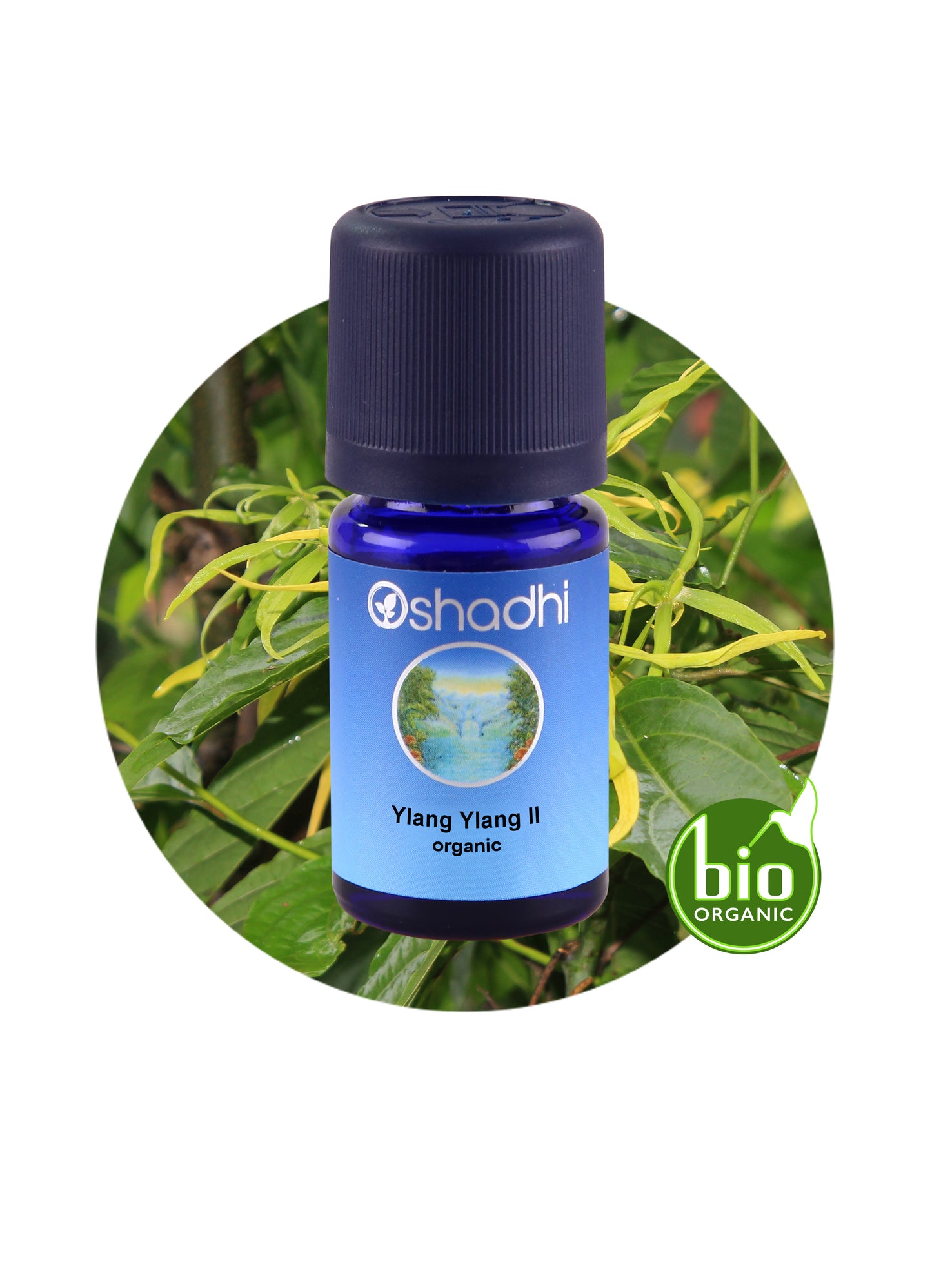
The grades of ylang ylang are often taken as grades of flower. They are fractions of one continuous distillation. Extra is drawn first, then I, II and III. Ylang Ylang II is a later fraction, not a lesser harvest.
01 · Origin
Cananga odorata is a tropical tree of the Annonaceae, native to South-East Asia and long cultivated in Madagascar and the Comoros. This oil is distilled in Madagascar from the blossoms of certified organic trees.
02 · Chemistry
Later fractions carry less of the light esters and ethers that give extra its sharp, sweet top, and more of the heavier sesquiterpenes. Germacrene-D, beta-caryophyllene and trans,trans-alpha-farnesene lead here. Geranyl acetate, benzyl benzoate and linalool keep the floral character.
03 · In Practice
Rich, creamy and floral, softer and woodier than extra, with greater tenacity. A heart to base note in natural perfumery. Massage blends, bath preparations, skincare formulation and diffusion. Comparative work alongside Ylang Ylang extra organic (No. 3041) and Ylang Ylang complete organic (No. 3030) shows the distillation curve in three bottles. Blends with sandalwood, bergamot, jasmine, rose, vetiver, patchouli and orange.
General information: For external use only. Dilute before applying to skin. Keep away from heat and sunlight. Keep out of reach of children. Avoid contact with eyes and mucous membranes.
How to use Essential Oils
Find out more about how Essential Oils can be used and the different application methods:
https://oshadhi.com/pages/how-to-use-essential-oils