

Cape Chamomile / Eriocephalus punctulatus
Cape Chamomile / Eriocephalus punctulatus
Low stock: 5 left
Sell by Date: March 2029
Couldn't load pickup availability
Product No. 1346
Eriocephalus punctulatus
| Origin | South Africa |
| Plant part | Blossom/Plant |
| Cultivation | Wild |
| Extraction | Distilled |
| Main constituents | Isobutyl 2-Methylbutanoate, Isobutyl Isobutanoate, 2-Methyl 2-Methylbutylbutanoate |
| Aroma | Earthy, Floral, Sweet |
| Ingredients (INCI) | Eriocephalus Punctulatus Flower Oil |
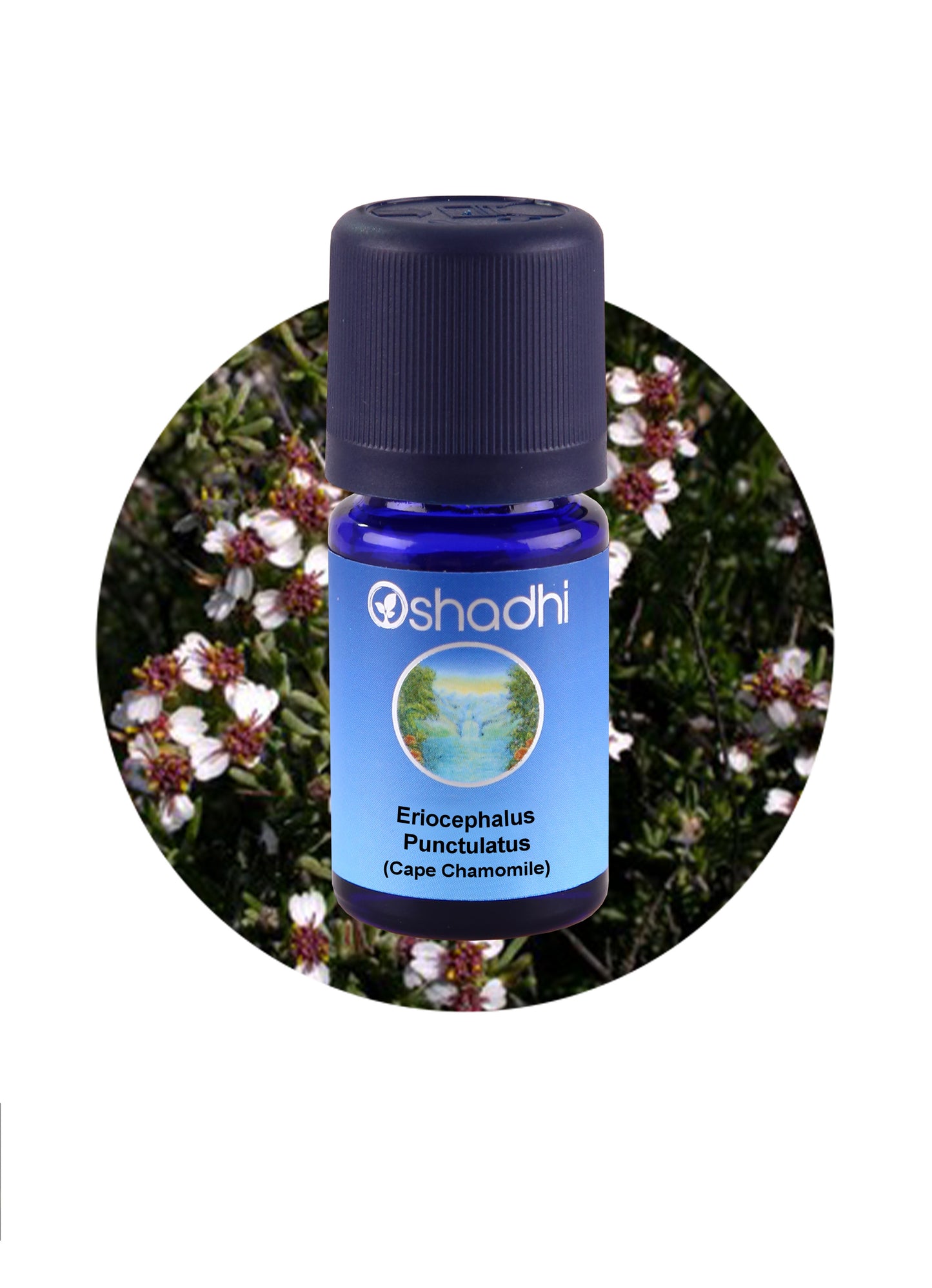
Cape chamomile is a chamomile in name only. It belongs to neither Matricaria nor Chamaemelum, the two genera usually meant. Eriocephalus punctulatus is a South African shrub of the daisy family, and its oil is led by short-chain esters unlike anything in German or Roman chamomile.
01 · Origin
A shrub of the dry western regions of South Africa, with small white flowers and woolly seed heads. This oil is distilled from the flowering plant, gathered wild.
02 · Chemistry
Short-chain esters lead: isobutyl 2-methylbutanoate, isobutyl isobutanoate and 2-methylbutyl 2-methylbutanoate. Esters of this kind are responsible for fruity notes in many ripe fruits. The colour varies between batches, from greenish to bluish, with the proportion of flowers in the still and the conditions of the season.
03 · In Practice
Intensely sweet and fruity, with a boiled-sweet top and a soft herbaceous base. A top-to-middle note. Diffusion, evening blends, massage and skincare formulation at low concentration. Comparison with Chamomile, Wild (No. 1731), another chamomile by name only, is instructive. Blends with lavender, bergamot, mandarin, geranium, neroli, sandalwood and rose.
General information: For external use only. Dilute before applying to skin. Keep away from heat and sunlight. Keep out of reach of children. Avoid contact with eyes and mucous membranes.
How to use Essential Oils
Find out more about how Essential Oils can be used and the different application methods:
https://oshadhi.com/pages/how-to-use-essential-oils