

Cardamom (organic)
Cardamom (organic)
Low stock: 4 left
Sell by Date: March 2029
Couldn't load pickup availability
Product No. 1750
Elettaria cardamomum
| Origin | Sri Lanka |
| Plant part | Fruits/Seeds |
| Cultivation | Certified organic |
| Certification | DE-ÖKO-007 |
| Extraction | Distilled |
| Main constituents | Terpenyl acetate, 1,8-Cineol, Linalyl acetate, Linalool, Sabinene |
| Aroma | Earthy, Herbaceous |
| Ingredients (INCI) | Elettaria Cardamomum Seed Oil* |
*Certified organic, DE-ÖKO-007.
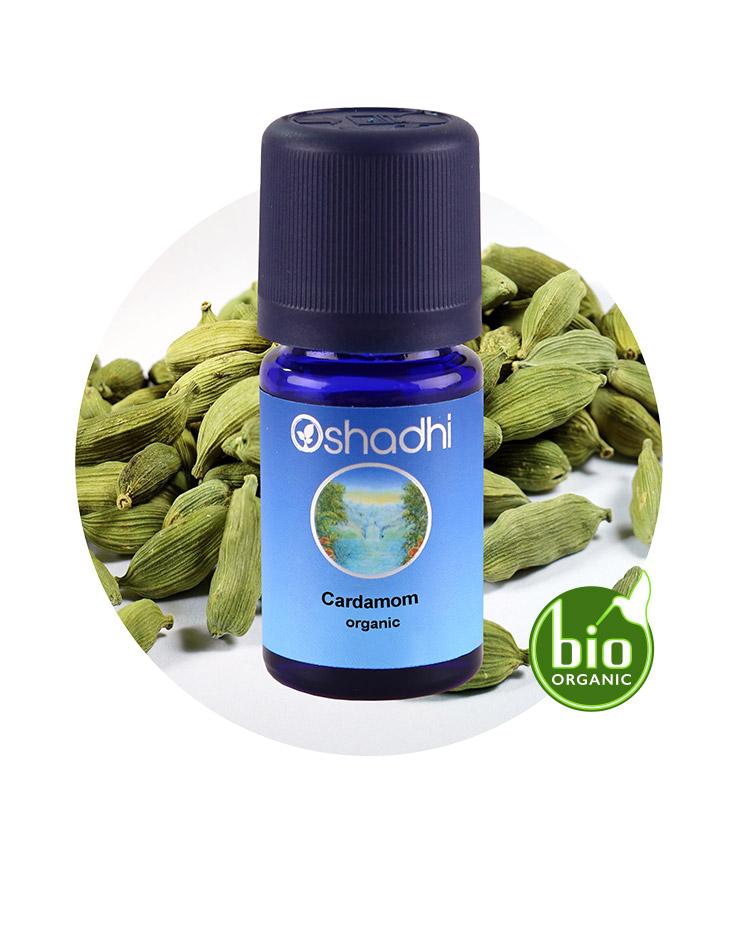
The name cardamom is shared by two unrelated spices. Green cardamom is Elettaria cardamomum. Black cardamom is Amomum subulatum, dried over fire and smoky in character. This oil is green cardamom, distilled from the seeds, with no smoke in its profile.
01 · Origin
Elettaria cardamomum is a perennial of the ginger family, Zingiberaceae, native to the wet forests of southern India and Sri Lanka. The pods form at the base of the plant on creeping stems. This oil is distilled from the fruits and seeds of certified organic cultivation in Sri Lanka (DE-ÖKO-007).
02 · Chemistry
Alpha-terpinyl acetate and 1,8-cineole form the core. Their balance sets the character: more ester gives a sweeter, rounder oil, more oxide a sharper, more camphoraceous one. Linalyl acetate, linalool and sabinene add a floral, faintly citrus lift.
03 · In Practice
Warm, spicy and sweet, with a cool eucalyptus-like opening. A middle note that bridges citrus tops and wood bases. Perfume accords, diffusion, massage and skin formulations. A small proportion lifts a blend without dominating. Blends with orange, bergamot, rose, cinnamon, clove, sandalwood, ginger and cedarwood.
General information: For external use only. Dilute before applying to skin. Keep away from heat and sunlight. Keep out of reach of children. Avoid contact with eyes and mucous membranes.
How to use Essential Oils
Find out more about how Essential Oils can be used and the different application methods:
https://oshadhi.com/pages/how-to-use-essential-oils