

Dill Seed (organic)
Dill Seed (organic)
Low stock: 5 left
Couldn't load pickup availability
Product No. 1311
Anethum graveolens
| Origin | France |
| Plant part | Seeds |
| Cultivation | Certified organic |
| Certification | DE-ÖKO-007 |
| Extraction | Distilled |
| Main constituents | Carvone, Limonene, alpha-Phellandrene, Dill ether, trans-Dihydrocarvone, cis-Dihydrocarvone |
| Aroma | Earthy, Herbaceous, Sweet |
| Ingredients (INCI) | Anethum Graveolens Seed Oil* |
*Certified organic, DE-ÖKO-007.
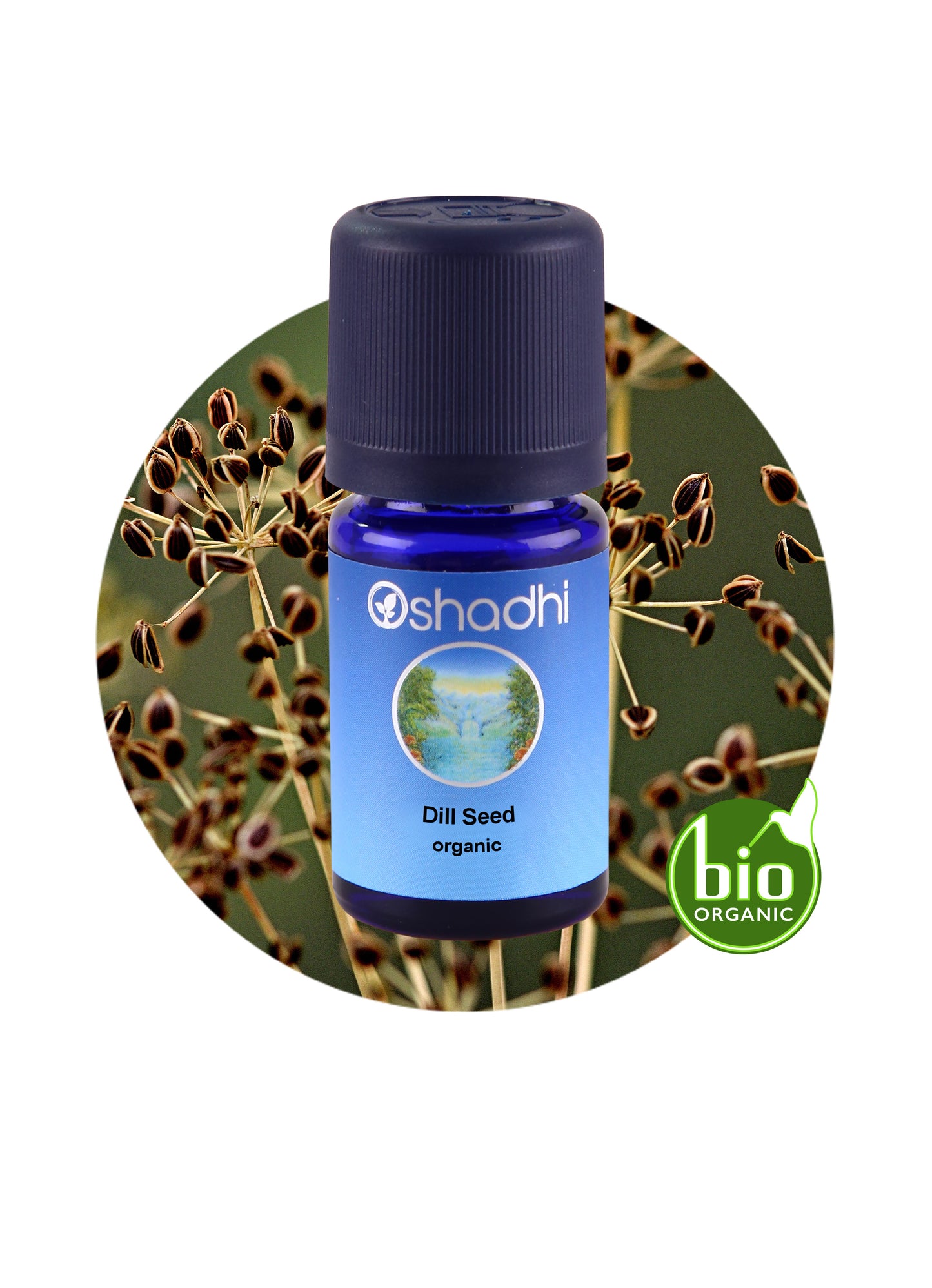
Dill seed oil and dill herb oil come from one plant and are different materials. The seed oil is led by carvone, the same enantiomer that dominates caraway. Dill Herb (No. 1320), distilled from the green plant, is led by para-cymene and limonene and carries the fresh dill note of the leaf.
01 · Origin
An annual of the carrot family, Apiaceae, native to south-western Asia and grown across Europe for leaf and seed. This oil is distilled from the seeds, certified organic in France.
02 · Chemistry
Carvone leads, with limonene the second major component. Alpha-phellandrene and dill ether bring the herbaceous freshness that separates it from caraway. Trans- and cis-dihydrocarvone are present in smaller proportion.
03 · In Practice
Warm, sweet and spicy, with a caraway-like body and a light herbal top. A top-to-middle note. Diffusion, massage blends and natural perfumery, where it adds a culinary spice accent. Blends with orange, mandarin, lemon, bergamot, coriander seed, nutmeg and spearmint.
General information: For external use only. Dilute before applying to skin. Keep away from heat and sunlight. Keep out of reach of children. Avoid contact with eyes and mucous membranes.
How to use Essential Oils
Find out more about how Essential Oils can be used and the different application methods:
https://oshadhi.com/pages/how-to-use-essential-oils