

Ginger (organic)
Ginger (organic)
Low stock: 3 left
Sell by Date: March 2029
Couldn't load pickup availability
Product No. 1615
Zingiber officinale
| Origin | Sri Lanka |
| Plant part | Rhizome |
| Cultivation | Certified organic |
| Certification | DE-ÖKO-007 |
| Extraction | Distilled |
| Main constituents | alpha-Zingiberene, ar-Curcumene, beta-Sesquiphellandrene, Bisabolene |
| Aroma | Earthy, Spicy |
| Ingredients (INCI) | Zingiber Officinale Root Oil* |
*Certified organic, DE-ÖKO-007.
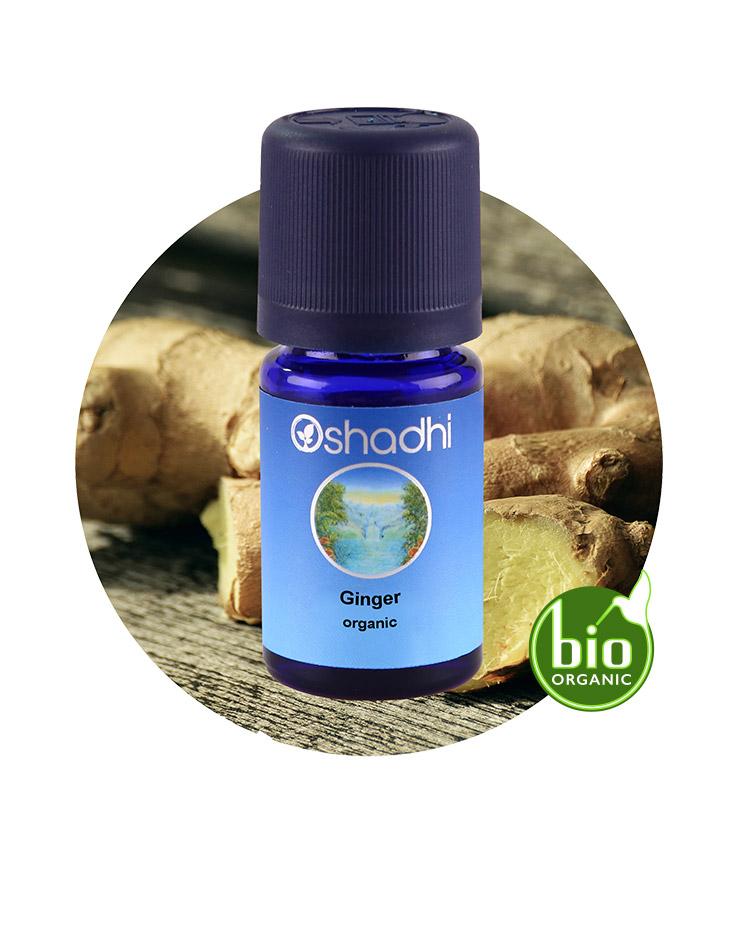
Ginger oil lacks the heat of the spice. The pungency of the rhizome comes from gingerols and shogaols, which are not volatile enough to pass over in distillation. What reaches the oil is aroma: warm, woody and lemony, without the bite.
01 · Origin
Zingiber officinale is a herbaceous perennial of the Zingiberaceae, of South or Southeast Asian origin and known only in cultivation. This oil is distilled in Sri Lanka from dried rhizome of certified organic cultivation. Dried and fresh rhizome give different oils; the dried is the warmer and woodier of the two.
02 · Chemistry
Alpha-zingiberene leads the profile, a sesquiterpene that is the signature of ginger oil. Ar-curcumene, beta-sesquiphellandrene and bisabolene follow. The sesquiterpene structure gives the oil more tenacity than its bright opening suggests.
03 · In Practice
Warm, spicy and woody, with a citrus edge at the top and an earthy dry-down. A middle note. Massage blends, bath preparations, diffusion and natural perfumery, where it lifts citrus and wood accords. Used at low concentration. Blends with orange, lemon, cardamom, frankincense, sandalwood, vetiver and black pepper.
General information: For external use only. Dilute before applying to skin. Keep away from heat and sunlight. Keep out of reach of children. Avoid contact with eyes and mucous membranes.
How to use Essential Oils
Find out more about how Essential Oils can be used and the different application methods:
https://oshadhi.com/pages/how-to-use-essential-oils