

Bay St. Thomas
Bay St. Thomas
Low stock: 5 left
Couldn't load pickup availability
Product No. 1145
Pimenta racemosa
| Origin | Indonesia |
| Plant part | Leaves |
| Cultivation | Wild |
| Extraction | Distilled |
| Main constituents | Eugenol, Myrcene, 2-Propenyl-4-Phenol, Limonene, Linalool, Methyl eugenol |
| Aroma | Earthy, Medicinal, Spicy |
| Ingredients (INCI) | Pimenta Racemosa Leaf Oil |
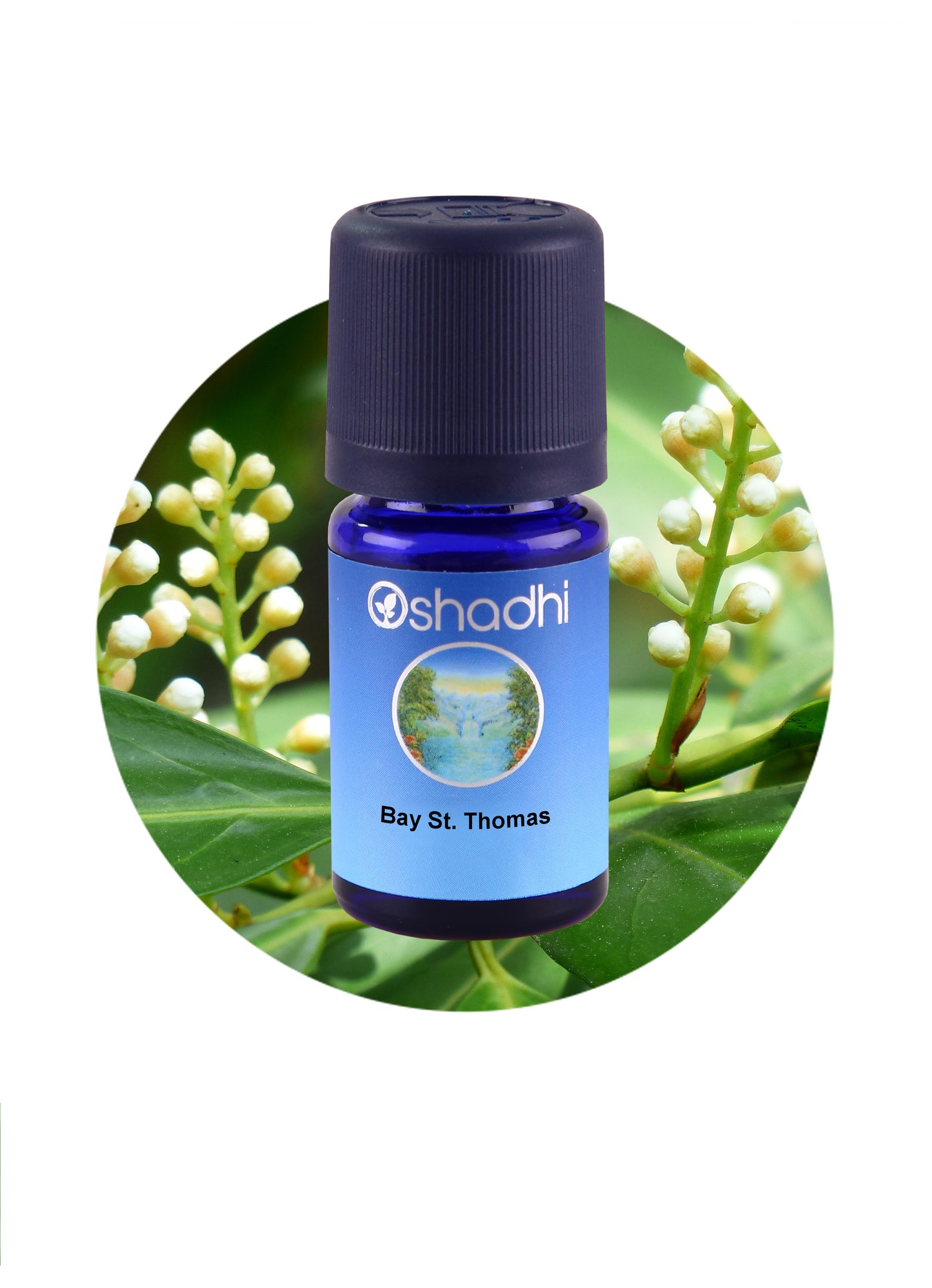
Bay St. Thomas is unrelated to bay laurel. Laurus nobilis belongs to the Lauraceae. Pimenta racemosa is a member of the Myrtaceae and shares its genus with allspice. The two oils differ in chemistry and in use.
01 · Origin
West Indian bay is a small evergreen tree of the Caribbean. Its leaves were once macerated in rum on St Thomas, in the Virgin Islands, to make bay rum, which gave the oil its trade name. This oil is distilled from the leaves of wild trees in Indonesia.
02 · Chemistry
A phenol-rich oil. Eugenol dominates, with chavicol (2-propenyl-4-phenol) and methyl eugenol alongside. Myrcene, limonene and linalool form a lighter terpene top. Phenols of this kind call for low concentration in any skin preparation.
03 · In Practice
Warm, spicy and clove-like, with a fresh, slightly citrus lift. A middle note, long associated with colognes, hair tonics and aftershaves. Natural perfumery, massage blends at low concentration and room scenting. Comparative work with Allspice Berry (No. 2503) shows the eugenol thread within Pimenta. Blends with orange, bergamot, lavender, rosemary, cedarwood, ylang ylang and black pepper.
General information: For external use only. Dilute before applying to skin. Keep away from heat and sunlight. Keep out of reach of children. Avoid contact with eyes and mucous membranes.
How to use Essential Oils
Find out more about how Essential Oils can be used and the different application methods:
https://oshadhi.com/pages/how-to-use-essential-oils