

Sugandha Kokila (organic)
Sugandha Kokila (organic)
Low stock: 9 left
Couldn't load pickup availability
Product No. 2736
Cinnamomum glaucescens
| Origin | Nepal |
| Plant part | Berries |
| Cultivation | Certified organic |
| Extraction | Distilled |
| Main constituents | 1,8-Cineol, Methyl cinnamate, Paracymene, alpha-Terpineol, alpha- & beta-Pinene, Myristicine |
| Aroma | Camphoraceous, Floral |
| Ingredients (INCI) | Cinnamomum Glaucescens Fruit Oil* |
*Certified organic.
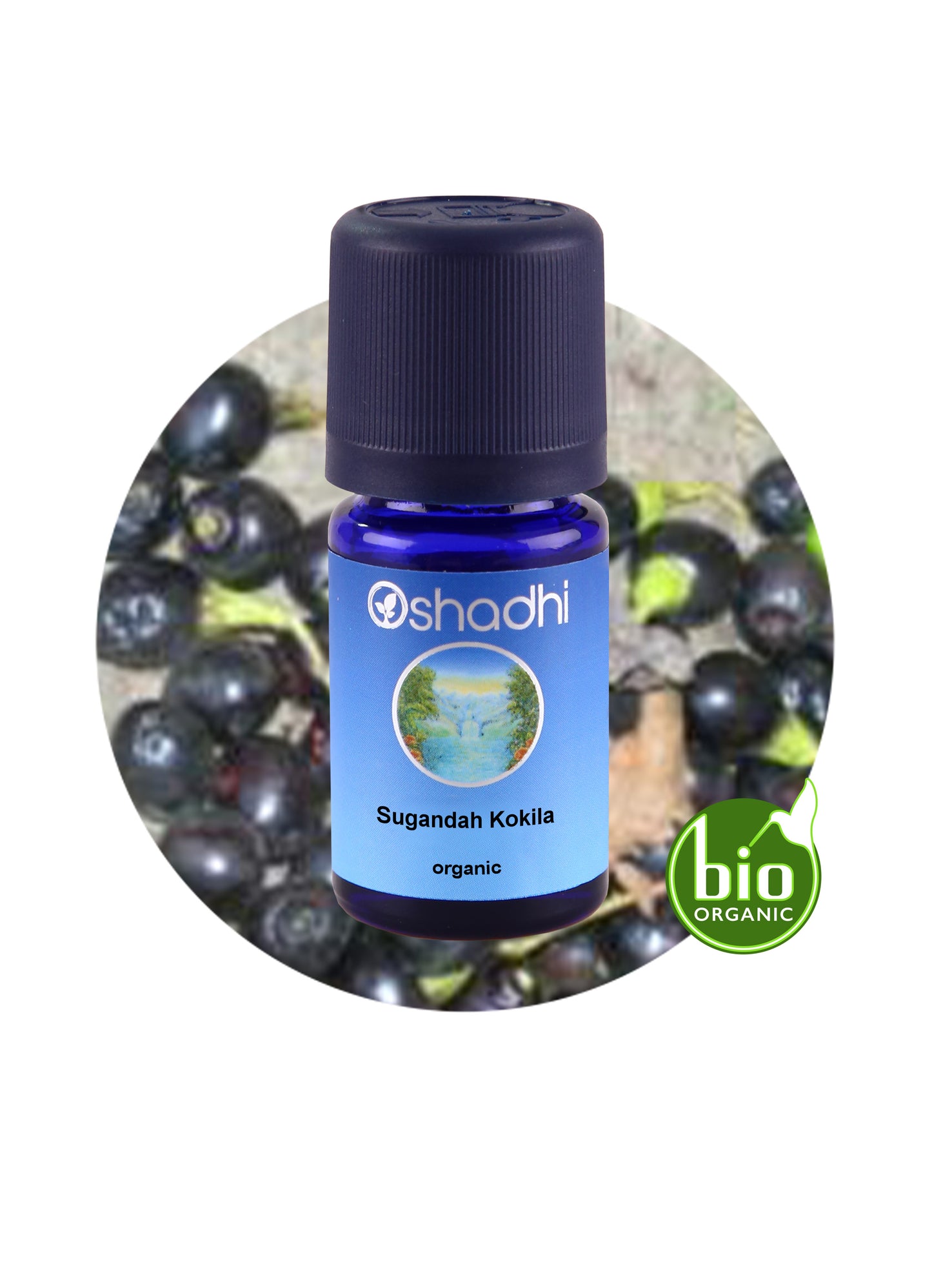
Sugandha kokila is a cinnamon relative that smells nothing like cinnamon. Cinnamomum glaucescens produces no significant cinnamaldehyde. Its oil is cineole-led, with a fruity balsamic note from methyl cinnamate.
01 · Origin
A tree of the laurel family, Lauraceae, growing in the hills of Nepal and northern India. The oil is distilled from the berries. This material comes from certified organic sources in Nepal, where the berries are collected after ripening and dried before distillation.
02 · Chemistry
The oxide 1,8-cineole is the main constituent. Methyl cinnamate gives the characteristic sweet, fruity, balsamic tone. Para-cymene, alpha-terpineol and alpha- and beta-pinene complete the monoterpene picture. Myristicin, the phenylpropanoid also found in nutmeg, is present in small amounts.
03 · In Practice
Fresh, camphoraceous and spicy, with a warm, fruity balsamic undertone that sets it apart from other cineole oils. A top-to-middle note. Diffusion, massage blends and meditation practice. Natural perfumers use it as a spicy lift. Blends with cardamom, frankincense, ginger, sandalwood, lemon, cinnamon leaf and black pepper.
General information: For external use only. Dilute before applying to skin. Keep away from heat and sunlight. Keep out of reach of children. Avoid contact with eyes and mucous membranes.
How to use Essential Oils
Find out more about how Essential Oils can be used and the different application methods:
https://oshadhi.com/pages/how-to-use-essential-oils