

Thyme, Field (organic)
Thyme, Field (organic)
11 in stock
Couldn't load pickup availability
Product No. 2810
Thymus serpyllum
| Origin | Turkey |
| Plant part | Blossom/Plant |
| Cultivation | Wild-crafted organic |
| Extraction | Distilled |
| Main constituents | Carvacrol, Linalool, Paracymene, gamma-Terpinene, Thymol |
| Aroma | Herbaceous, Spicy |
| Ingredients (INCI) | Thymus Serpyllum Flower Oil* |
*Certified organic.
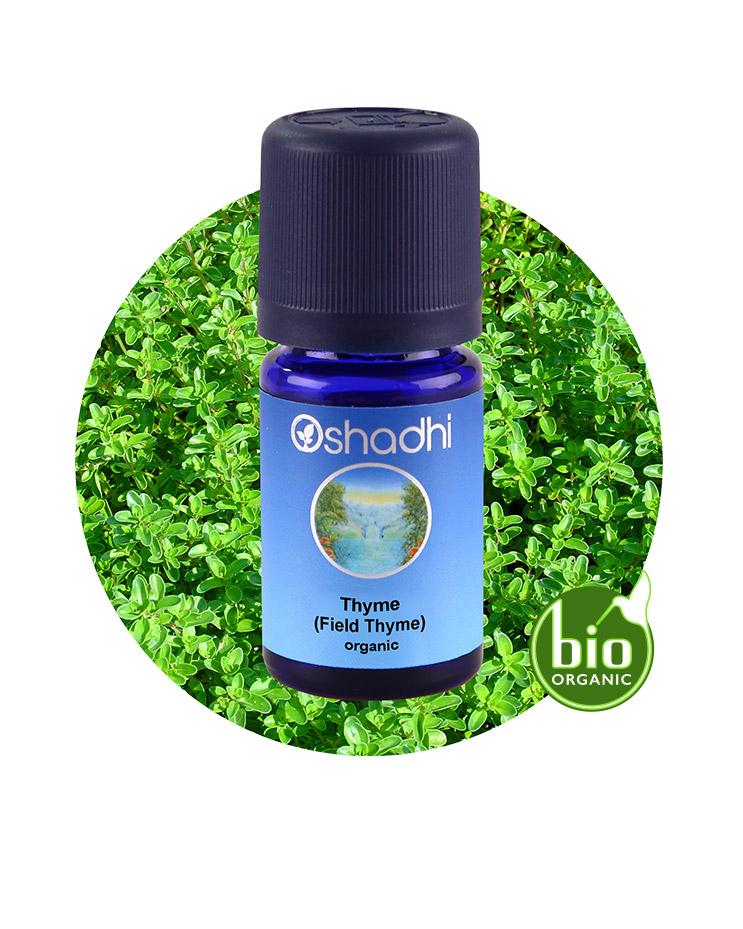
With thyme, chemotype matters more than species. Thymus serpyllum, like Thymus vulgaris, can produce oils led by carvacrol, thymol, linalool or other compounds depending on population. The botanical name alone does not predict the aroma or the strength of the oil.
01 · Origin
Thymus serpyllum, field or creeping thyme, is a low, mat-forming Lamiaceae of dry, open ground. This oil is distilled from the flowering plant, wild-crafted in Turkey under organic certification.
02 · Chemistry
The phenol carvacrol is the principal constituent. Linalool is present in useful proportion and rounds the phenolic edge. Para-cymene and gamma-terpinene, the biosynthetic precursors of the phenols, follow, with thymol in smaller amounts. The phenol content places it among the oils used at very low dilution.
03 · In Practice
Warm, herbaceous and spicy, with a phenolic sharpness softened by a floral note. A middle note. Small amounts in diffusion; massage only at high dilution. Comparison with Thyme, Thymol (No. 2830), Thyme mild, Linalool (No. 2850) and Thyme, Carvacrol (No. 2811) maps the chemotypes across the genus. Blends with rosemary, lemon, lavender, pine, bergamot, oregano and marjoram.
General information: For external use only. Dilute before applying to skin. Keep away from heat and sunlight. Keep out of reach of children. Avoid contact with eyes and mucous membranes.
How to use Essential Oils
Find out more about how Essential Oils can be used and the different application methods:
https://oshadhi.com/pages/how-to-use-essential-oils