

Thyme (Carvacrol) organic
Thyme (Carvacrol) organic
12 in stock
Couldn't load pickup availability
Product No. 2811
Thymus vulgaris carvacroliferum
| Origin | France |
| Plant part | Blossom/Plant |
| Cultivation | Certified organic |
| Certification | DE-ÖKO-007 |
| Extraction | Distilled |
| Main constituents | Carvacrol, Linalol, Para-cymene, Gamma-terpinene, Thymol |
| Aroma | Camphoraceous, Herbaceous, Medicinal, Fresh |
| Ingredients (INCI) | Thymus Vulgaris Flower Oil* |
*Certified organic, DE-ÖKO-007.
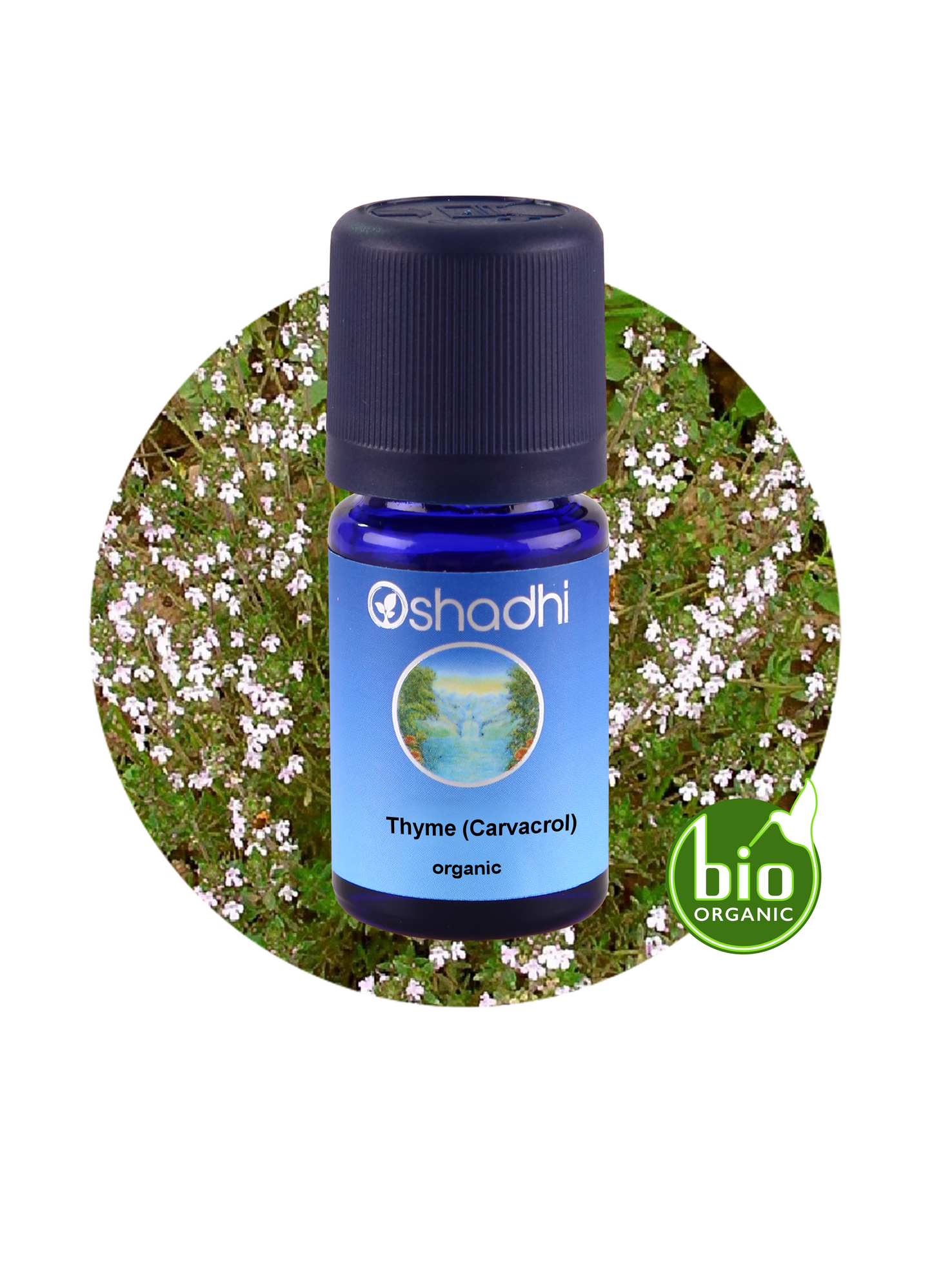
Thymus vulgaris is a single species with several chemotypes. Plants that look identical produce oils led by thymol, carvacrol, linalool, geraniol or thujanol. The word thyme on a label says little until the chemotype is named.
01 · Origin
A low woody shrub of the western Mediterranean garrigue. This oil is distilled from the flowering plant of the carvacrol chemotype, certified organic in France.
02 · Chemistry
Carvacrol, a phenol, leads. Linalool, para-cymene and gamma-terpinene follow, and thymol is present in smaller proportion. Gamma-terpinene is the precursor from which the plant builds its phenols. Phenol-led oils are among the most demanding on the skin and are used at high dilution.
03 · In Practice
Hot, spicy and herbaceous, with an oregano-like intensity. A top-to-middle note. Diffusion and dilute massage blends. For gentler work Thyme mild (No. 2850) and for direct comparison Thyme (Borneol) (No. 2885) show how far the genus ranges. Blends with rosemary, lemon, lavender, pine, eucalyptus, bergamot and marjoram.
General information: For external use only. Dilute before applying to skin. Keep away from heat and sunlight. Keep out of reach of children. Avoid contact with eyes and mucous membranes.
How to use Essential Oils
Find out more about how Essential Oils can be used and the different application methods:
https://oshadhi.com/pages/how-to-use-essential-oils