

Spruce (Excelsa Spruce) organic
Spruce (Excelsa Spruce) organic
Low stock: 3 left
Couldn't load pickup availability
Product No. 1470
Picea abies
| Origin | Italy |
| Plant part | Needles/Twigs |
| Cultivation | Wild-crafted organic |
| Certification | DE-ÖKO-007 |
| Extraction | Distilled |
| Main constituents | Limonene, alpha- & beta-Pinene, Camphene, Bornyl acetate |
| Aroma | Coniferous, Fresh, Woody |
| Ingredients (INCI) | Picea Abies Leaf Oil* |
*Certified organic, DE-ÖKO-007.
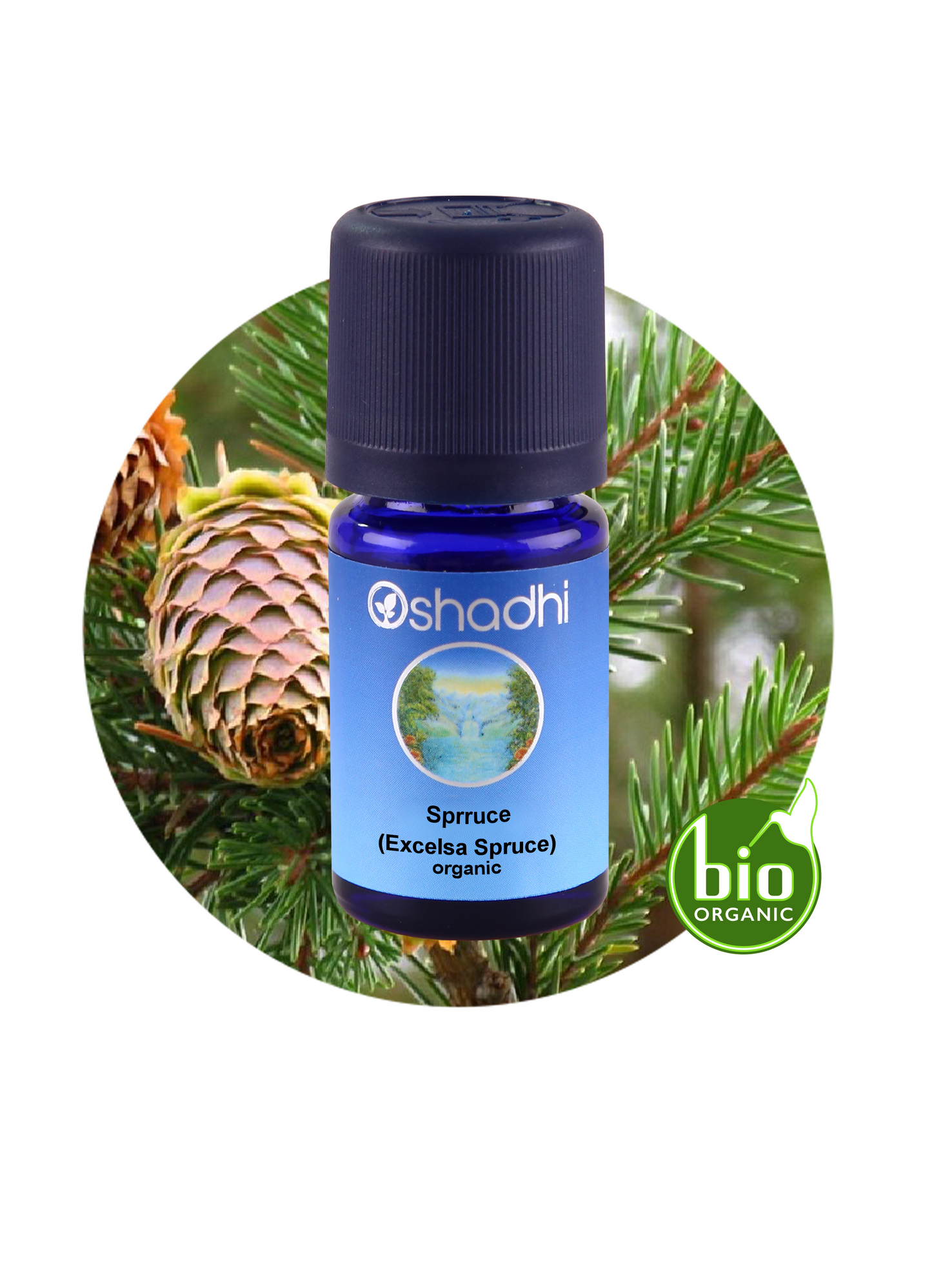
Picea excelsa and Picea abies are listed as if they were two trees. They are one. Excelsa is the older botanical name for Norway spruce, still current in the trade. The oil is the common spruce of the European forest.
01 · Origin
A tall conifer of the pine family, native from the Alps and Carpathians to Scandinavia. This oil is distilled in Italy from the needles and twigs of wild-crafted trees, certified organic.
02 · Chemistry
A monoterpene oil. Limonene, alpha- and beta-pinene and camphene form the bulk. Bornyl acetate is the ester that matters: it supplies the sweet, balsamic note that separates a good spruce from a flat, turpentine-like one.
03 · In Practice
Clean, green and resinous, with a soft balsamic tail. A top to middle note. Diffusion, sauna and bath preparations, massage blends and forest accords in natural perfumery. Sets well beside Spruce, Black (No. 1465) for a study of how one genus varies across continents. Blends with fir, pine, juniper, lemon, cedarwood, lavender and frankincense.
General information: For external use only. Dilute before applying to skin. Keep away from heat and sunlight. Keep out of reach of children. Avoid contact with eyes and mucous membranes.
How to use Essential Oils
Find out more about how Essential Oils can be used and the different application methods:
https://oshadhi.com/pages/how-to-use-essential-oils