

Santolina (organic)
Santolina (organic)
Low stock: 6 left
Couldn't load pickup availability
Product No. 1550
Santolina chamaecyparissus
| Origin | Spain |
| Plant part | Plant |
| Cultivation | Certified organic |
| Extraction | Distilled |
| Main constituents | Artemisia cetone, beta-Phellandrene, Myrcene, Sabinene, beta-Pinene |
| Aroma | Herbaceous, Sweet, Spicy, Fresh |
| Ingredients (INCI) | Santolina Chamaecyparissus Oil* |
*Certified organic.
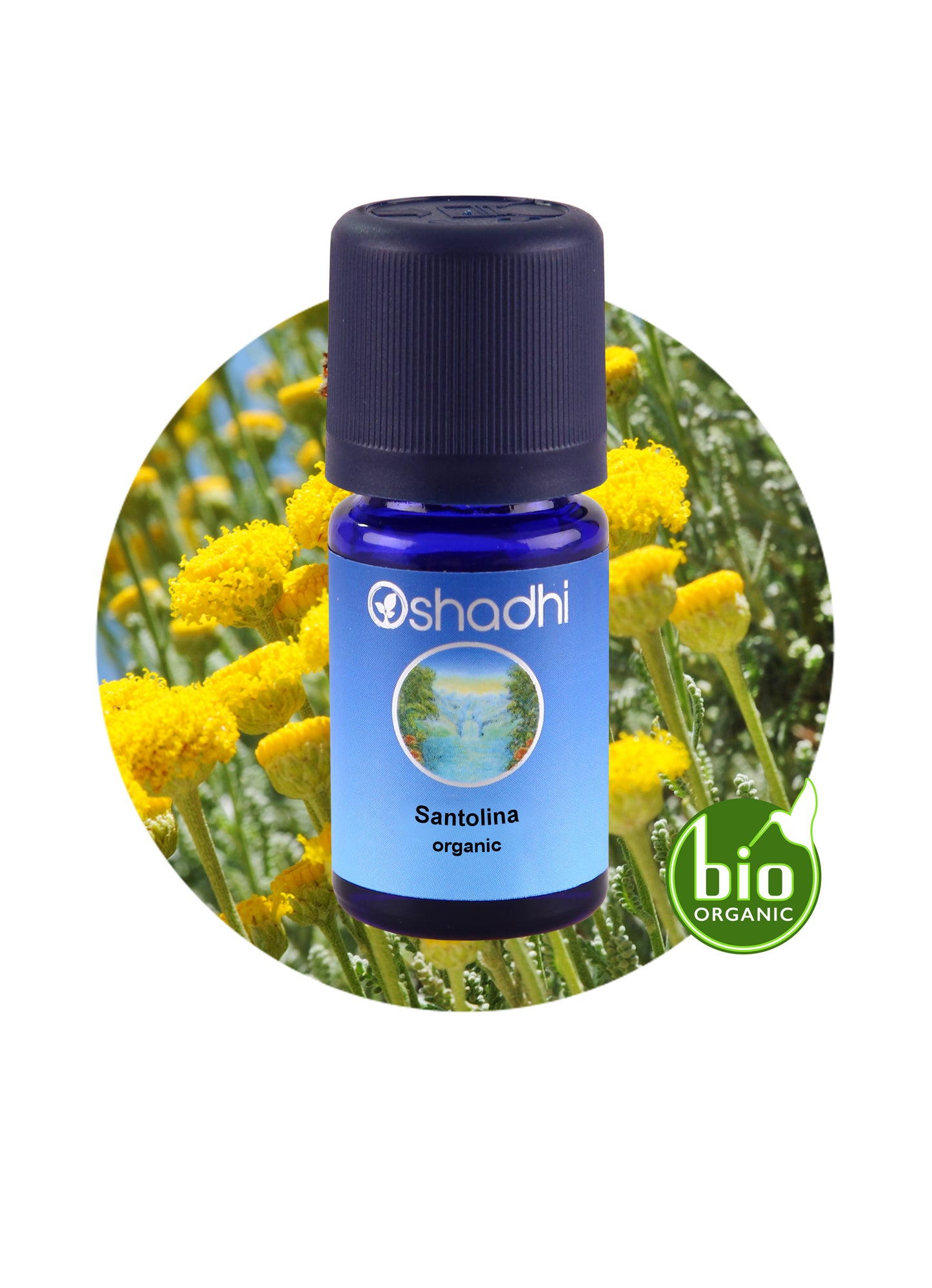
Santolina is sold as cotton lavender, a gardener's name for its grey, felted foliage. Santolina chamaecyparissus belongs to the daisy family, Asteraceae, and its oil is led by a ketone, not the linalool and linalyl acetate of Lavandula.
01 · Origin
A small evergreen shrub of the western Mediterranean, with silver-grey foliage and yellow button flowers. It has long been clipped for low hedges in knot gardens. This oil is distilled from the whole plant, certified organic in Spain.
02 · Chemistry
Artemisia ketone leads. Beta-phellandrene, myrcene, sabinene and beta-pinene make up the monoterpene fraction. Ketone-led oils call for careful handling and low concentration.
03 · In Practice
Sharp, herbaceous and bitter-sweet, with a camphoraceous top and a dry, slightly fruity base. A middle note. Natural perfumery and olfactory study, and room blends where a wild Mediterranean herb accent is wanted. Blends with lavender, rosemary, cypress, juniper, lemon, sage and pine.
General information: For external use only. Dilute before applying to skin. Keep away from heat and sunlight. Keep out of reach of children. Avoid contact with eyes and mucous membranes.
How to use Essential Oils
Find out more about how Essential Oils can be used and the different application methods:
https://oshadhi.com/pages/how-to-use-essential-oils