

Sandalwood, Australian (organic)
Sandalwood, Australian (organic)
Low stock: 3 left
Couldn't load pickup availability
Product No. 2684
Santalum spicatum
| Origin | Australia |
| Plant part | Wood |
| Cultivation | Wild-crafted organic |
| Extraction | Distilled |
| Main constituents | alpha-Santalol, cis-beta-Santalol, cis-Nuciferol, cis-beta-Curcumene-12-ol, epi-alpha-Bisabolol |
| Aroma | Balsamic, Earthy, Woody |
| Ingredients (INCI) | Santalum Spicatum Wood Oil* |
*Certified organic.
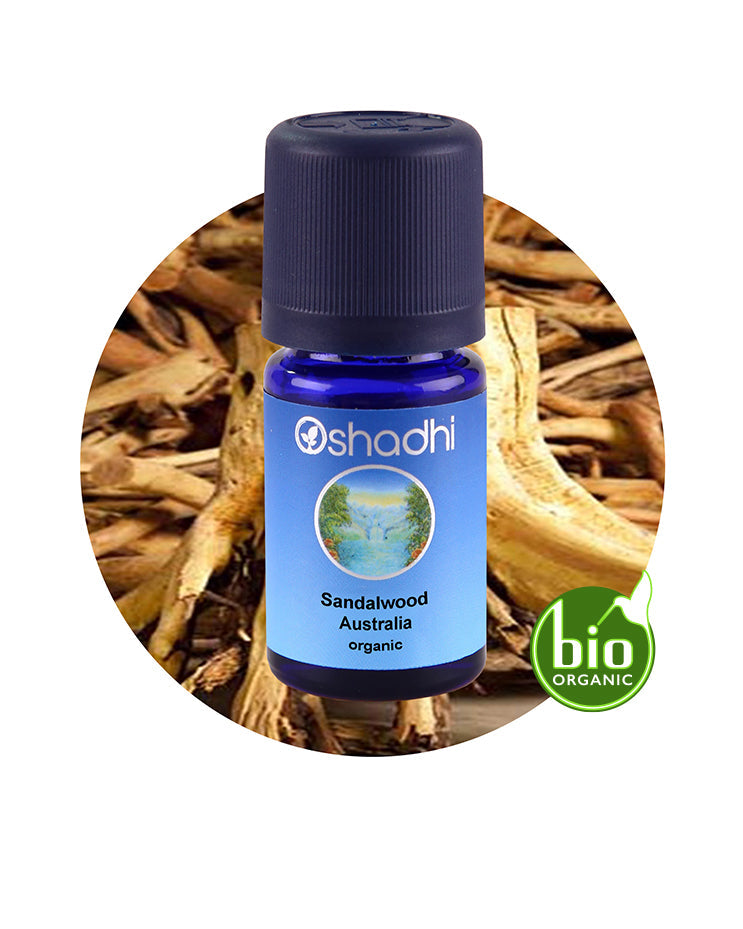
Australian sandalwood is often presented as a stand-in for Indian sandalwood. It is a separate species. Santalum spicatum carries the same santalol family of alcohols in a different balance, and its profile is drier and greener at the opening as a result.
01 · Origin
A small, slow-growing tree native to the semi-arid south-west of Western Australia. Like all sandalwoods it is a root hemiparasite, drawing part of its water and nutrients from neighbouring host plants. This oil is distilled from wild-crafted wood under organic certification.
02 · Chemistry
Alpha-santalol and cis-beta-santalol lead. Cis-nuciferol and cis-beta-curcumen-12-ol follow, with epi-alpha-bisabolol. These sesquiterpene alcohols are heavy and slow to evaporate, which gives the oil its value as a fixative.
03 · In Practice
Soft, woody and slightly green, with a dry resinous opening and a creamy dry-down. A base note. Natural perfumery, massage blends, skincare formulation and meditation practice. Sandalwood, Pacific (No. 2682) offers a rounder, creamier comparison. Blends with rose, frankincense, vetiver, jasmine, cedarwood, patchouli and bergamot.
General information: For external use only. Dilute before applying to skin. Keep away from heat and sunlight. Keep out of reach of children. Avoid contact with eyes and mucous membranes.
How to use Essential Oils
Find out more about how Essential Oils can be used and the different application methods:
https://oshadhi.com/pages/how-to-use-essential-oils