

Rosewood
Rosewood
Low stock: 4 left
Couldn't load pickup availability
Product No. 2580
Aniba rosaeodora
| Origin | Peru |
| Plant part | Wood |
| Cultivation | Conventional |
| Extraction | Distilled |
| Main constituents | Linalool, alpha-Terpineol, Geraniol, 1,8-Cineol, Linalool oxide, Limonene, Benzyl benzoate |
| Aroma | Floral, Fruity, Sweet, Woody |
| Ingredients (INCI) | Aniba Rosaeodora Wood Oil |
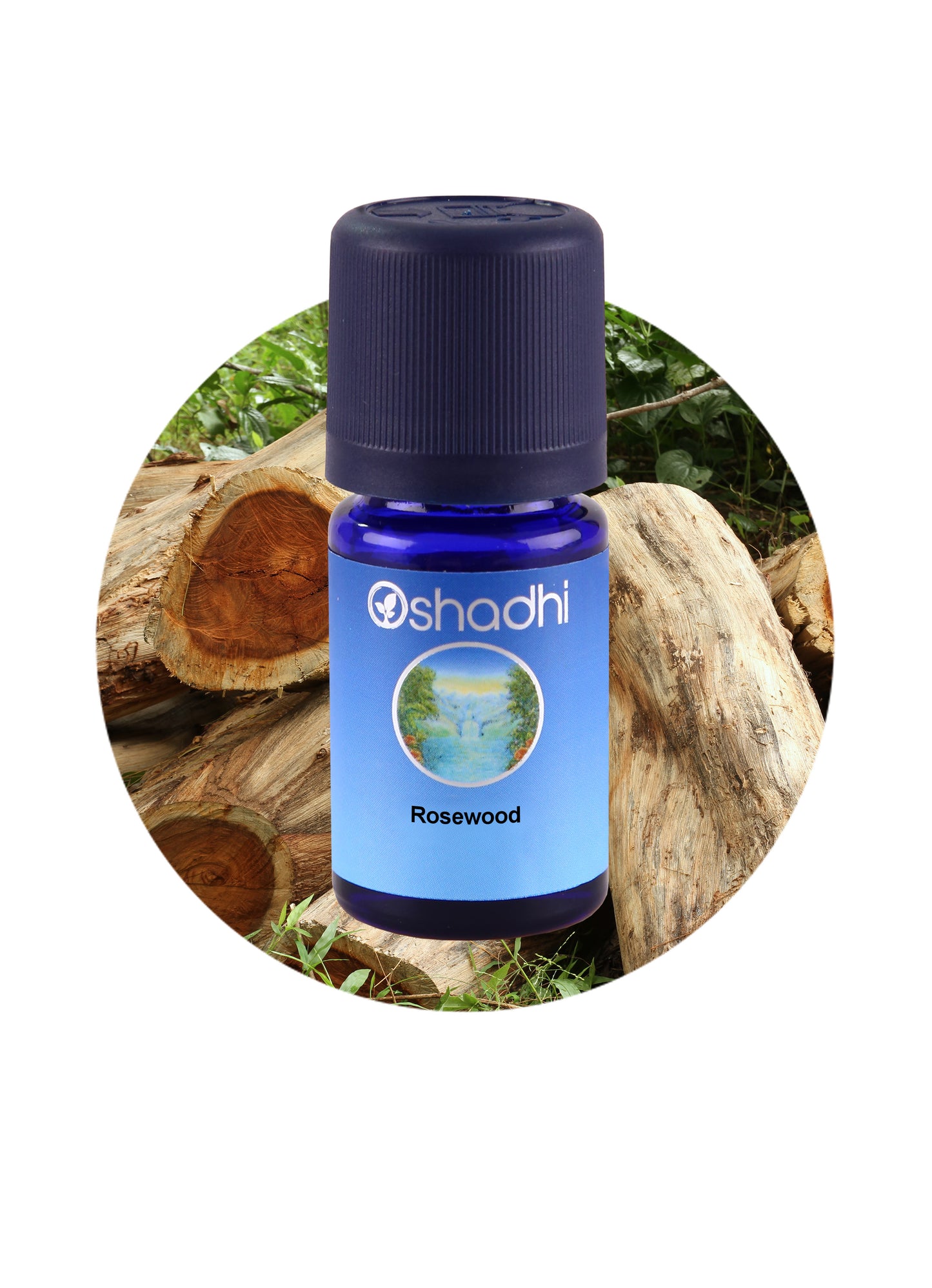
Rosewood oil has no connection to the rosewood timbers of furniture making, which belong to the genus Dalbergia. Aniba rosaeodora is an Amazonian tree of the laurel family, Lauraceae. The name refers to the faintly rose-like scent of its wood.
01 · Origin
Heavy exploitation for perfumery reduced wild populations severely, and the species is now listed under CITES. International trade in its oil requires a CITES certificate, which this oil carries. It is distilled in Peru from the wood.
02 · Chemistry
Linalool forms the great majority of the oil. Alpha-terpineol, geraniol and 1,8-cineole follow, with linalool oxide, limonene and benzyl benzoate in small part. The geraniol contributes the rosy facet behind the name.
03 · In Practice
Soft, woody and floral, with a light spicy sweetness. A middle note that rounds the edges of a blend. Massage blends, skincare formulation, diffusion and natural perfumery. Howood (No. 1570), also linalool-rich, is the usual comparison for practitioners weighing sourcing. Blends with rose, neroli, sandalwood, geranium, bergamot, frankincense and ylang ylang.
General information: For external use only. Dilute before applying to skin. Keep away from heat and sunlight. Keep out of reach of children. Avoid contact with eyes and mucous membranes.
How to use Essential Oils
Find out more about how Essential Oils can be used and the different application methods:
https://oshadhi.com/pages/how-to-use-essential-oils