

Rosemary, Verbenone (organic)
Rosemary, Verbenone (organic)
Low stock: 4 left
Sell by Date: March 2029
Couldn't load pickup availability
Product No. 2620
Rosmarinus officinalis
| Origin | France |
| Plant part | Blossom/Plant |
| Cultivation | Wild-crafted organic |
| Certification | DE-ÖKO-007 |
| Extraction | Distilled |
| Main constituents | alpha-Pinene, Bornyl acetate, Camphene, Camphor,Verbenone, Borneol |
| Aroma | Camphoraceous, Herbaceous, Spicy |
| Ingredients (INCI) | Rosmarinus Officinalis Leaf Oil* |
*Certified organic, DE-ÖKO-007.
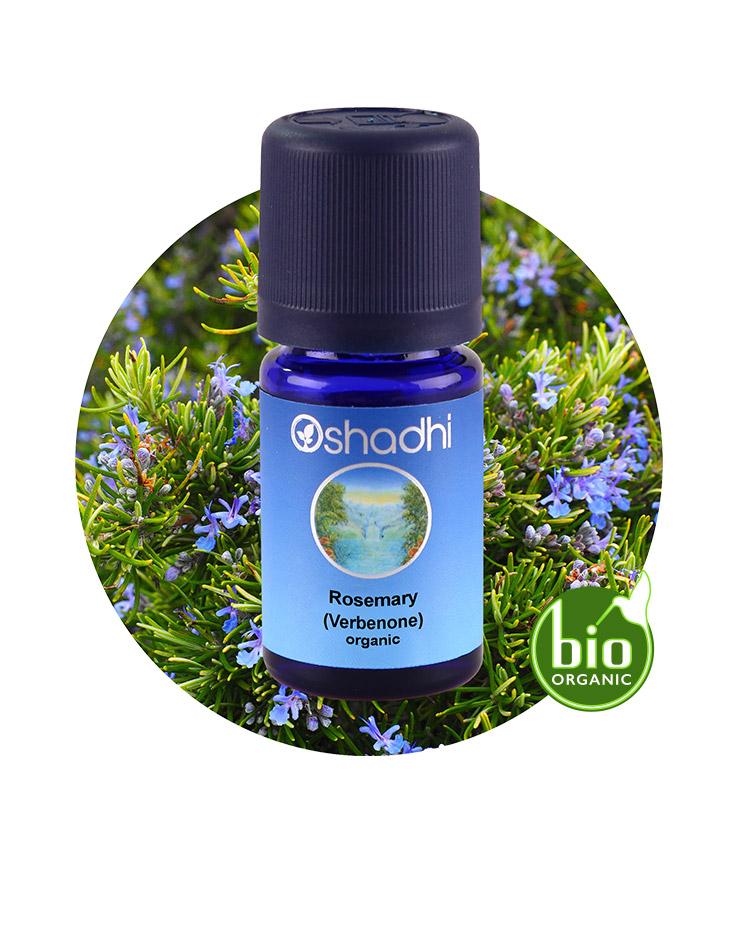
Rosemary is one species with several distinct chemotypes. The verbenone, cineole and camphor types share a botanical name and differ widely in character. For rosemary, the chemotype on the label tells more than the species.
01 · Origin
Rosmarinus officinalis is an evergreen shrub of the mint family, Lamiaceae, native to the Mediterranean. The verbenone chemotype is associated with the garrigue of southern France and Corsica. This oil is distilled in France from wild-crafted organic flowering plants.
02 · Chemistry
Alpha-pinene leads, with bornyl acetate and camphene. Camphor is present alongside verbenone, the ketone that defines the type, and borneol. The ester and ketone balance gives a softer, greener profile than the cineole chemotype.
03 · In Practice
Fresh, herbaceous and green, less sharp than other rosemaries. Used at low concentration given the ketone content. Skincare formulation, massage blends and diffusion. For chemotype study: Rosemary, Cineol (No. 2591) and Rosemary, Borneone (No. 2610). Blends with lavender, lemon, petitgrain, peppermint, cedarwood, thyme and frankincense.
General information: For external use only. Dilute before applying to skin. Keep away from heat and sunlight. Keep out of reach of children. Avoid contact with eyes and mucous membranes.
How to use Essential Oils
Find out more about how Essential Oils can be used and the different application methods:
https://oshadhi.com/pages/how-to-use-essential-oils