

Petitgrain Mandarin
Petitgrain Mandarin
Low stock: 5 left
Sell by Date: March 2027
Couldn't load pickup availability
Product No. 2479
Citrus reticulata
| Origin | Egypt |
| Plant part | Leaves |
| Cultivation | Conventional |
| Extraction | Distilled |
| Main constituents | Methyl-N-methylanthranilate, gamma-Terpinene, Limonene, alpha-Pinene |
| Aroma | Citrus, Herbaceous, Sweet |
| Ingredients (INCI) | Citrus Nobilis Peel Oil |
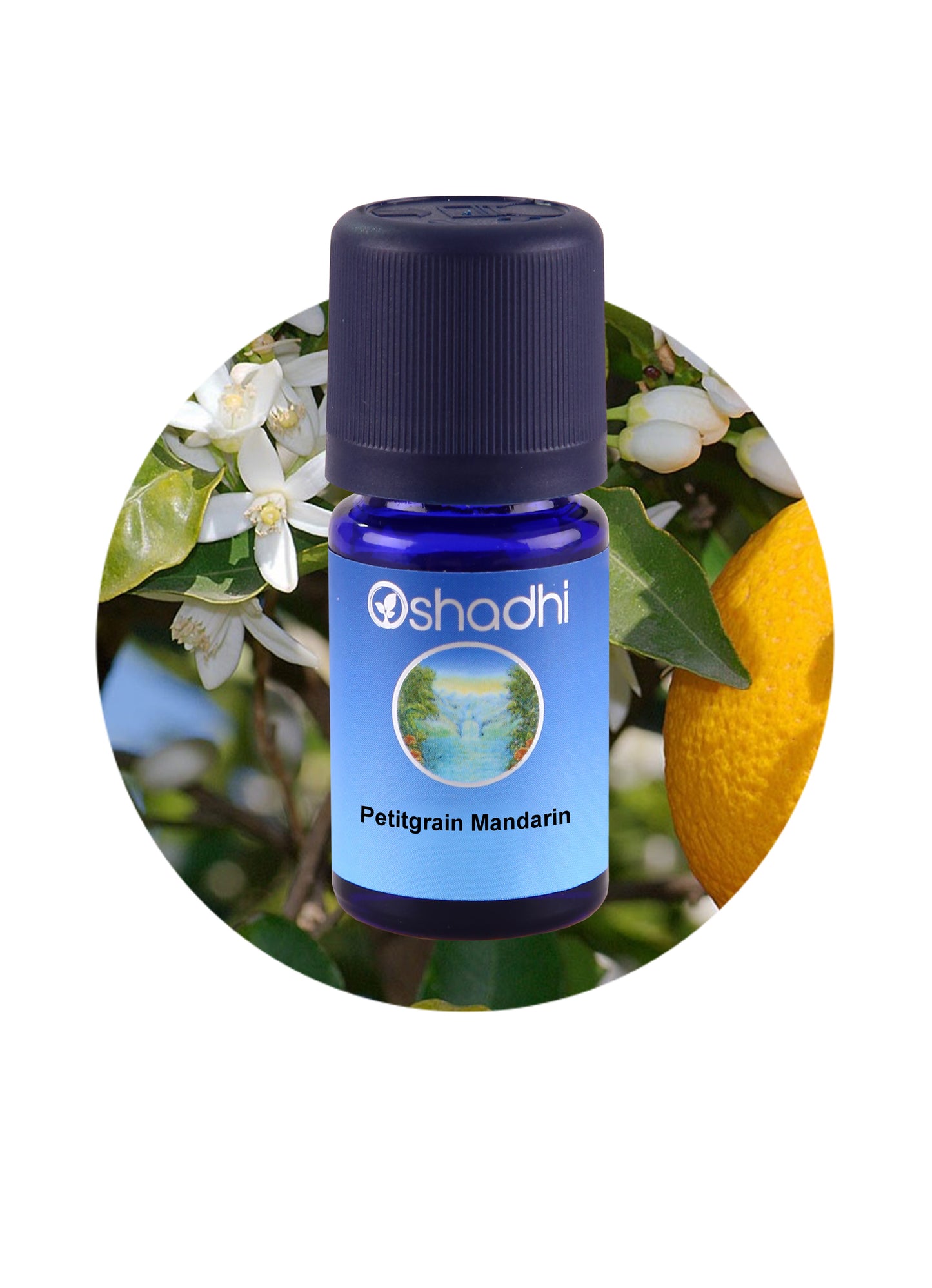
Petitgrain, unqualified, means the leaf oil of the bitter orange. Other citrus trees give their own petitgrains, and they differ sharply. The mandarin leaf oil is defined by methyl N-methylanthranilate, an ester present in only trace amounts in bitter orange leaf.
01 · Origin
Citrus reticulata originates in southern China and South-East Asia and is now grown across the Mediterranean and North Africa. This oil is distilled in Egypt from the leaves of cultivated trees.
02 · Chemistry
Methyl N-methylanthranilate dominates. It carries the soft, sweet, almost grape-like note that identifies mandarin. Gamma-terpinene, limonene and alpha-pinene make up the monoterpene fraction. Anthranilate-rich oils are best kept tightly closed and away from light.
03 · In Practice
Sweet, green and fruity, with a floral, slightly musky undertone. A middle note with more body than most leaf oils. Natural perfumery, diffusion, evening blends and massage. Blends with neroli, petitgrain bigarade, mandarin, lavender, chamomile, sandalwood and ylang ylang.
General information: For external use only. Dilute before applying to skin. Keep away from heat and sunlight. Keep out of reach of children. Avoid contact with eyes and mucous membranes.
How to use Essential Oils
Find out more about how Essential Oils can be used and the different application methods:
https://oshadhi.com/pages/how-to-use-essential-oils