

Petitgrain Combava Oil (Organic)
Petitgrain Combava Oil (Organic)
Low stock: 6 left
Sell by Date: March 2027
Couldn't load pickup availability
Product No. 2455
Citrus hystrix
| Origin | Madagascar |
| Plant part | Leaves |
| Cultivation | Wild-crafted organic |
| Certification | DE-ÖKO-007 |
| Extraction | Distilled |
| Main constituents | Citronellal, Citronellol, Citronellyl acetate |
| Aroma | Citrus, Herbaceous |
| Ingredients (INCI) | Citrus Hystrix Leaf Oil* |
*Certified organic, DE-ÖKO-007.
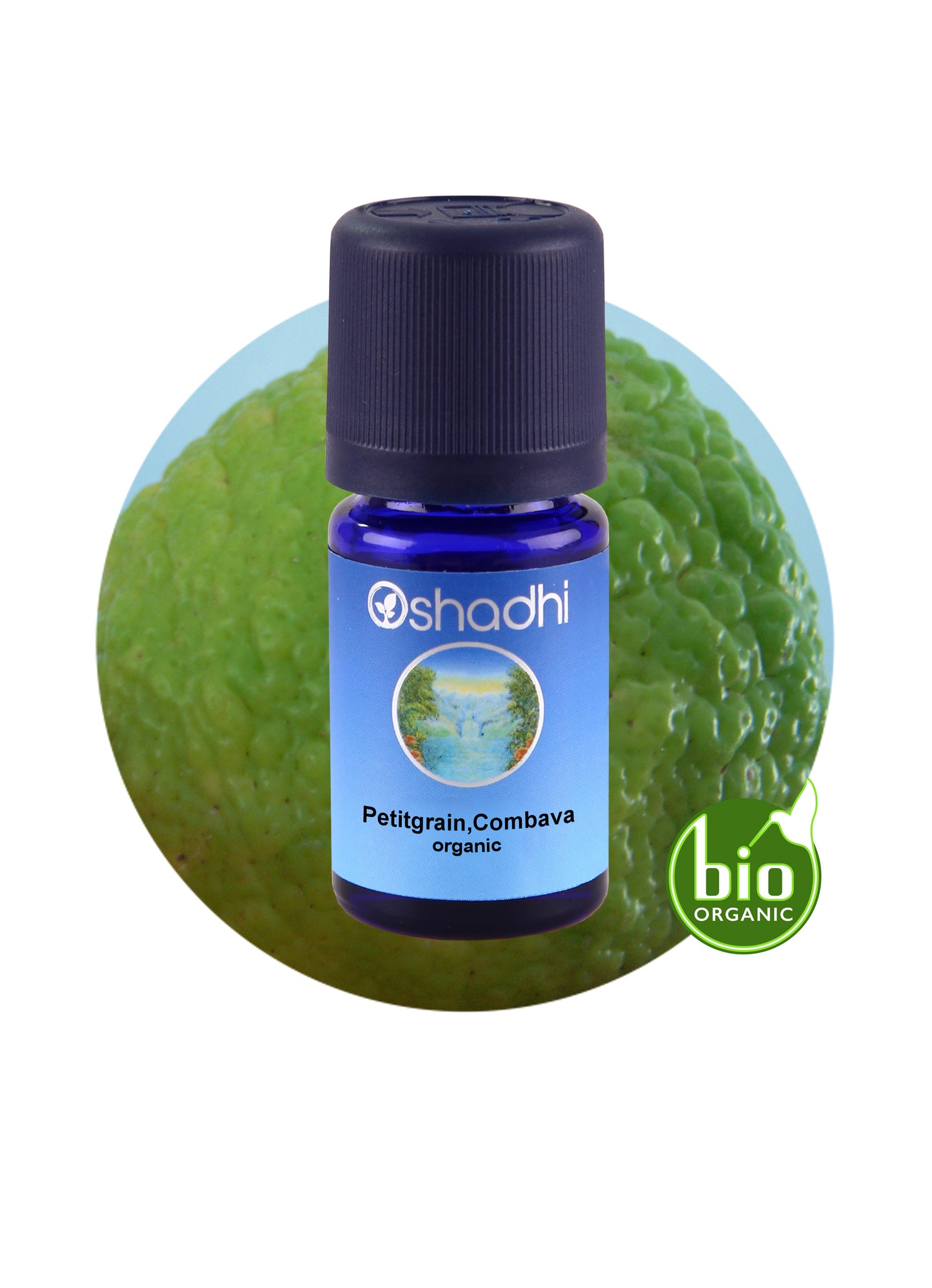
Combava oil is often assumed to be a single product. The leaf and the peel of Citrus hystrix give two different oils. The leaf oil is built on citronellal. The peel oil is built on limonene and pinenes, and smells of lime zest rather than of the crushed leaf.
01 · Origin
Citrus hystrix is a thorny citrus of tropical South-East Asia, now also grown in Madagascar. The leaves are the distinctive double leaves of Thai and Indonesian cooking. This oil is distilled from the leaves of wild-crafted organic trees in Madagascar and certified organic (DE-ÖKO-007).
02 · Chemistry
Citronellal dominates. Citronellol and citronellyl acetate follow. An aldehyde-led profile of this kind gives a sharp, green, lemony character comparable to lemon eucalyptus and citronella, with a more rounded floral undertone from the ester.
03 · In Practice
Green, crisp and lemony, with a herbaceous finish. A top note. Diffusion, room preparations, massage blends and natural perfumery, used at low concentration given the aldehyde content. The peel oil, Combava (No. 1277), makes a direct comparison. Blends with lemongrass, ginger, lime, geranium, cedarwood, vetiver and coriander.
General information: For external use only. Dilute before applying to skin. Keep away from heat and sunlight. Keep out of reach of children. Avoid contact with eyes and mucous membranes.
How to use Essential Oils
Find out more about how Essential Oils can be used and the different application methods:
https://oshadhi.com/pages/how-to-use-essential-oils