

Peru Balm, distilled
Peru Balm, distilled
Low stock: 5 left
Sell by Date: March 2027
Couldn't load pickup availability
Product No. 2410
Myroxylon balsamum var. pereirae
| Origin | France |
| Plant part | Resin |
| Cultivation | Wild |
| Extraction | Distilled |
| Main constituents | Benzyl benzoate, Benzyl cinnamate, Benzoic acid, Cinnamic acid |
| Aroma | Balsamic, Earthy, Sweet |
| Ingredients (INCI) | Myroxylon Balsamum Oil |
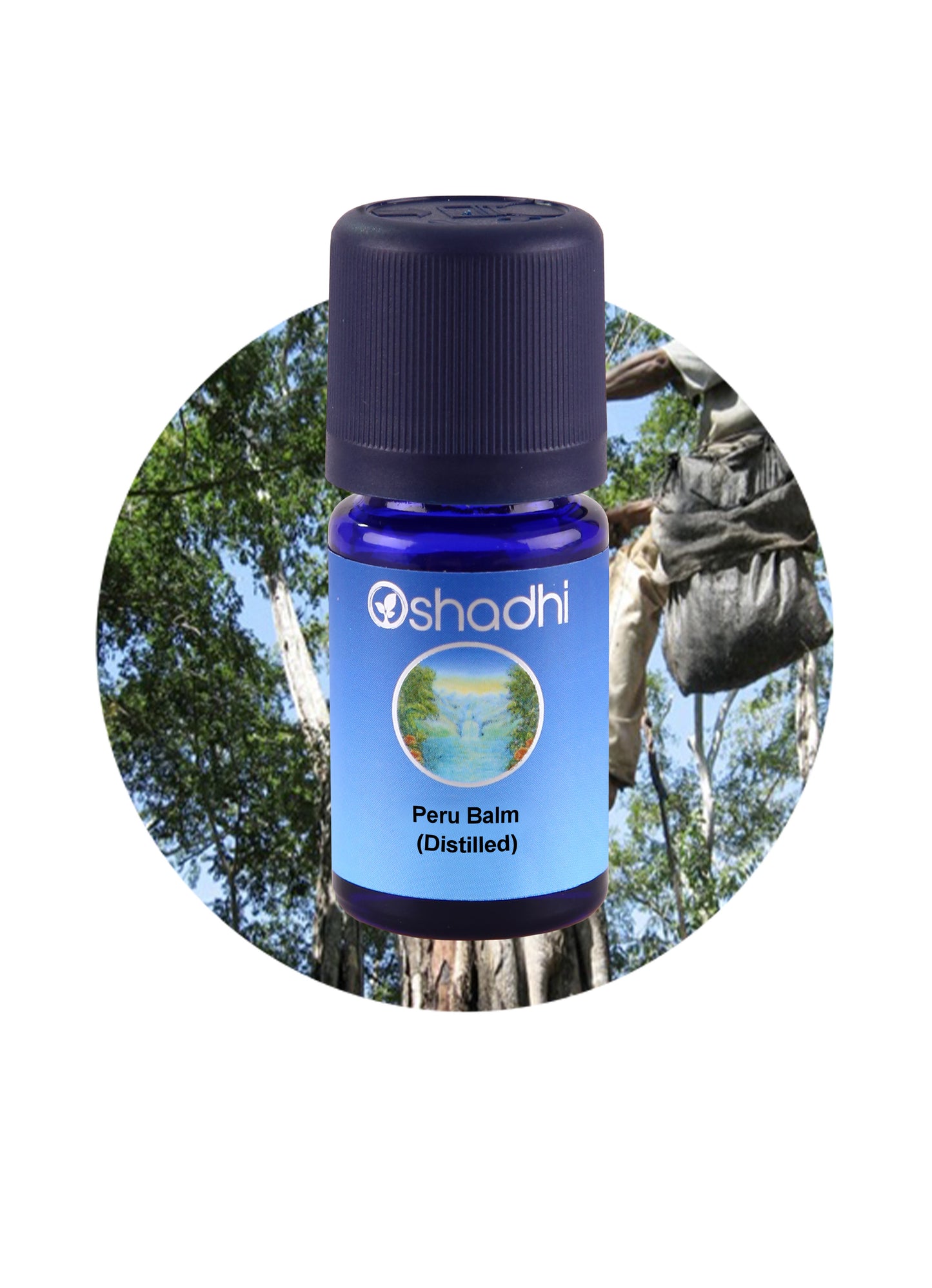
Peru balm does not come from Peru. The tree is native to Central America. The name dates from the colonial trade, when the balsam was shipped to Europe through Peruvian ports. It is a variety of the same species that gives Tolu balm.
01 · Origin
Myroxylon balsamum var. pereirae is a tall tree of the legume family, Fabaceae. The balsam is a dark, viscous exudate collected from the trunk of wild trees. This oil is distilled from that resin in France.
02 · Process
Crude Peru balsam is thick and resinous, and difficult to work in a formula. Distillation separates the volatile fraction from the heavy resin. Benzyl benzoate and benzyl cinnamate lead, the pair historically known as cinnamein. Benzoic and cinnamic acids follow. The result is a pourable oil.
03 · In Practice
Sweet, warm and balsamic, with vanilla-like and cinnamic tones. A base note and fixative in natural perfumery. Used at low concentration in massage blends, bath preparations and diffusion. Comparative work beside Tolu Balm (No. 2890) shows the two varieties of one species side by side. Blends with benzoin, vanilla, sandalwood, rose, ylang ylang and frankincense.
General information: For external use only. Dilute before applying to skin. Keep away from heat and sunlight. Keep out of reach of children. Avoid contact with eyes and mucous membranes.
How to use Essential Oils
Find out more about how Essential Oils can be used and the different application methods:
https://oshadhi.com/pages/how-to-use-essential-oils