

Pepper, Pink / Californian Pepper
Pepper, Pink / Californian Pepper
Low stock: 2 left
Sell by Date: March 2027
Couldn't load pickup availability
Product No. 2715
Schinus molle L.
| Origin | Peru |
| Plant part | Berries |
| Cultivation | Wild |
| Extraction | Distilled |
| Main constituents | alpha- & beta-Phellandrene, Myrcene, Limonene |
| Aroma | Fruity, Sweet, Spicy |
| Ingredients (INCI) | Schinus Molle Fruit Oil |
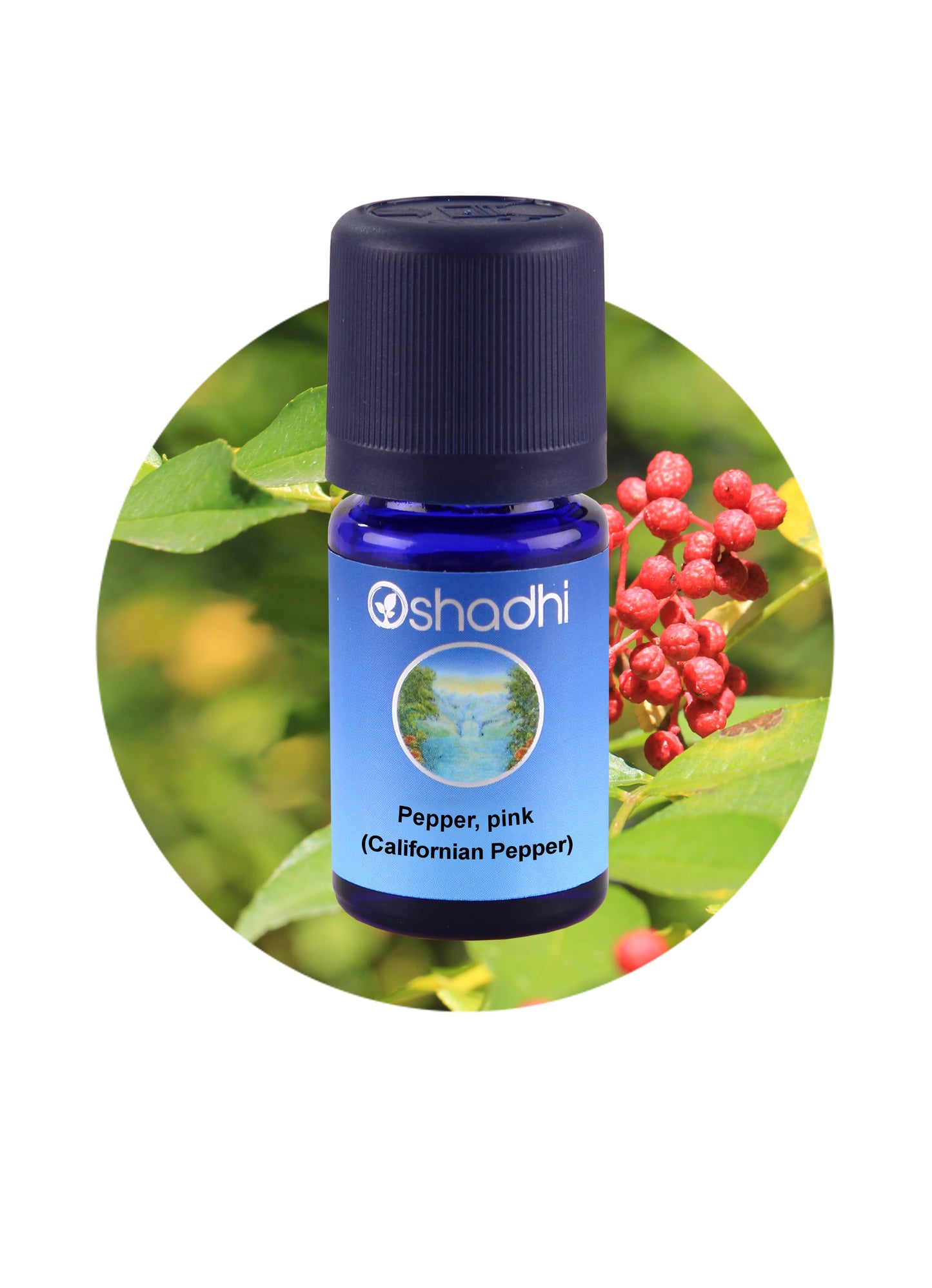
The name pink pepper describes a resemblance, not a relationship. Schinus molle belongs to the cashew family, Anacardiaceae, and has no botanical link to Piper nigrum. The name comes from the look and bite of its small, rose-coloured berries. Black Pepper (No. 2500) sits in a different order of flowering plants.
01 · Origin
Schinus molle is an evergreen tree native to the Andes of Peru, with drooping, aromatic foliage. It is often called the Peruvian or Californian pepper tree after its spread into California. This oil is distilled in Peru from the berries of wild trees. A related species, Schinus terebinthifolius, is the Brazilian pepper tree.
02 · Chemistry
Alpha- and beta-phellandrene lead, with myrcene and limonene. This monoterpene profile accounts for the fresh, peppery lift and the quick evaporation. The sesquiterpene depth that gives black pepper its warmth is largely absent.
03 · In Practice
Fresh, rosy and peppery, with a bright, slightly sweet fruit note and a dry, woody edge. A top note in natural perfumery, widely used in contemporary fragrance for sparkle. Diffusion, massage blends and olfactory study. Blends with rose, geranium, grapefruit, bergamot, cedarwood, vetiver and frankincense.
General information: For external use only. Dilute before applying to skin. Keep away from heat and sunlight. Keep out of reach of children. Avoid contact with eyes and mucous membranes.
How to use Essential Oils
Find out more about how Essential Oils can be used and the different application methods:
https://oshadhi.com/pages/how-to-use-essential-oils