

Parsley (Organic)
Parsley (Organic)
Low stock: 3 left
Sell by Date: August 2028
Couldn't load pickup availability
Product No. 2430
Petroselinum sativum
| Origin | Egypt |
| Plant part | Herb |
| Cultivation | Certified organic |
| Extraction | Distilled |
| Main constituents | Limonene, Para 1,3,8 Menthatriene, alpha- & beta-Pinene, Myristicine, Apiole |
| Aroma | Herbaceous, Spicy, Earthy |
| Ingredients (INCI) | Petroselinum Sativum Oil* |
*Certified organic.
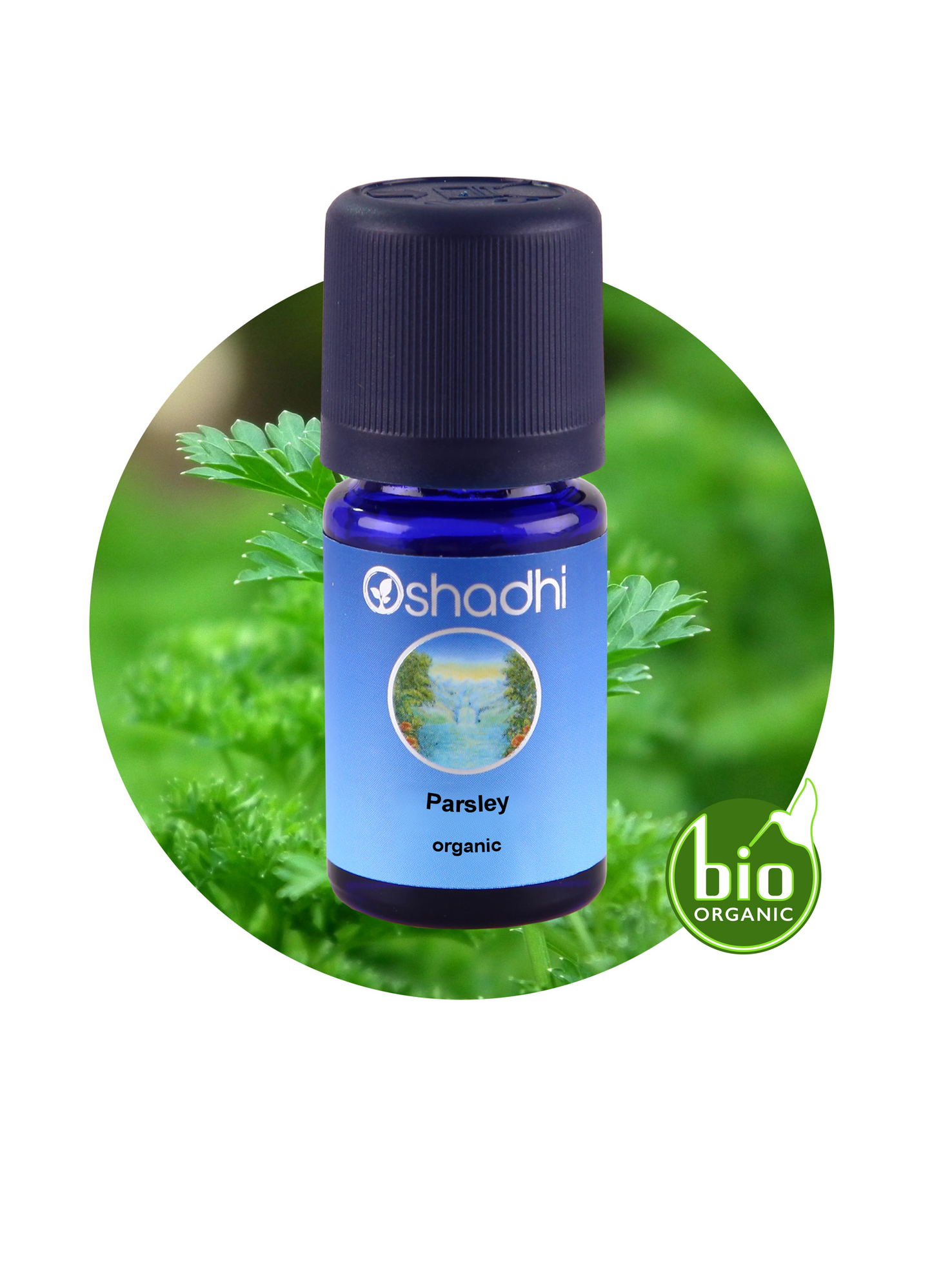
Parsley oil is distilled from two different parts of the plant, and the two are not the same oil. Seed oil is dominated by apiole and myristicin. Herb oil, distilled from the leafy plant, carries the menthatriene that gives fresh parsley leaf its characteristic smell.
01 · Origin
Petroselinum sativum, also listed as Petroselinum crispum, is a biennial of the carrot family, Apiaceae, native to the eastern Mediterranean. This oil is distilled in Egypt from the herb, from certified organic cultivation.
02 · Chemistry
Limonene leads. Para-1,3,8-menthatriene, the marker of leaf oil, follows, with alpha- and beta-pinene. Myristicin and apiole, both phenylpropanoids, are present in smaller proportion than in seed oil. They account for the warm, slightly spicy undertone.
03 · In Practice
Green, fresh and herbaceous, with a sharp leafy top and a warm, spiced drydown. A top note. Used at low concentration in natural perfumery, where it lends realism to green accords, and in massage blends and diffusion. Blends with lemon, basil, coriander, rose, clary sage, orange and petitgrain.
General information: For external use only. Dilute before applying to skin. Keep away from heat and sunlight. Keep out of reach of children. Avoid contact with eyes and mucous membranes.
How to use Essential Oils
Find out more about how Essential Oils can be used and the different application methods:
https://oshadhi.com/pages/how-to-use-essential-oils