

Oregano, Spain (organic)
Oregano, Spain (organic)
Low stock: 4 left
Sell by Date: August 2027
Couldn't load pickup availability
Product No. 2341
Thymus capitatus
| Origin | Spain |
| Plant part | Plant |
| Cultivation | Certified organic |
| Extraction | Distilled |
| Main constituents | Carvacrol, gamma-Terpinene, Paracymene, beta-Caryophyllene, Thymol |
| Aroma | Camphoraceous, Herbaceous, Medicinal, Fresh |
| Ingredients (INCI) | Thymus Capitatus Oil* |
*Certified organic.
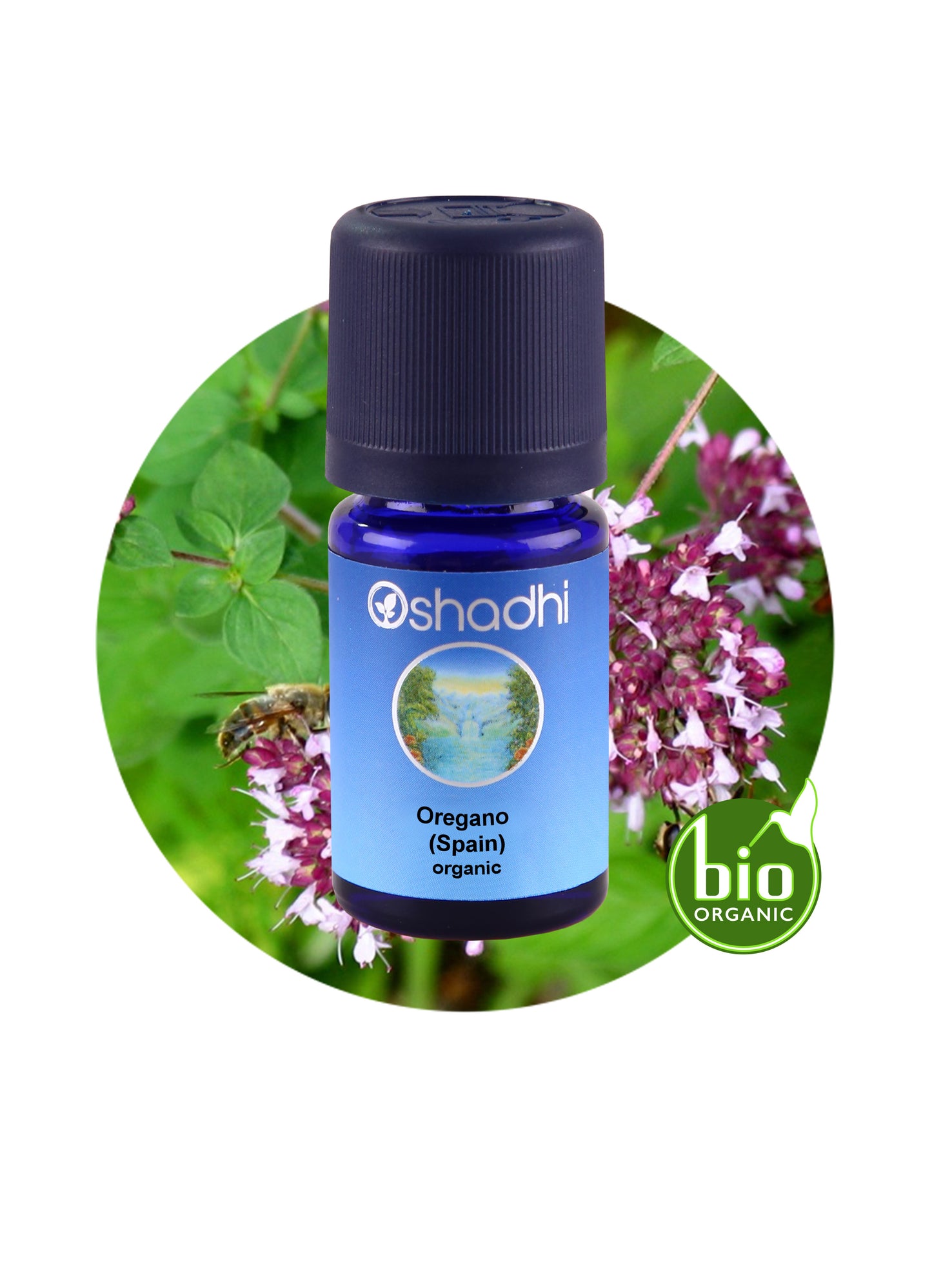
Spanish oregano is not an Origanum. Thymus capitatus, now usually placed in Thymbra as Thymbra capitata, is a thyme relative, and the name reflects its aroma and kitchen use rather than its botany. True oreganos, such as Origanum vulgare (No. 2350), form a separate genus.
01 · Origin
A compact, woody shrub of the mint family, Lamiaceae, with purple flowers held in dense heads, native to dry, rocky ground around the Mediterranean. This oil is distilled in Spain from the plant under certified organic cultivation.
02 · Chemistry
Carvacrol, a phenol, dominates. Gamma-terpinene and para-cymene, its biosynthetic precursors, follow. Beta-caryophyllene adds a woody note, and thymol is present in smaller proportion. Phenol-rich oils are strongly irritant to skin and mucous membranes and are used only at very low dilution.
03 · In Practice
Hot, spicy and herbaceous, with a dry, tarry depth. A middle note used sparingly. Diffusion in combination with milder oils, massage blends at very low concentration and olfactory study of the phenolic oils. Blends with lavender, rosemary, lemon, bergamot, pine, cedarwood and tea tree.
General information: For external use only. Dilute before applying to skin. Keep away from heat and sunlight. Keep out of reach of children. Avoid contact with eyes and mucous membranes.
How to use Essential Oils
Find out more about how Essential Oils can be used and the different application methods:
https://oshadhi.com/pages/how-to-use-essential-oils