

Oregano, Heracleoticum, Greece
Oregano, Heracleoticum, Greece
Low stock: 4 left
Sell by Date: January 2027
Couldn't load pickup availability
Product No. 2347
Origanum heracleoticum
| Origin | Greece |
| Plant part | Blossom/Plant |
| Cultivation | Conventional |
| Extraction | Distilled |
| Main constituents | Carvacrol, Thymol, Paracymene, alpa- & gamma-Terpinene, Linalool, Linalyl acetate |
| Aroma | Herbaceous, Spicy, Medicinal |
| Ingredients (INCI) | Origanum Heracleoticum Oil |
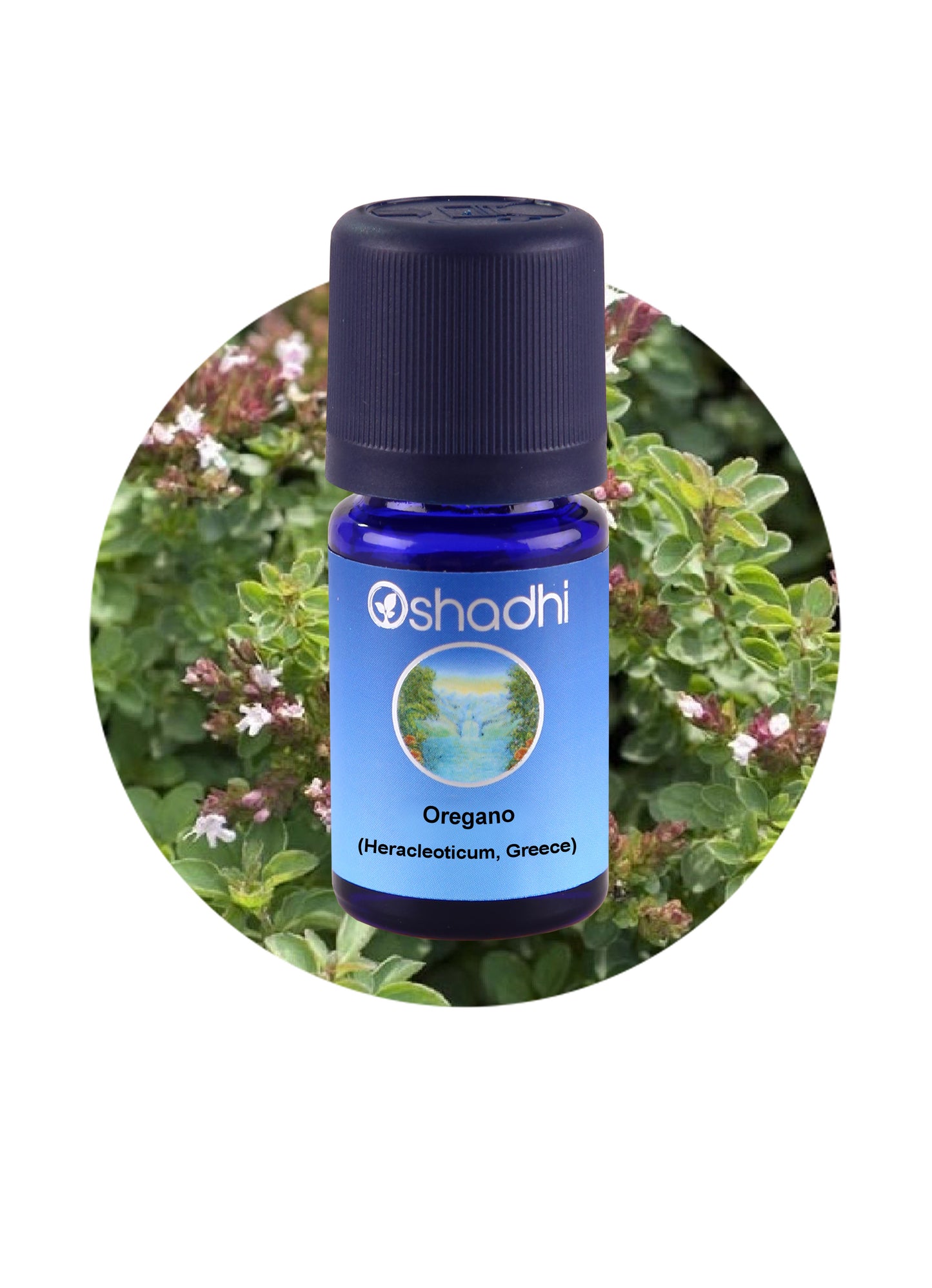
Much of the oil sold as oregano comes from other plants. Thymbra capitata, traded as Spanish oregano, and several Origanum and Thymus species reach the market under the one name. Origanum heracleoticum, Greek oregano, is commonly identified with Origanum vulgare subsp. hirtum, the carvacrol-rich oregano of the Greek hills.
01 · Origin
A low, woody-based perennial of the mint family, Lamiaceae, growing on dry, stony Mediterranean ground. This oil is distilled in Greece from the flowering herb.
02 · Chemistry
Carvacrol leads, with thymol behind it. The two phenols are accompanied by their biosynthetic precursors, p-cymene and gamma-terpinene, along with alpha-terpinene. Linalool and linalyl acetate soften the profile slightly.
03 · In Practice
Hot, spicy and intensely herbal. A top-to-middle note. Phenol-rich oils of this kind are used at high dilution and kept out of facial formulation. Diffusion, in small proportion, and olfactory study. Blends with lemon, rosemary, thyme, lavender, eucalyptus and pine.
General information: For external use only. Dilute before applying to skin. Keep away from heat and sunlight. Keep out of reach of children. Avoid contact with eyes and mucous membranes.
How to use Essential Oils
Find out more about how Essential Oils can be used and the different application methods:
https://oshadhi.com/pages/how-to-use-essential-oils