

Myrtle (organic)
Myrtle (organic)
Low stock: 1 left
Sell by Date: July 2028
Couldn't load pickup availability
Product No. 2181
Myrtus communis cineoliferum
| Origin | Morocco |
| Plant part | Twigs/Leaves |
| Cultivation | Wild-crafted organic |
| Certification | DE-ÖKO-007 |
| Extraction | Distilled |
| Main constituents | 1,8-Cineol, alpha-Pinene, Myrtenyl acetate, Limonene, alpha-Terpineol, Myrtenol |
| Aroma | Camphoraceous, Herbaceous, Spicy |
| Ingredients (INCI) | Myrtus Communis Leaf Oil* |
*Certified organic, DE-ÖKO-007.
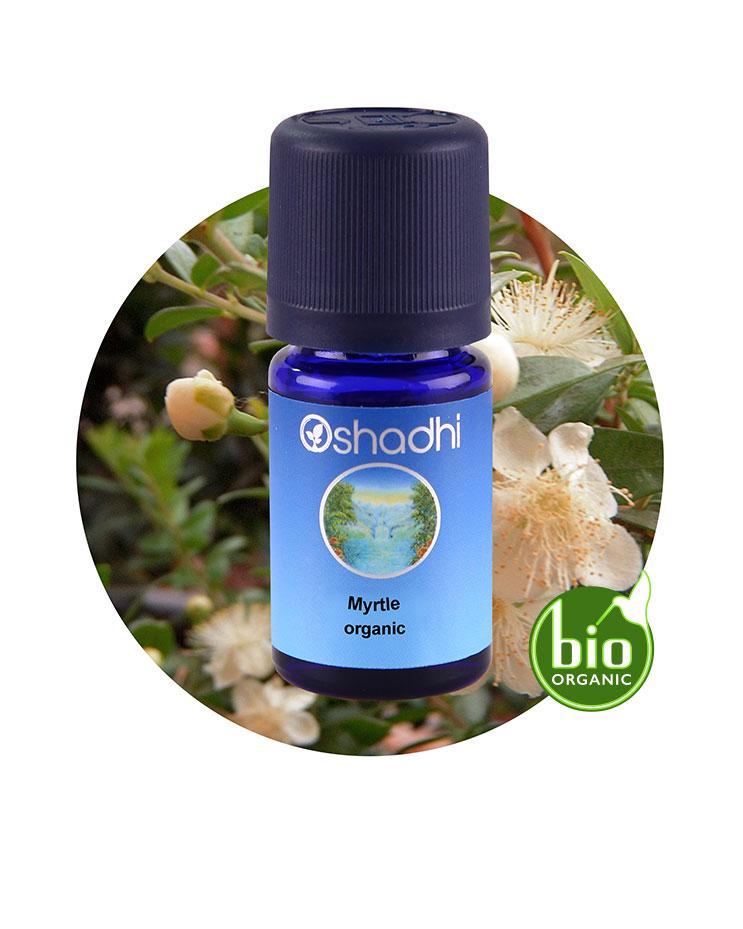
Myrtle and lemon myrtle share a family and a name, and nothing else of use in a formula. Myrtus communis is a Mediterranean shrub with a cineole and pinene profile. Lemon Myrtle (No. 2182) is Backhousia citriodora, an Australian tree whose oil is built on citral.
01 · Origin
An evergreen shrub of Mediterranean scrubland, of the myrtle family, Myrtaceae. This oil is distilled in Morocco from the twigs and leaves of wild-crafted plants, certified organic under DE-ÖKO-007.
02 · Chemistry
This is the cineole type. 1,8-cineole and alpha-pinene lead. Myrtenyl acetate, an ester, gives a softer, sweeter quality than the cineole content alone would suggest. Limonene, alpha-terpineol and myrtenol complete the profile.
03 · In Practice
Fresh, clear and camphoraceous, with a sweet, slightly floral undertone. A top note. Diffusion, massage blends, skincare formulation and bath preparations. Softer in a blend than eucalyptus. Blends with lavender, bergamot, lemon, rosemary, frankincense, clary sage and cypress.
General information: For external use only. Dilute before applying to skin. Keep away from heat and sunlight. Keep out of reach of children. Avoid contact with eyes and mucous membranes.
How to use Essential Oils
Find out more about how Essential Oils can be used and the different application methods:
https://oshadhi.com/pages/how-to-use-essential-oils