

Myrtle, Lemon (organic)
Myrtle, Lemon (organic)
Low stock: 2 left
Sell by Date: March 2029
Couldn't load pickup availability
Product No. 2182
Backhousia citriodora
| Origin | Australia |
| Plant part | Leaves |
| Cultivation | Certified organic |
| Extraction | Distilled |
| Main constituents | Geranial, Neral, trans-Isocitral |
| Aroma | Citrus, Sweet |
| Ingredients (INCI) | Backhousia Citriodora Leaf Oil* |
*Certified organic.
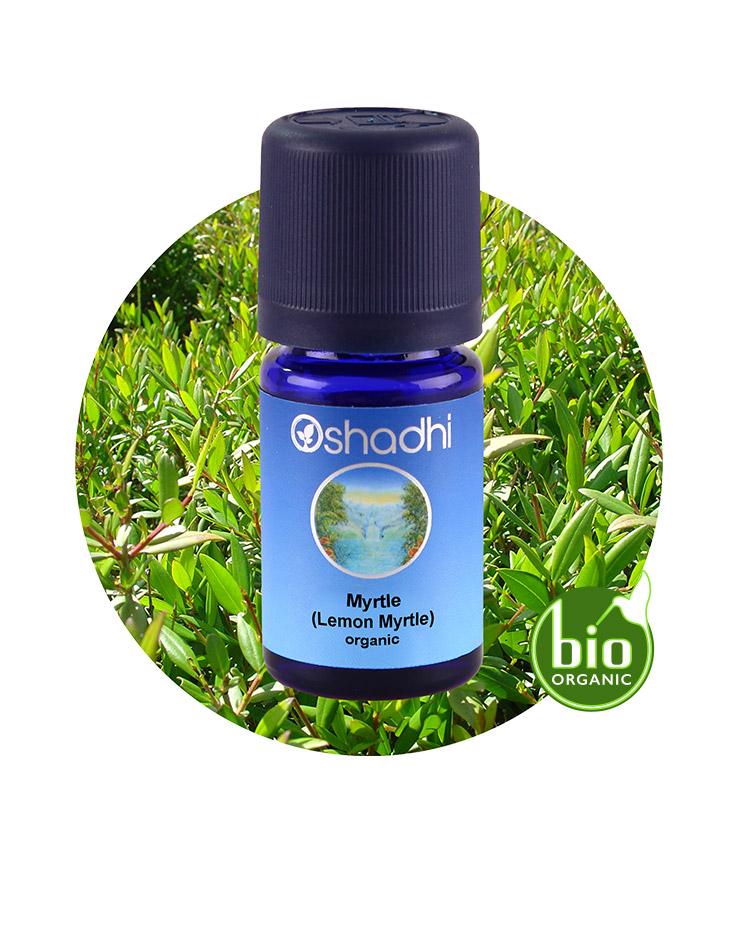
The lemon note of lemon myrtle does not come from limonene, as it does in citrus peel. It comes from citral, an aldehyde. Lemon myrtle is among the most citral-rich oils known, and in a blend it reads sharper and greener than any lemon.
01 · Origin
Backhousia citriodora is a tree of the subtropical rainforests of Queensland, of the myrtle family, Myrtaceae. Despite the name, it is not a myrtle in the Mediterranean sense; Myrtle (No. 2181) is Myrtus communis. This oil is distilled in Australia from the leaves, from certified organic cultivation.
02 · Chemistry
Geranial and neral, the two isomers of citral, dominate the oil. Trans-isocitral is present in small proportion. Aldehyde-dominant oils oxidise and should be kept tightly closed and cool.
03 · In Practice
Intensely lemony, sweet and fresh, with a creamy, sherbet-like quality. A top note. Used at low concentration in diffusion, massage blends, skincare formulation and natural perfumery. Blends with lavender, eucalyptus, ginger, kunzea, sandalwood, rosemary and geranium.
General information: For external use only. Dilute before applying to skin. Keep away from heat and sunlight. Keep out of reach of children. Avoid contact with eyes and mucous membranes.
How to use Essential Oils
Find out more about how Essential Oils can be used and the different application methods:
https://oshadhi.com/pages/how-to-use-essential-oils