

Myrtle, Green (Organic)
Myrtle, Green (Organic)
12 in stock
Sell by Date: March 2029
Couldn't load pickup availability
Product No. 2185
Myrtus communis
| Origin | France |
| Plant part | Twigs/Leaves |
| Cultivation | Wild-crafted organic |
| Certification | DE-ÖKO-007 |
| Extraction | Distilled |
| Main constituents | alpha-Pinene, 1,8-Cineol, Limonene, Geranyl acetate, Linalool |
| Aroma | Herbaceous, Sweet, Spicy |
| Ingredients (INCI) | Myrtus Communis Leaf Oil* |
*Certified organic, DE-ÖKO-007.
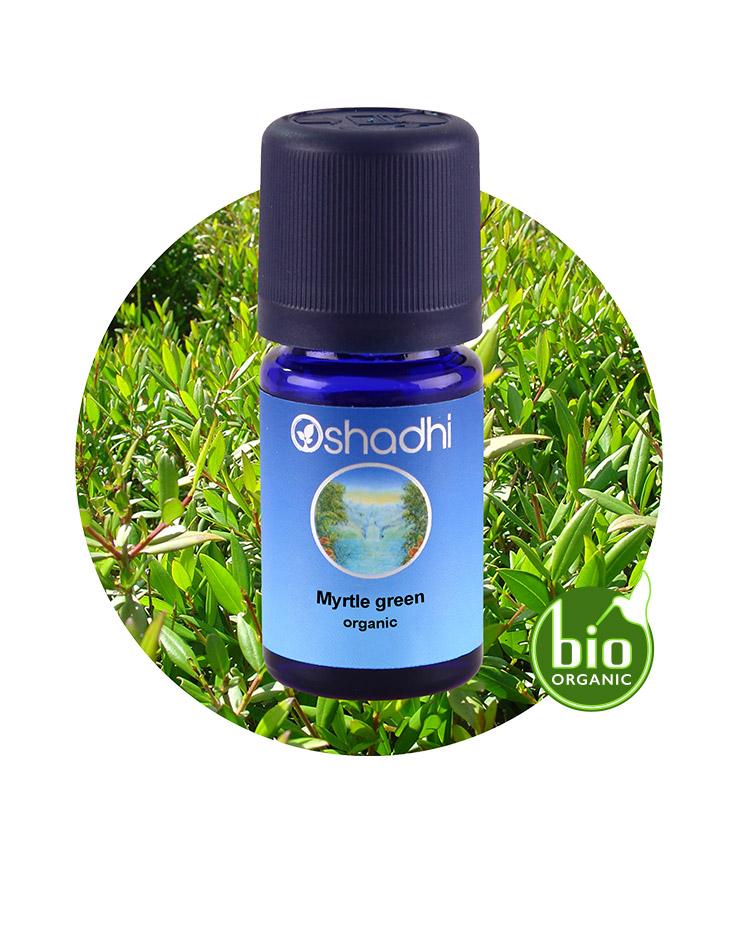
Myrtle oils are traded as green and red. The terms describe two chemical types. Green myrtle is led by alpha-pinene and 1,8-cineole; the red type carries myrtenyl acetate in quantity. Neither should be confused with lemon myrtle, Backhousia citriodora (No. 2182), an Australian tree of a different genus.
01 · Origin
Myrtus communis is an evergreen shrub of the Mediterranean maquis, in the Myrtaceae. This oil is distilled in France from the twigs and leaves of wild-crafted plants under organic certification, DE-ÖKO-007.
02 · Chemistry
Alpha-pinene leads, with 1,8-cineole close behind. Limonene adds a citrus brightness. Geranyl acetate and linalool contribute a soft floral sweetness that distinguishes myrtle from eucalyptus-type oils of similar composition.
03 · In Practice
Fresh, clear and herbaceous, with a sweet floral undertone. A top note. Diffusion, massage blends, bath preparations and skincare formulation. Comparative work with Myrtle organic (No. 2181) shows variation within the species. Blends with lavender, rosemary, bergamot, lemon, cypress, juniper and eucalyptus.
General information: For external use only. Dilute before applying to skin. Keep away from heat and sunlight. Keep out of reach of children. Avoid contact with eyes and mucous membranes.
How to use Essential Oils
Find out more about how Essential Oils can be used and the different application methods:
https://oshadhi.com/pages/how-to-use-essential-oils