

Mugwort
Mugwort
Low stock: 2 left
Sell by Date: March 2029
Couldn't load pickup availability
Product No. 1150
Artemisia vulgaris
| Origin | Egypt |
| Plant part | Blossom/Plant |
| Cultivation | Wild |
| Extraction | Distilled |
| Main constituents | alpha- & beta-Thujone, Camphor, Camphene, 1,8-Cineol, Sabinene |
| Aroma | Camphoraceous, Herbaceous |
| Ingredients (INCI) | Artemisia Vulgaris Flower Oil |
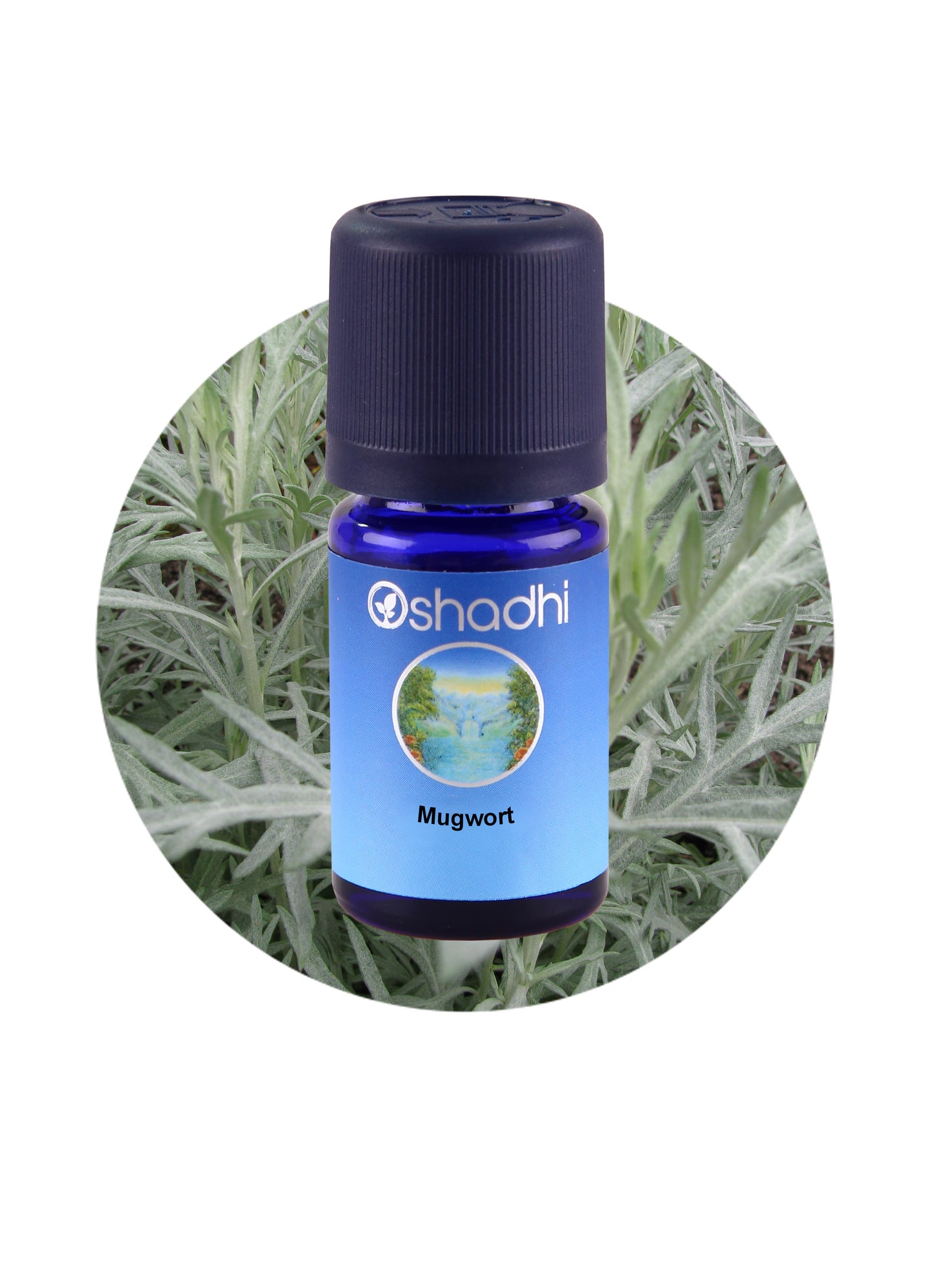
Mugwort and wormwood are often confused. Artemisia vulgaris and Artemisia absinthium share a genus and the ketone thujone, but they are distinct plants. Great Mugwort, Artemisia arborescens, is a third species again, with a blue, chamazulene-bearing oil.
01 · Origin
Artemisia vulgaris is a tall perennial of the daisy family, Asteraceae, found across Europe, Asia and North Africa on field margins and waste ground. The leaves are dark green above and silvery-white beneath. It has a long history in European herbal and folk tradition. This oil is distilled in Egypt from the flowering plant of wild stands.
02 · Chemistry
Alpha- and beta-thujone lead the profile, followed by camphor, camphene, 1,8-cineole and sabinene. Thujone-bearing oils are used sparingly and always at low dilution. Comparison with Artemisia Arborescens / Great Mugwort (No. 1096) and Mugwort, White (No. 1151) shows the spread of chemistry within the genus.
03 · In Practice
Bitter, herbaceous and camphoraceous, with a sharp green top and a dry, sage-like body. A middle note. Olfactory study, meditation practice and natural perfumery in very small proportion. Blends with clary sage, lavender, cedarwood, patchouli, rosemary and juniper.
General information: For external use only. Dilute before applying to skin. Keep away from heat and sunlight. Keep out of reach of children. Avoid contact with eyes and mucous membranes.
How to use Essential Oils
Find out more about how Essential Oils can be used and the different application methods:
https://oshadhi.com/pages/how-to-use-essential-oils