

Mimosa (absolute)
Mimosa (absolute)
Low stock: 2 left
Sell by Date: March 2029
Couldn't load pickup availability
Product No. 2070
Acacia decurrens Willd.
| Origin | Morocco |
| Plant part | Blossoms |
| Cultivation | Conventional |
| Extraction | Extracted |
| Main constituents | Nonadecane, Heptadecene, Methyl linalonate, Heptadecane, Benzyl benzoat |
| Aroma | Floral, Fruity, Sweet |
| Ingredients (INCI) | Acacia Decurrens Flower Extract, Alcohol |
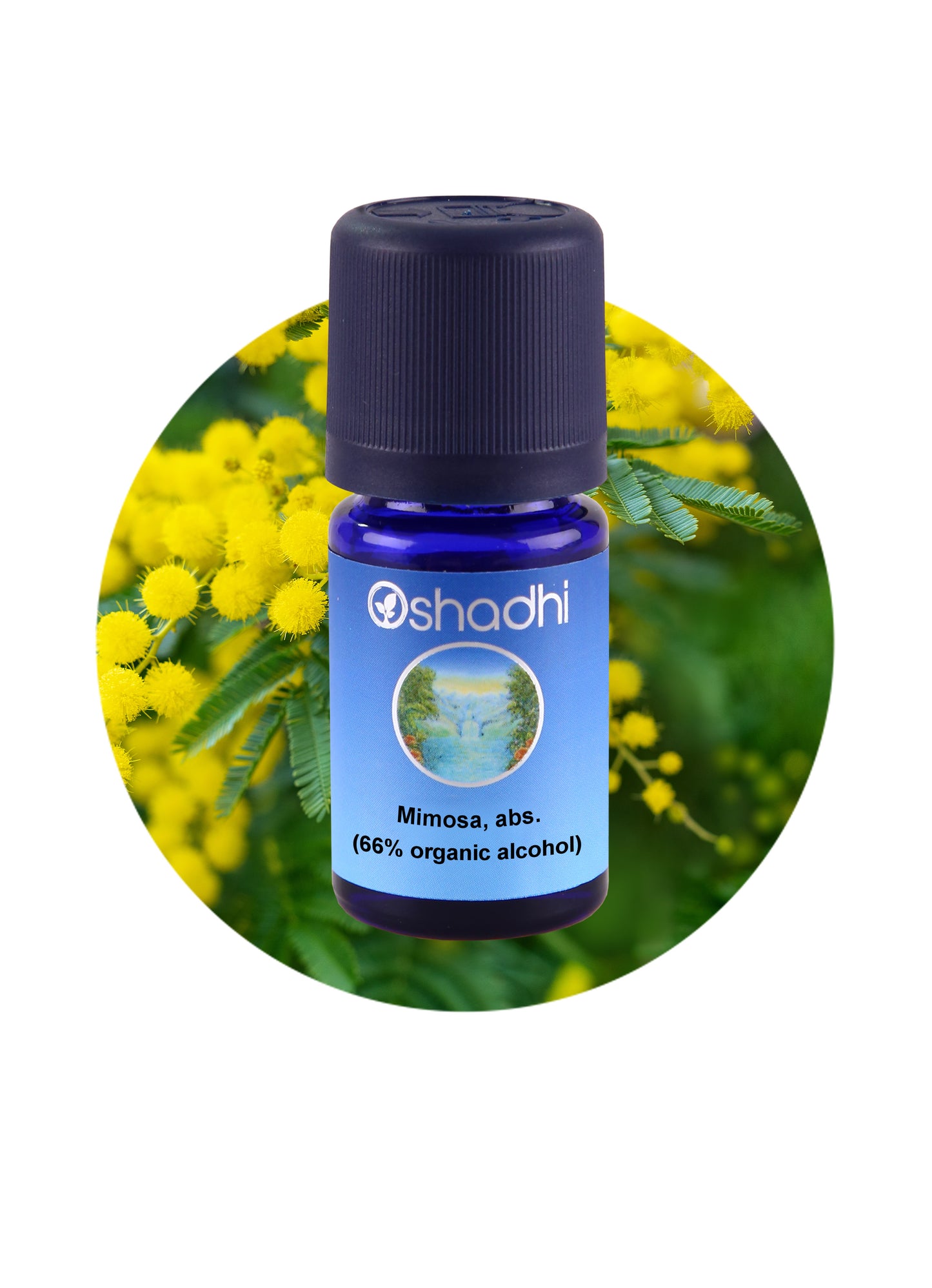
The mimosa of perfumery is not a Mimosa. The florists' mimosa is an acacia, an Australian wattle. Mimosa pudica, the sensitive plant, has no role here. This absolute comes from Acacia decurrens, the green wattle.
01 · Origin
Acacia decurrens belongs to the legume family, Fabaceae, and is native to south-eastern Australia. It has been grown around the Mediterranean for flowers. This absolute is produced in Morocco from blossoms of conventional cultivation.
02 · Process
The flowers are solvent-extracted to a concrete, then washed with alcohol to give the absolute. A large waxy hydrocarbon fraction is characteristic: nonadecane, heptadecene and heptadecane. Benzyl benzoate contributes a balsamic tone. The material is supplied diluted in organic alcohol for ease of handling.
03 · In Practice
Powdery, honeyed and green-floral, with a soft woody depth. A middle-to-base note and a useful fixative in natural perfumery, where it rounds violet, iris and soft floral accords. Used in very small proportion in perfume work and skincare formulation. Blends with violet leaf, iris, rose, ylang ylang, sandalwood, bergamot and cassis.
General information: For external use only. Dilute before applying to skin. Keep away from heat and sunlight. Keep out of reach of children. Avoid contact with eyes and mucous membranes.
How to use Essential Oils
Find out more about how Essential Oils can be used and the different application methods:
https://oshadhi.com/pages/how-to-use-essential-oils