

Magnolia Leaf
Magnolia Leaf
Low stock: 5 left
Sell by Date: March 2029
Couldn't load pickup availability
Product No. 2005
Magnolia grandiflora
| Origin | China |
| Plant part | Leaves |
| Cultivation | Conventional |
| Extraction | Distilled |
| Main constituents | Linalool, beta-Caryophyllene, trans-beta-Ocimene, trans-Nerolidol |
| Aroma | Floral, Spicy, Sweet |
| Ingredients (INCI) | Magnolia Grandiflora Leaf Oil |
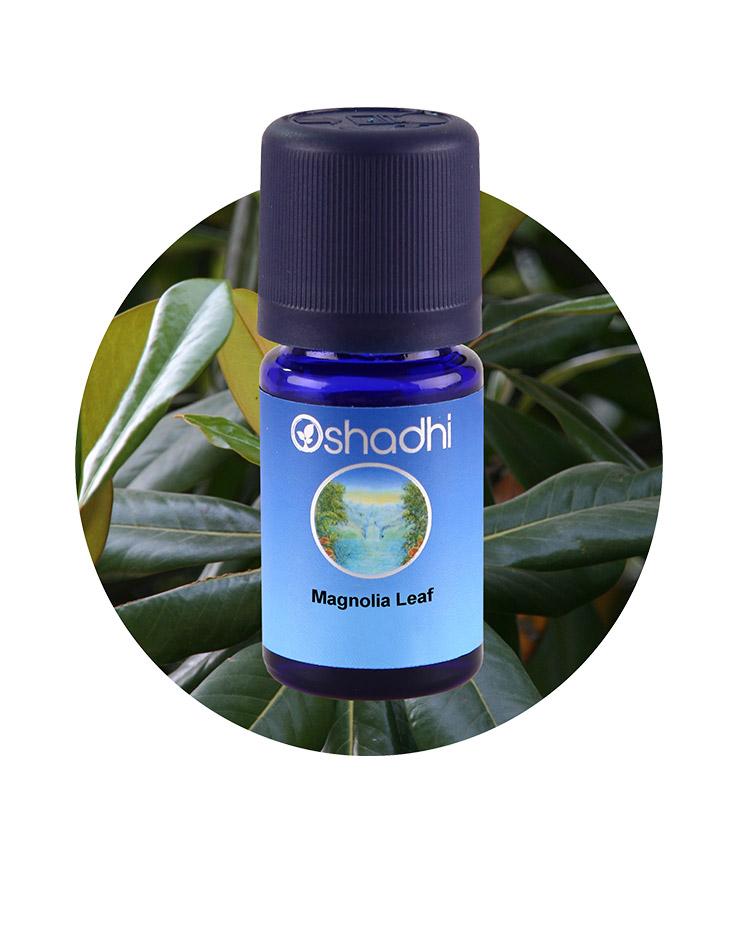
Magnolia leaf oil is easily confused with the leaf oil of Michelia alba, the white champaca, which is also linalool-rich. This oil is from a different tree. Magnolia grandiflora, the southern magnolia, is a true Magnolia, and its leaf oil is a separate material from both champaca leaf and magnolia blossom.
01 · Origin
A large evergreen of the family Magnoliaceae, native to the south-eastern United States and planted widely in China. This oil is distilled from the thick, glossy leaves of conventionally grown trees in China.
02 · Chemistry
Linalool leads the profile, which gives the oil its soft floral lift. Beta-caryophyllene adds a dry, faintly woody body. Trans-beta-ocimene brings a green, herbaceous top. Trans-nerolidol, a sesquiterpene alcohol, extends the drydown and gives the oil more tenacity than its brightness suggests.
03 · In Practice
Fresh, green and lightly floral, with a tea-like quality. A top to middle note in natural perfumery. Diffusion, massage blends and skincare formulation. Comparative work alongside Magnolia Blossom (No. 2000) and Champaca white, abs. (No. 1247) shows how plant part and genus separate three materials sold under related names. Blends with bergamot, neroli, petitgrain, jasmine, sandalwood and green tea accords.
General information: For external use only. Dilute before applying to skin. Keep away from heat and sunlight. Keep out of reach of children. Avoid contact with eyes and mucous membranes.
How to use Essential Oils
Find out more about how Essential Oils can be used and the different application methods:
https://oshadhi.com/pages/how-to-use-essential-oils