

Tea Tree, Lemon / Leptospermum citratum (organic)
Tea Tree, Lemon / Leptospermum citratum (organic)
Low stock: 4 left
Couldn't load pickup availability
Product No. 1956
Leptospermum petersonii
| Origin | South Africa |
| Plant part | Leaves |
| Cultivation | Wild-crafted organic |
| Extraction | Distilled |
| Main constituents | Citral, Citronellal, Citronellol, Geraniol |
| Aroma | Camphoraceous, Citrus, Fresh |
| Ingredients (INCI) | Leptospermum Petersonii Leaf Oil* |
*Certified organic.
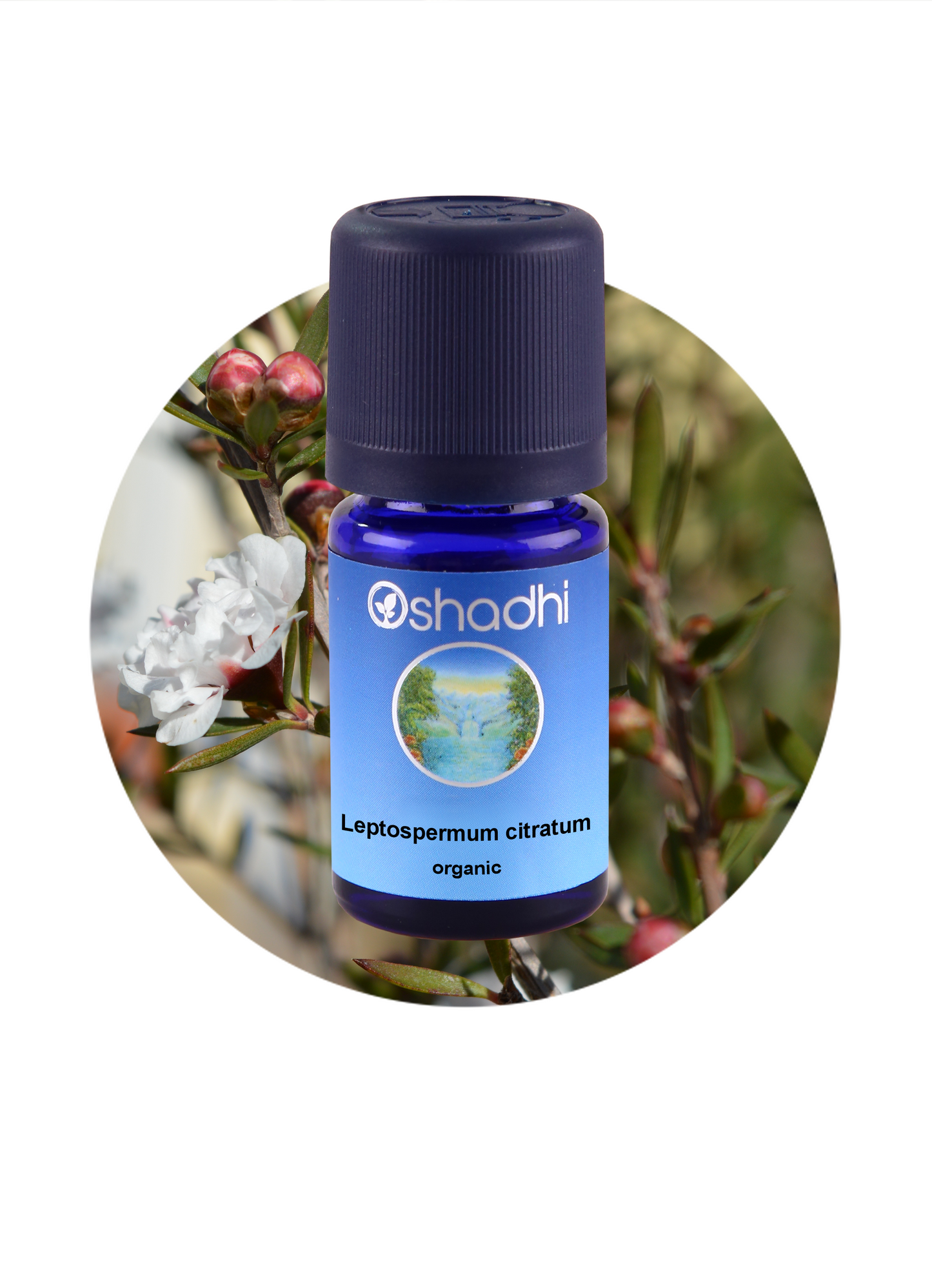
Lemon tea tree is not a lemon-scented form of tea tree. Melaleuca alternifolia (No. 2780) and Leptospermum petersonii share a common name and a family, Myrtaceae, but belong to different genera. Manuka (No. 2047) is the better-known Leptospermum oil. This oil is led by aldehydes, not terpinen-4-ol.
01 · Origin
A shrub or small tree native to the coastal forests of eastern Australia, also traded under the synonym Leptospermum citratum. This oil is distilled from the leaves of wild-crafted plants in South Africa, certified organic.
02 · Chemistry
Citral, the pair of aldehydes geranial and neral, leads. Citronellal adds a sharper, grassy brightness. Citronellol and geraniol soften the profile with a rosy note. Aldehyde-rich oils are handled at low dilution on the skin.
03 · In Practice
Intensely lemon, fresh and slightly rosy. A top note. Diffusion, room fragrance, natural cleaning formulations and dilute massage blends. Blends with eucalyptus, lavender, rosemary, cedarwood, geranium, ginger and lemongrass.
General information: For external use only. Dilute before applying to skin. Keep away from heat and sunlight. Keep out of reach of children. Avoid contact with eyes and mucous membranes.
How to use Essential Oils
Find out more about how Essential Oils can be used and the different application methods:
https://oshadhi.com/pages/how-to-use-essential-oils