

Labrador Tea (Ledum) organic
Labrador Tea (Ledum) organic
Low stock: 9 left
Sell by Date: March 2029
Couldn't load pickup availability
Product No. 1935
Ledum groenlandicum
| Origin | Canada |
| Plant part | Plant |
| Cultivation | Wild-crafted organic |
| Extraction | Distilled |
| Main constituents | beta-Selinene, Limonene, Sabinene, alpha- & beta-Pinene |
| Aroma | Earthy, Herbaceous, Medicinal, Woody |
| Ingredients (INCI) | Ledum Groenlandicum Oil* |
*Certified organic.
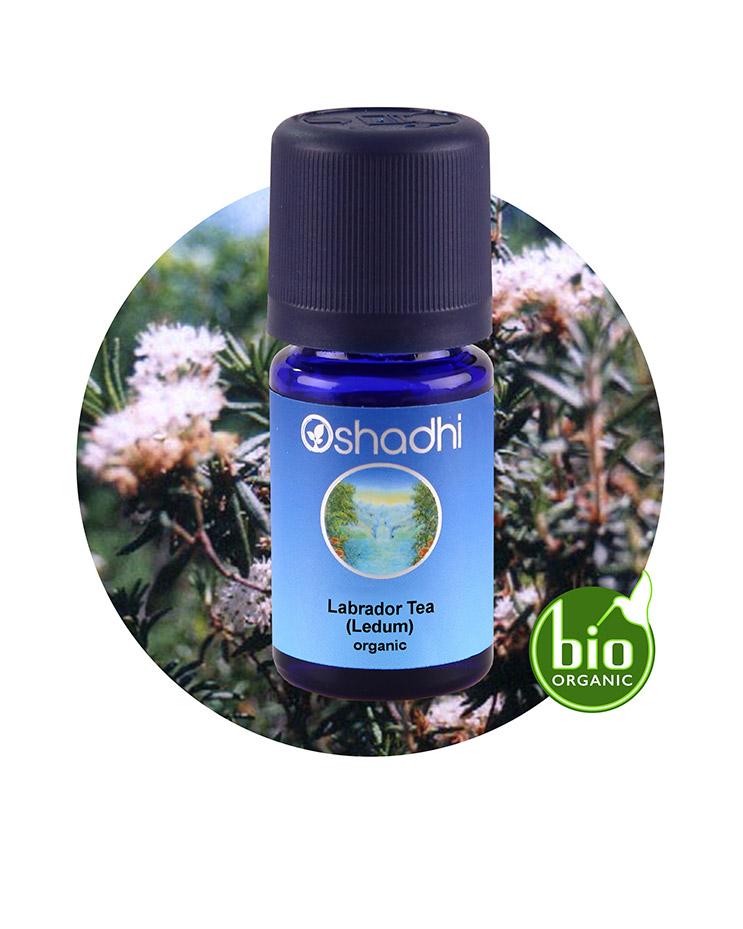
Labrador tea is frequently confused with marsh tea, Ledum palustre, a European and Siberian species with a separate chemistry. This oil is from the North American plant, Ledum groenlandicum, now placed by botanists in the genus Rhododendron.
01 · Origin
A low evergreen shrub of the heath family, Ericaceae, growing in peat bogs and boreal forest across Canada. The leaves are leathery, with a rust-coloured felt on the underside. The plant has a long history as a tea in First Nations and settler households. This oil is distilled from the whole plant, wild-crafted under organic certification in Canada.
02 · Chemistry
Beta-selinene, a sesquiterpene, leads the profile. Limonene, sabinene and alpha- and beta-pinene contribute a fresh terpene top. The pairing of a bright monoterpene fraction with a heavier sesquiterpene base gives a fresh opening and a persistent dry-down.
03 · In Practice
Herbaceous, resinous and slightly sweet, with a clean, coniferous edge and a woody, honeyed undertone. A middle note. Diffusion, massage blends, meditation practice and olfactory study. Used at low concentration. Blends with black spruce, fir, rosemary, lavender, cedarwood and frankincense.
General information: For external use only. Dilute before applying to skin. Keep away from heat and sunlight. Keep out of reach of children. Avoid contact with eyes and mucous membranes.
How to use Essential Oils
Find out more about how Essential Oils can be used and the different application methods:
https://oshadhi.com/pages/how-to-use-essential-oils