

Frankincense, Serrata
Frankincense, Serrata
Out of stock
Sell by Date: March 2029
Couldn't load pickup availability
Product No. 3012
Boswellia serrata
| Origin | India |
| Plant part | Resin |
| Cultivation | Wild |
| Extraction | Distilled |
| Main constituents | alpha-Thuyene, alpha-Pinene, Sabinene |
| Aroma | Balsamic, Resinous, Spicy, Fresh |
| Ingredients (INCI) | Boswellia Serrata Oil |
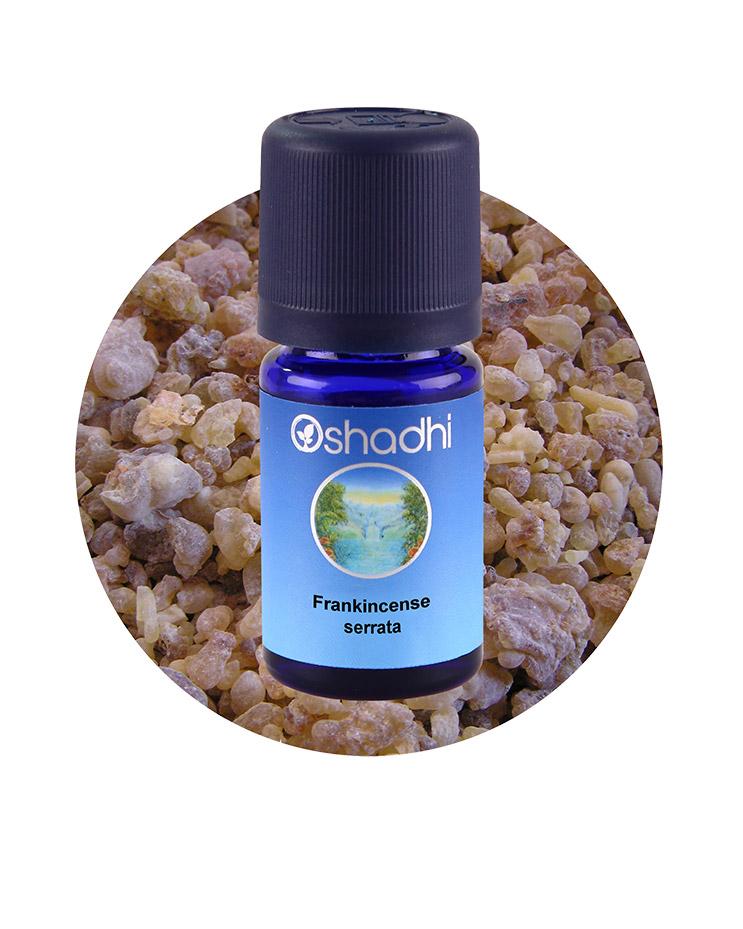
Boswellia serrata is best known for boswellic acids. Those acids are heavy triterpenes and do not distil. The essential oil carries the volatile monoterpene fraction of the resin, and its character should be judged on that basis.
01 · Origin
Indian frankincense, known locally as salai, is a deciduous tree of dry hill forest across central and northern India, family Burseraceae. This oil is distilled from the resin of wild trees, gathered in India by traditional methods.
02 · Process
The trunk is tapped and the gum-resin left to harden on the bark before collection. Steam distillation takes the volatile fraction and leaves the gum and the acids behind. Alpha-thujene leads, an unusual marker among frankincense species, with alpha-pinene and sabinene following. Comparison with Frankincense, Sacra (No. 3021) and Frankincense, Carterii (No. 3010) shows how far the genus varies.
03 · In Practice
Fresh, resinous and slightly peppery, with a citrus-pine top and a soft balsamic finish. A middle note. Meditation practice, diffusion, massage blends, skincare formulation and natural perfumery. Blends with myrrh, sandalwood, cedarwood, lavender, orange, vetiver and rose.
General information: For external use only. Dilute before applying to skin. Keep away from heat and sunlight. Keep out of reach of children. Avoid contact with eyes and mucous membranes.
How to use Essential Oils
Find out more about how Essential Oils can be used and the different application methods:
https://oshadhi.com/pages/how-to-use-essential-oils