

Crocodile Herb / Hazomboay
Crocodile Herb / Hazomboay
Low stock: 6 left
Couldn't load pickup availability
Product No. 1803
Oliganthus pseudo centauropsis (Compositae)
| Origin | South Africa |
| Plant part | Herb |
| Cultivation | Wild |
| Extraction | Distilled |
| Main constituents | Dodecanol-1, Tetradecanol-1, Lauryl acetate |
| Aroma | Earthy, Sweet, Spicy, Woody |
| Ingredients (INCI) | Oliganthus Pseudo Oil |
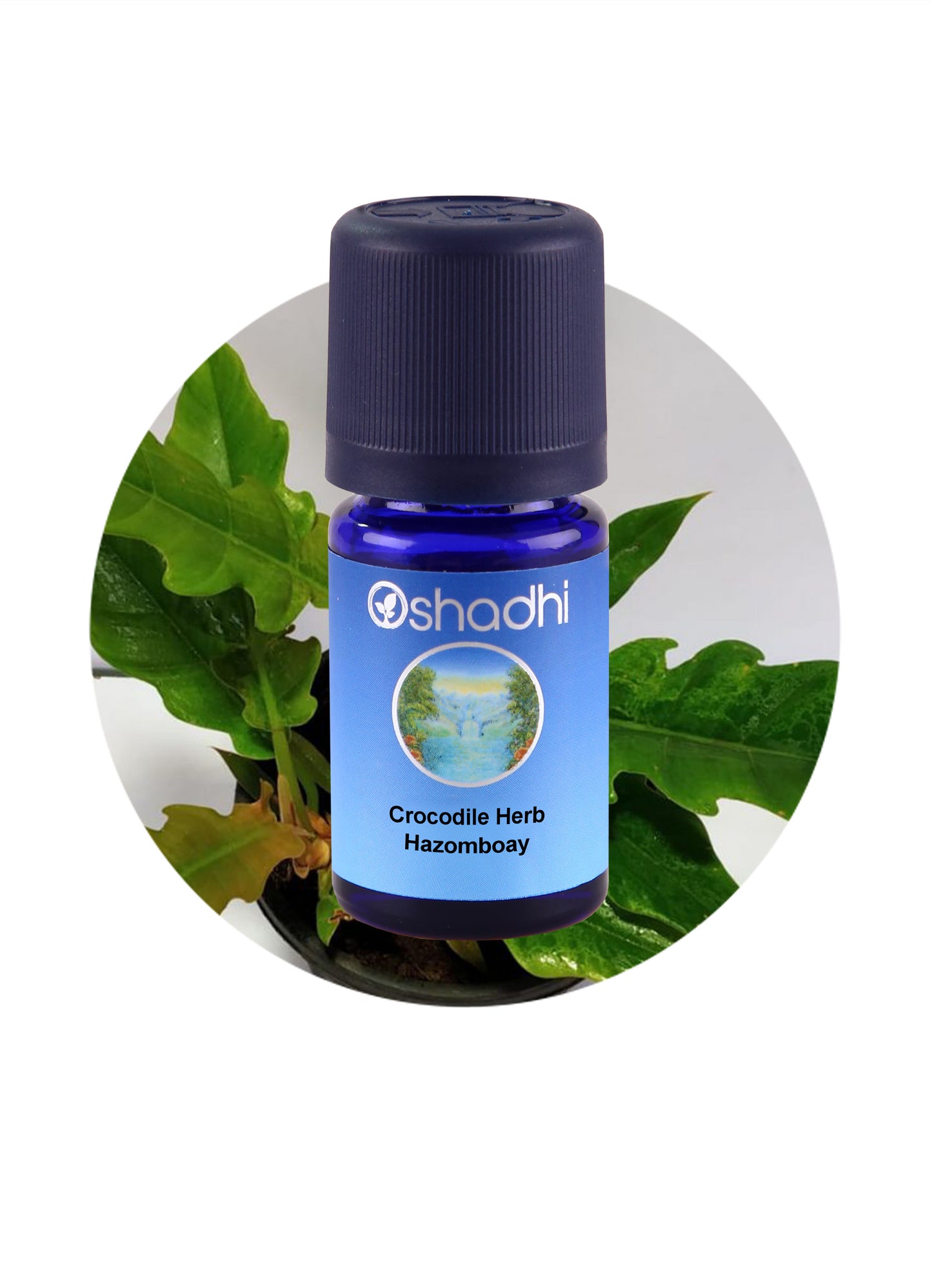
Crocodile herb is a trade name, not a botanical one. It points to no particular plant family and says nothing about the oil. The source is Oliganthus pseudocentauropsis, a member of the daisy family, Compositae, known locally as hazomboay.
01 · Origin
The oil is distilled from the herb, gathered from wild stands. The origin is South Africa. The species is seldom distilled and rarely appears in aromatherapy literature, which makes reliable reference samples scarce.
02 · Chemistry
The profile is unusual for the daisy family, where terpenes normally lead. Here the main constituents are long-chain fatty alcohols, dodecanol and tetradecanol, with their ester lauryl acetate. Materials of this class read as waxy and clean rather than sharp or camphoraceous.
03 · In Practice
A soft, waxy, faintly soapy herbaceous note with a green undertone. Its character suits study alongside more conventional herb oils, where the contrast in chemistry is easy to perceive. Massage blends, diffusion and natural perfumery, at low concentration. Blends with lavender, geranium, bergamot, petitgrain, cedarwood and vetiver.
General information: For external use only. Dilute before applying to skin. Keep away from heat and sunlight. Keep out of reach of children. Avoid contact with eyes and mucous membranes.
How to use Essential Oils
Find out more about how Essential Oils can be used and the different application methods:
https://oshadhi.com/pages/how-to-use-essential-oils