

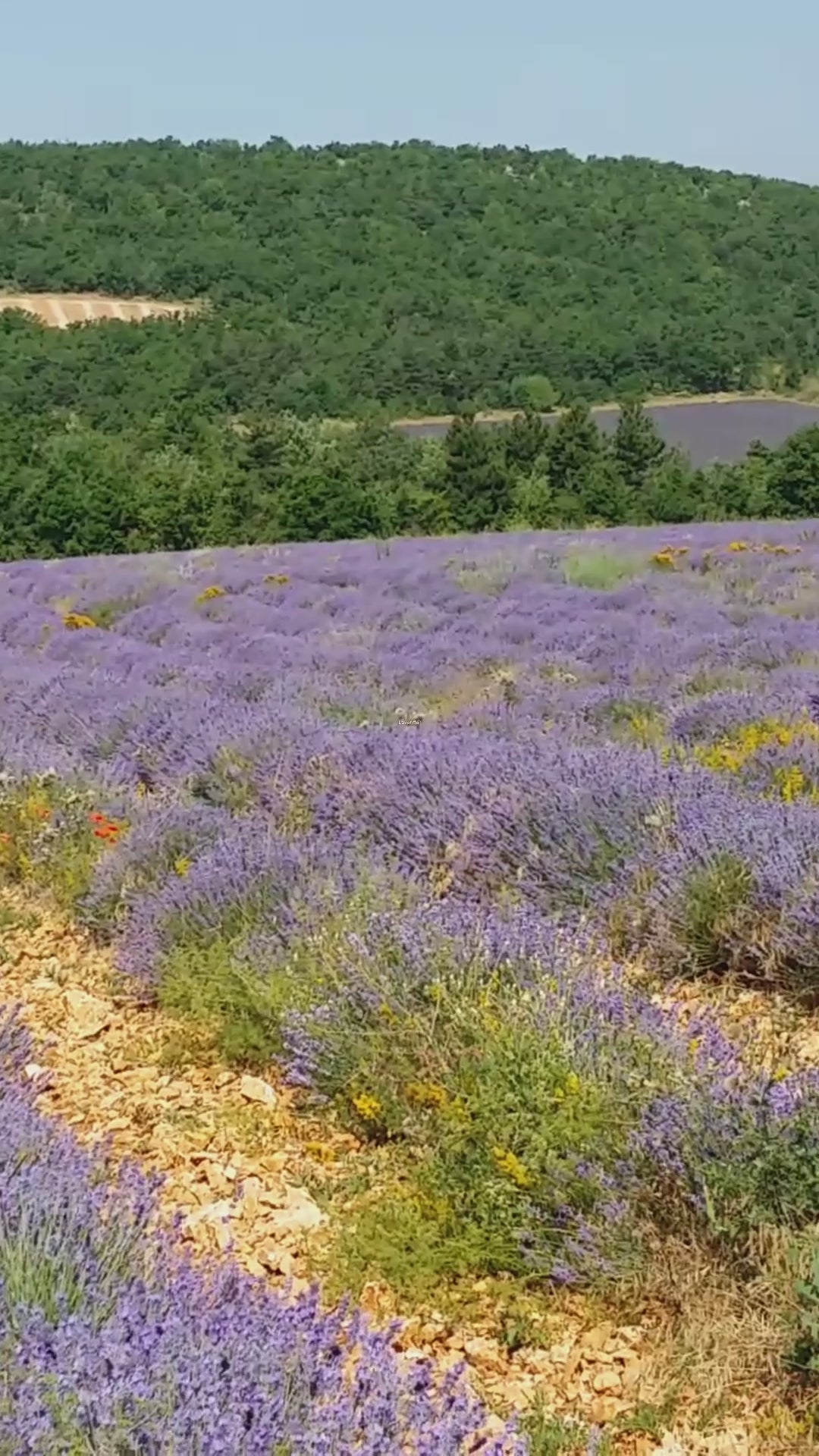
Lavender, Maillette (organic)
Lavender, Maillette (organic)
Low stock: 4 left
Sell by Date: March 2029
Couldn't load pickup availability
Product No. 1901
Lavandula angustifolia
| Origin | France |
| Plant part | Blossom/Plant |
| Cultivation | Certified organic |
| Certification | DE-ÖKO-007 |
| Extraction | Distilled |
| Main constituents | Linalyl acetate, Linalool, beta-Caryophyllene, 1,8-Cineol |
| Aroma | Balsamic, Floral, Herbaceous |
| Ingredients (INCI) | Lavandula Angustifolia Oil* |
*Certified organic, DE-ÖKO-007.

Fields of true lavender are often assumed to be grown from seed. Maillette is a clone. It is a named cultivar of Lavandula angustifolia, propagated vegetatively, so every plant shares the same genetic makeup and the oil varies little from season to season.
01 · Origin
Maillette was selected in France and is grown widely in Provence. This oil is distilled from the flowering tops of certified organic cultivation in France (DE-ÖKO-007).
02 · Chemistry
Linalyl acetate and linalool lead, as in all true lavender. Beta-caryophyllene adds a soft, woody note. 1,8-cineole is present in small proportion. Being a true lavender, Maillette is distinct from lavandin, the sterile hybrid with spike lavender, which carries markedly more camphor.
03 · In Practice
Floral, sweet and herbaceous, with a clean, even character. A middle note. A dependable reference lavender for diffusion, massage, bath preparations and skincare formulation. Comparison with Lavender Highland, Bulgaria (No. 1907) and Lavandin Sweet Super (No. 1870) separates clone, population and hybrid. Blends with bergamot, geranium, clary sage, rosemary, cedarwood, chamomile and patchouli.
General information: For external use only. Dilute before applying to skin. Keep away from heat and sunlight. Keep out of reach of children. Avoid contact with eyes and mucous membranes.
How to use Essential Oils
Find out more about how Essential Oils can be used and the different application methods:
https://oshadhi.com/pages/how-to-use-essential-oils