

Honey Myrtle (Melaleuca teretifolia)
Honey Myrtle (Melaleuca teretifolia)
Low stock: 5 left
Sell by Date: March 2029
Couldn't load pickup availability
Product No. 2187
Melaleuca teretifolia
| Origin | Australia |
| Plant part | Twigs/Leaves |
| Cultivation | Conventional |
| Extraction | Distilled |
| Main constituents | Geranial, Neral, Myrcene, Geraniol, trans-Isocitral, Nerol |
| Aroma | Citrus, Herbaceous, Minty, Fresh |
| Ingredients (INCI) | Melaleuca Teretifolia Leaf Oil |
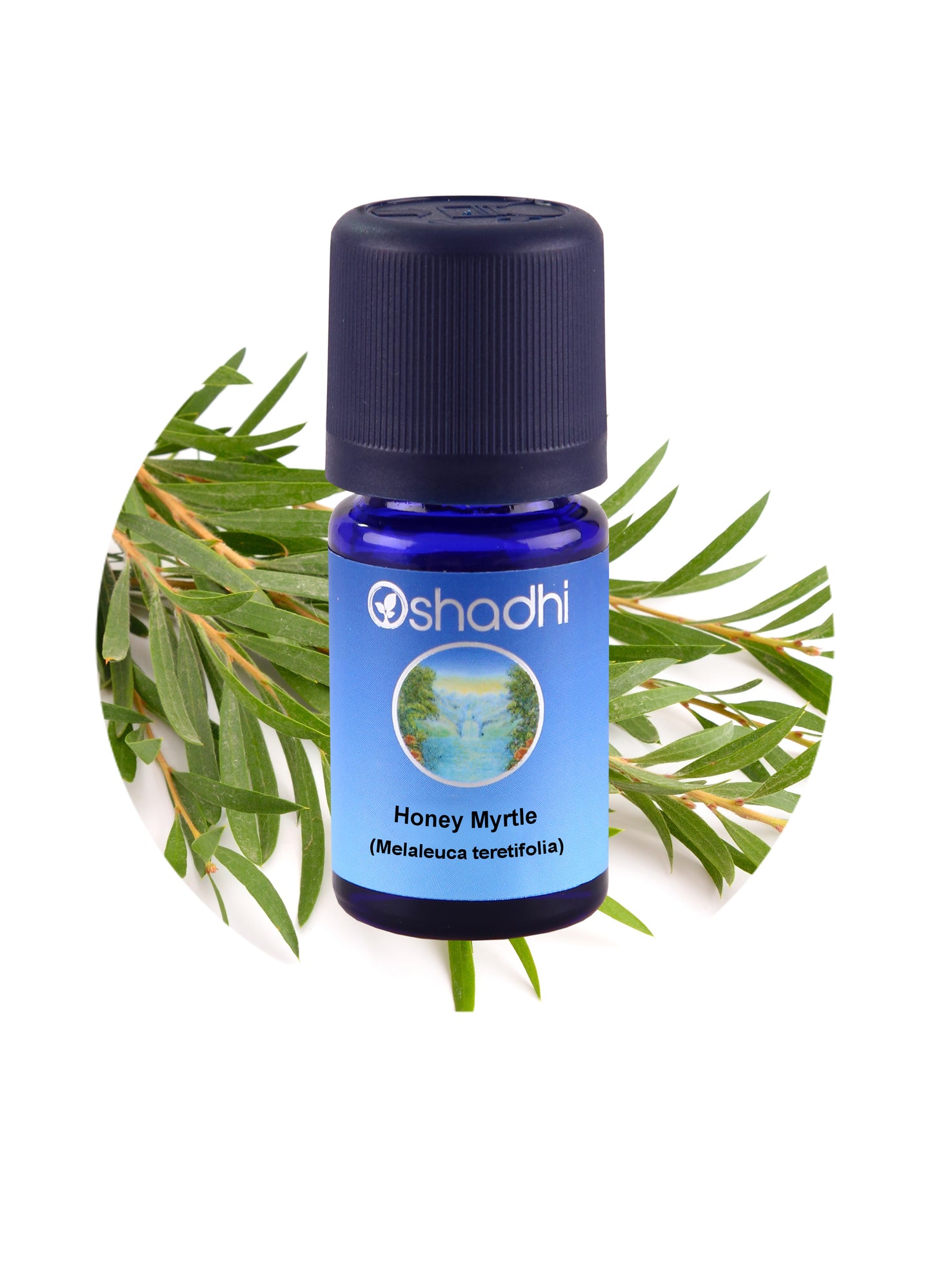
Honey myrtle is not a myrtle in the strict sense. Melaleuca teretifolia is a relative of tea tree; true myrtle is Myrtus communis. The two share the family Myrtaceae and little else. The aroma is lemon, not the cineole freshness of Myrtle, Green (No. 2185).
01 · Origin
A shrub of Western Australia with slender, cylindrical leaves, a feature recorded in its species name. This oil is distilled from the twigs and leaves, grown conventionally in Australia.
02 · Chemistry
Geranial and neral, together known as citral, dominate. Myrcene, geraniol, trans-isocitral and nerol follow. The profile is close to that of lemongrass, softened by the alcohols. Citral-rich oils are handled at low dilution on the skin.
03 · In Practice
Bright lemon at the top, with a rounded, faintly honeyed sweetness underneath. A top note. Diffusion, room fragrance and dilute massage blends. Blends with lavender, eucalyptus, geranium, ginger, rosemary, cedarwood and sandalwood.
General information: For external use only. Dilute before applying to skin. Keep away from heat and sunlight. Keep out of reach of children. Avoid contact with eyes and mucous membranes.
How to use Essential Oils
Find out more about how Essential Oils can be used and the different application methods:
https://oshadhi.com/pages/how-to-use-essential-oils