

Copaiba, Distilled
Copaiba, Distilled
22 in stock
Sell by Date: March 2029
Couldn't load pickup availability
Product No. 11279
Copaifera officinalis
| Origin | Brazil |
| Plant part | Resin |
| Cultivation | Certified organic |
| Extraction | Distilled |
| Main constituents | beta Caryophyllene, trans-alpha-Bergamotene, Germacrene-D |
| Aroma | Balsamic, Earthy, Resinous, Woody |
| Ingredients (INCI) | Copaifera Officinalis Oil* |
*Certified organic.
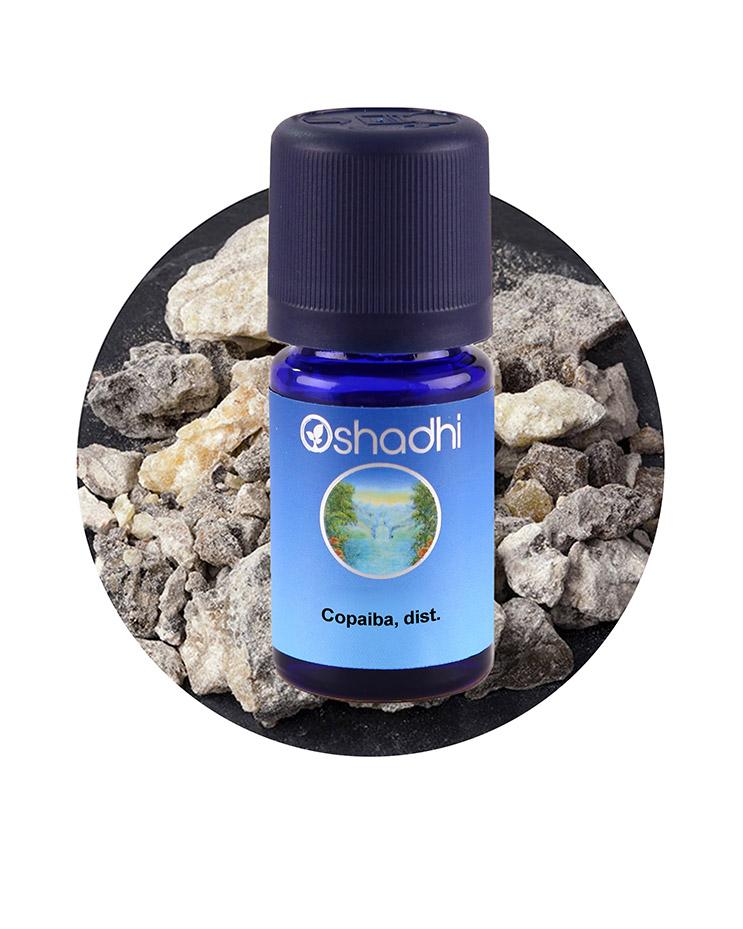
Copaiba is widely called a balsam. Strictly it is an oleoresin. True balsams contain benzoic or cinnamic esters, as benzoin and Peru balsam do, and copaiba resin has neither. The distilled oil is dominated by a single sesquiterpene.
01 · Origin
Copaifera officinalis is a tree of the Fabaceae from the forests of northern South America. The resin collects in channels within the trunk. This oil is produced in Brazil from certified organic resin.
02 · Process
The trunk is tapped and the oleoresin drawn off, in a manner similar to rubber tapping. The resin is then distilled to give the essential oil. Beta-caryophyllene is the dominant constituent. Trans-alpha-bergamotene and germacrene-D follow.
03 · In Practice
Warm, soft and lightly woody, with a honeyed sweetness and a faint pepper note. A base note, rarely used alone. In blends it acts as a fixative for lighter top notes. Massage blends, natural perfumery and skincare formulation. Blends well with rose, jasmine and ylang ylang, as well as vetiver, cedarwood and black pepper.
General information: For external use only. Dilute before applying to skin. Keep away from heat and sunlight. Keep out of reach of children. Avoid contact with eyes and mucous membranes.
How to use Essential Oils
Find out more about how Essential Oils can be used and the different application methods:
https://oshadhi.com/pages/how-to-use-essential-oils