

Pepper, Chili, CO2 (organic)
Pepper, Chili, CO2 (organic)
Low stock: 4 left
Sell by Date: March 2027
Couldn't load pickup availability
Product No. 1256
Capsicum frutescens
| Origin | Uganda |
| Plant part | Fruits/Seeds |
| Cultivation | Certified organic |
| Certification | DE-ÖKO-007 |
| Extraction | Co2extracted |
| Main constituents | capsaicinoids, carotenoids |
| Aroma | Spicy, Fruity |
| Ingredients (INCI) | Capsicum Frutescens Fruit Extract, Brassica Napus Seed Oil* |
*Certified organic, DE-ÖKO-007.
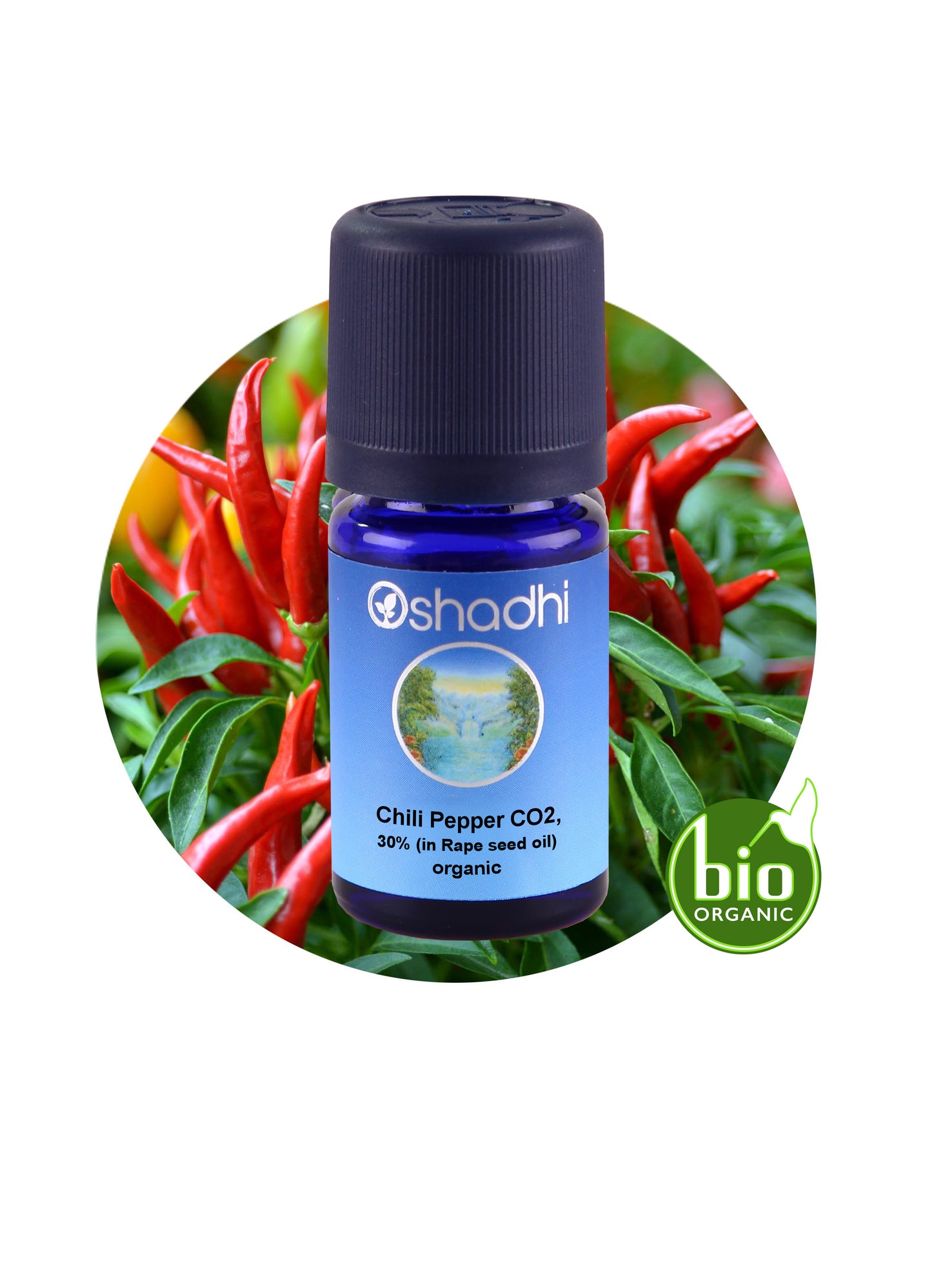
Chili is not a source of essential oil in the usual sense. Capsaicinoids, the compounds responsible for its heat, are not volatile and do not distil. Carbon dioxide extraction is the method that carries them out of the fruit intact.
01 · Origin
Capsicum frutescens is a member of the nightshade family, Solanaceae, native to the tropical Americas and now grown throughout the tropics. This extract is produced from the fruits and seeds of certified organic cultivation in Uganda.
02 · Process
Supercritical carbon dioxide draws out both the pungent and the pigmented fractions of the fruit. The extract is standardised for capsaicinoid content and supplied in 30% rapeseed oil (Brassica napus oleifera) for handling. Carotenoids give the extract its deep red-orange colour.
03 · In Practice
Pungent, hot and faintly fruity. Produces a strong sensation of heat on skin even at very low dilution. Used in minute proportion in massage formulation, alongside warming spice oils. Wash hands thoroughly after handling. Blends with ginger, black pepper, rosemary, clove, cinnamon leaf and lavender.
General information: For external use only. Dilute before applying to skin. Keep away from heat and sunlight. Keep out of reach of children. Avoid contact with eyes and mucous membranes.
How to use Essential Oils
Find out more about how Essential Oils can be used and the different application methods:
https://oshadhi.com/pages/how-to-use-essential-oils