

Basil, 85% Methyl Chavicol (organic)
Basil, 85% Methyl Chavicol (organic)
Low stock: 1 left
Couldn't load pickup availability
Product No. 1111
Ocimum basilicum L.
| Origin | Egypt |
| Plant part | Blossom/Plant |
| Cultivation | Certified organic |
| Certification | DE-ÖKO-007 |
| Extraction | Distilled |
| Main constituents | Methyl chavicol (Estragole), 1,8-Cineol, Methyl eugenol, Linalool, alpha-Bergamotene |
| Aroma | Herbaceous, Spicy |
| Ingredients (INCI) | Ocimum Basilicum Flower Oil* |
*Certified organic, DE-ÖKO-007.
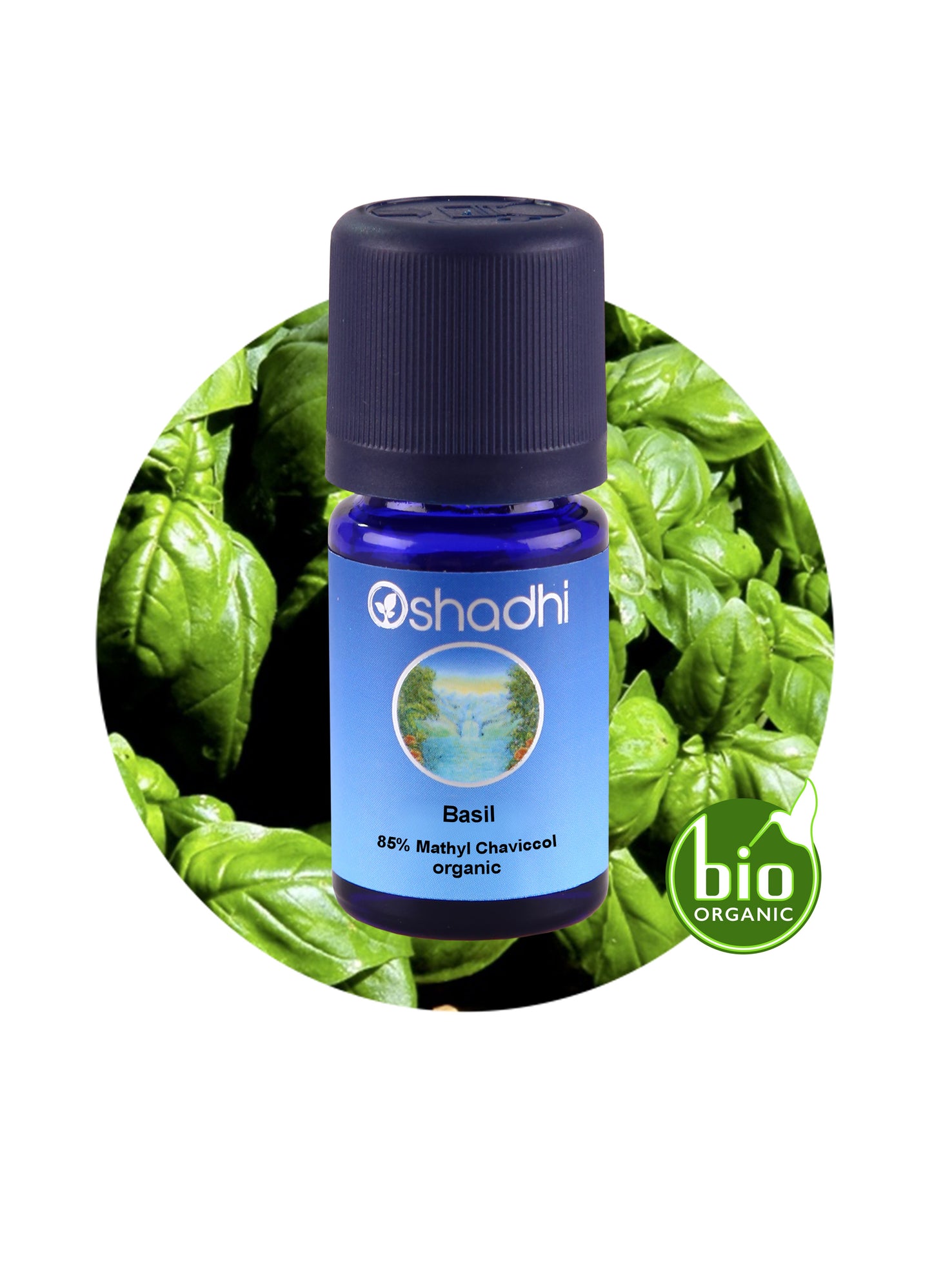
Sweet basil is one species with several chemotypes. The basil oil of European tradition is the linalool type. This is the methyl chavicol type, also called estragole, and its odour leans towards anise and tarragon.
01 · Origin
Ocimum basilicum is an annual of the mint family, Lamiaceae, native to tropical Asia and Africa. This oil is distilled in Egypt from the flowering plant, certified organic under DE-ÖKO-007.
02 · Chemistry
Methyl chavicol, a phenylpropanoid ether, is strongly dominant; the product name states its proportion. 1,8-cineole and linalool add a fresh, floral lift. Methyl eugenol and alpha-bergamotene are present in smaller amounts. The chemotype on the label determines how a basil oil can be used; the two main types are not interchangeable.
03 · In Practice
Sweet, anisic and herbaceous, with a green, fresh top. A top to middle note in natural perfumery. Used at low concentration in diffusion and massage blends. Comparative work alongside Basil, Lemon (No. 1139) shows how far chemistry can move within a single species. Blends with bergamot, lime, clary sage, geranium, lavender, fennel and black pepper.
General information: For external use only. Dilute before applying to skin. Keep away from heat and sunlight. Keep out of reach of children. Avoid contact with eyes and mucous membranes.
How to use Essential Oils
Find out more about how Essential Oils can be used and the different application methods:
https://oshadhi.com/pages/how-to-use-essential-oils