

Pine, Stone (organic)
Pine, Stone (organic)
Out of stock
Sell by Date: August 2028
Couldn't load pickup availability
Product No. 1780
Pinus cembra
| Origin | Italy |
| Plant part | Needles/Twigs |
| Cultivation | Wild-crafted organic |
| Extraction | Distilled |
| Main constituents | alpha-Pinene, beta-Phellandrene, Limonene, beta-Pinene |
| Aroma | Sweet, Woody |
| Ingredients (INCI) | Pinus Cembra Leaf Oil* |
*Certified organic.
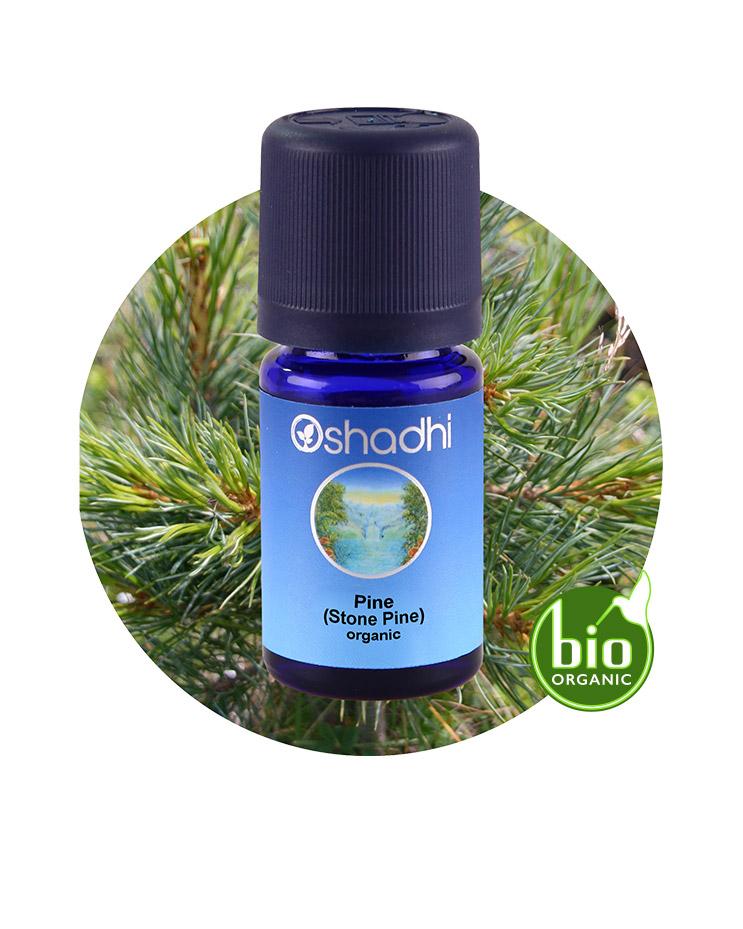
Two different pines carry the name stone pine. Pinus pinea is the Mediterranean umbrella pine. Pinus cembra is the Swiss stone pine, or Arolla pine, of the high Alps. This oil is Pinus cembra.
01 · Origin
Pinus cembra grows near the treeline in the Alps and Carpathians and withstands severe cold. The needles are carried in bundles of five, a mark of the white pine group. This oil is distilled in Italy from the needles and twigs of wild-crafted organic trees, certified organic.
02 · Chemistry
Alpha-pinene leads. Beta-phellandrene is unusually prominent and gives the oil a peppery, citrus edge. Limonene and beta-pinene follow. The hydrocarbon profile oxidises with exposure, so the bottle should be kept closed and cool.
03 · In Practice
Clean, resinous and bright, softer and sweeter than Scots pine. A top note. Diffusion, sauna preparations, massage blends and olfactory study of the conifers. Comparative work alongside Pine, Scots (No. 1475) and Larch Needles (No. 1852) sets three Alpine-type conifers side by side. Blends with juniper, fir, cedarwood, lemon, lavender, rosemary and frankincense.
General information: For external use only. Dilute before applying to skin. Keep away from heat and sunlight. Keep out of reach of children. Avoid contact with eyes and mucous membranes.
How to use Essential Oils
Find out more about how Essential Oils can be used and the different application methods:
https://oshadhi.com/pages/how-to-use-essential-oils